The Future of Tamahagane: Sustainability of Traditional Swordsmithing and the Japanese Blade Industry
 * Image is for illustrative purposes only.
Table of Contents
What is Tamahagane — The Industrial Foundation of Japanese Sword Culture
The essence of the Japanese sword lies in its physical and aesthetic perfection and the totality of the social and economic systems that support it. At its core is tamahagane. Tamahagane is a special alloy produced from iron sand and charcoal using the tatara method, an ancient smelting technique. It is an essential material that master swordsmiths transform into blades combining hardness and toughness through their advanced forging techniques. The interaction of this material and these techniques is what makes the Japanese sword a globally recognized craft.
The history of tatara ironworking was transmitted from the continent during the Yayoi period and developed primarily in the Chugoku mountains from the medieval through early modern periods. However, following the Meiji Restoration and the adoption of Western iron smelting technology, traditional tatara furnaces nearly disappeared. The resumption of tamahagane production in modern times was made possible when the Japanese Sword and Art Blade Preservation Society (NBTHK) revived operations of the "NBTHK tatara" in Okuizumo, Shimane Prefecture in 1977. Since then, this facility has functioned as the sole public infrastructure supplying tamahagane to registered sword makers throughout Japan.
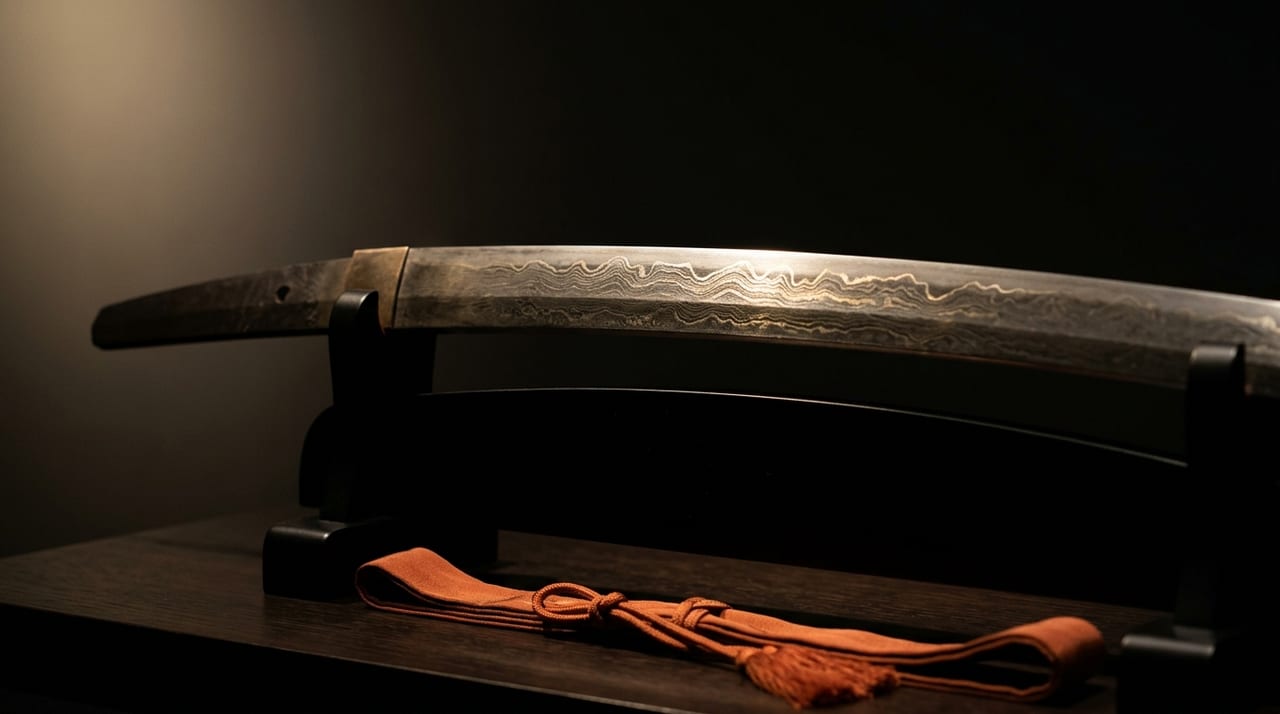
The term tamahagane is said to derive from the glossy, jewel-like appearance and shape of high-quality steel ingots. After furnace operation, the produced steel ingots (kera) are sorted and graded according to their carbon content and the quantity of impurities they contain. This sorting work also relies heavily on the experience of the murage (furnace master), and cannot be replaced by mechanical numerical assessment alone. The NBTHK tatara does not operate continuously throughout the year but conducts concentrated operations during limited periods, which naturally constrains the amount of tamahagane obtained in each operation. This scarcity is what underlies the special value attributed to sword forging with tamahagane.
Resource Crisis and Industrial Foundation Fragility
The procurement of iron sand (masago iron sand) and red pine charcoal that support tamahagane production currently faces a structural crisis.
| Raw Material | Challenges in Supply |
|---|---|
| Iron Sand (Masago Iron Sand) | The granite decomposition layers in the Chugoku mountains, which are the mining sites, have seen extraction-suitable areas rapidly shrink due to residential development following the high-growth period and environmental regulations. The traditional "tetsuanagarashi" water-washing and separation method of extraction has become difficult to reconcile with water resource conditions and modern regulations, and extraction costs continue to rise annually |
| Red Pine Charcoal | The decline of domestic forestry and the spread of pine wilt disease have created severe supply constraints in both quality and quantity. Securing the vast quantities required for one furnace operation has transcended mere logistics issues to become a fundamental question of industrial survival |
If the current situation persists, it is not possible to deny the possibility that tamahagane production itself could face a critical situation in the 2030s.
Such tightening of raw materials could also affect the quality of tamahagane. The purity of iron content and the distribution of impurities in masago iron sand vary by extraction site, and the depletion of high-quality ore deposits directly affects the yield during forging and the uniformity of the blade. If substitute materials with non-uniform heat intensity or combustion characteristics are used for red pine charcoal, stable temperature management within the furnace becomes difficult, further increasing the burden on the murage's skill. It is an important recognition shared among industry stakeholders that securing raw materials is not merely a matter of quantity—whether tamahagane can be produced at all—but also a matter of quality: whether tamahagane of the same grade as before can be maintained.
Technology Succession Crisis and Organizational Response
Tatara operations require precise management by the murage, the furnace master. Work such as furnace temperature control, timing of iron sand and charcoal input, and pressure management is governed by intuitive judgment based on decades of experience, and codifying this into manuals is fundamentally difficult. Currently, the aging of the murage who perform this work has reached a critical stage, and technology succession holds the key to industrial survival.
The NBTHK operates a technology succession program, but developing a fully-fledged murage requires long-term training through actual operations, necessarily making the process slow. Rapid personnel replacement is unrealistic, and whether multiple new-generation murage can establish independent operations within the next decade will be a decisive factor in the industry's fate.
The succession of this type of tacit knowledge is not limited to the murage. The forging techniques of the sword maker, the sense and judgment of the polisher, and the handwork of the scabbard maker and handle wrapper—all are acquired over long years through master-apprentice relationships and have inherent limits to being codified into formal knowledge through videos or manuals. If the depth of the production area as a community is lost, even if individual artisans are trained, the very environment in which techniques organically connect to one another could be lost. In this regard, the technology succession for tamahagane production and the technology succession for the artisans supporting sword making must be understood as an inseparable, integrated task.
Sword Maker Business Structure and Domestic Market Limitations
While there are approximately 300 registered sword makers, only a minority make sword production their primary business. Under the Cultural Affairs Agency's system, there is a cap on the number of swords a sword maker can produce annually (generally 24 or fewer), making it structurally impossible to expand the business foundation through mass production. There are also limits to the distribution of tamahagane, and using substitute materials for shortfalls results in lower evaluation in official assessments.
Completing one Japanese sword requires the collaboration of multiple specialized artisans beyond the sword maker: polishers, metal fitters, scabbard makers, lacquerers, and handle wrappers, and the total production cost can range from hundreds of thousands of yen to over one million yen. On the other hand, domestic market demand is limited to sword enthusiasts and art collectors, with limited tolerance for high price points. The divergence between the purchasing power of younger generations and the price range continues to widen, making it increasingly difficult to maintain the industry through domestic markets alone.
Practical Perspective for Buyers to Know
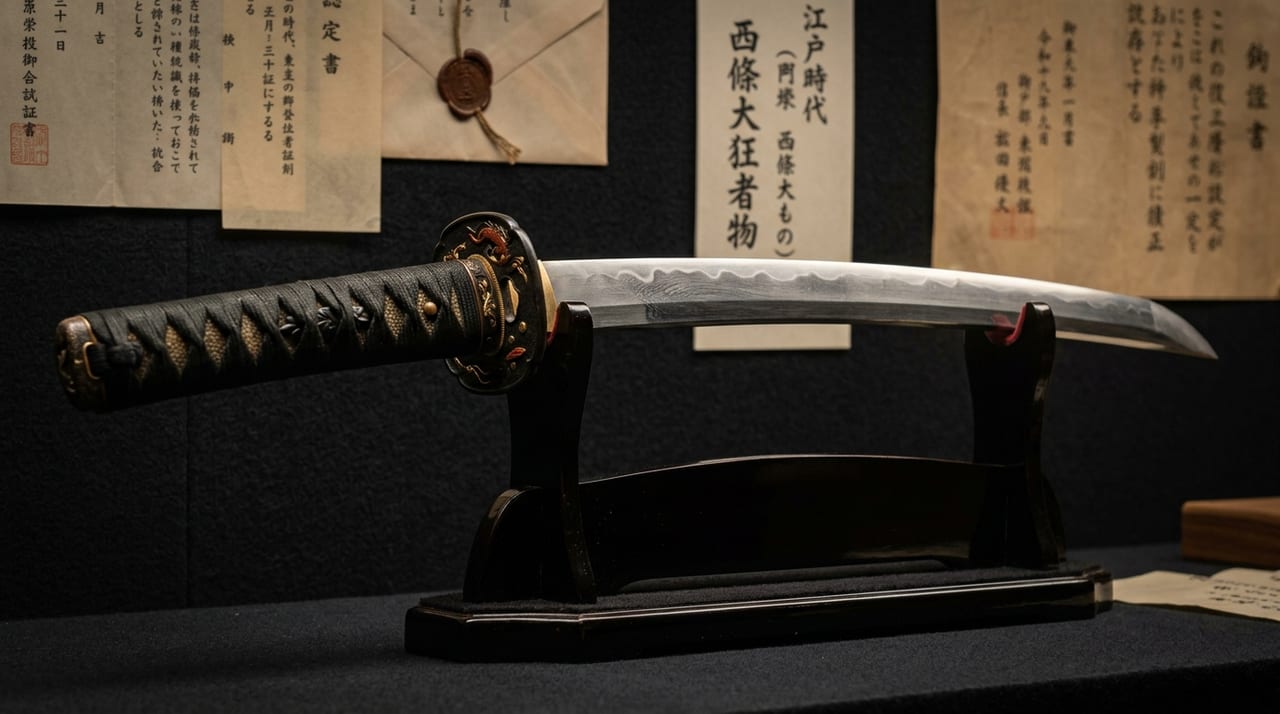
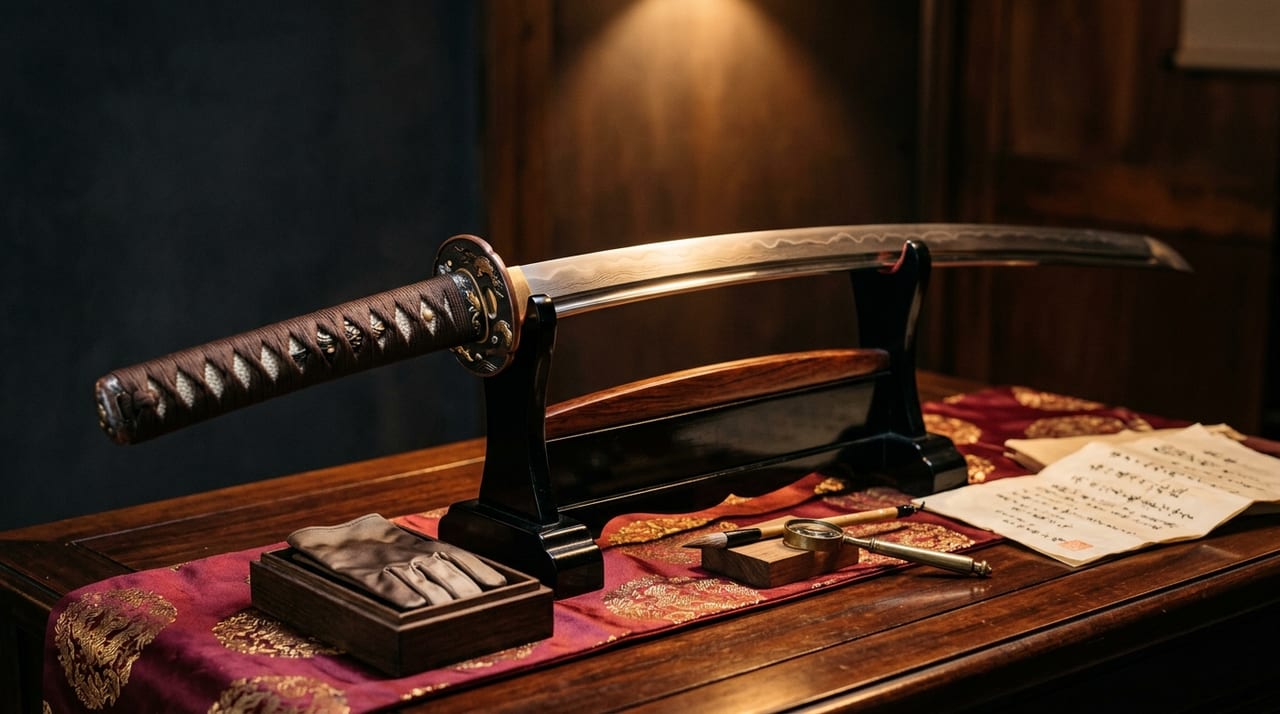
Given this structure, what becomes crucial for readers considering purchasing or collecting Japanese swords is the existence of certificates of authentication that substantiate authenticity and provenance. Certification organizations such as the Japanese Sword and Art Blade Preservation Society (NBTHK) examine the signature on the blade, the structure of the steel, blade pattern characteristics and other features based on expert knowledge, and present their assessment of authenticity, production period, and school of origin in the form of a certificate. As the scarcity of tamahagane itself increases, so too does the relative value of records documenting that a blade was forged from tamahagane through proper procedures.
When considering a purchase, the following points form the practical fundamentals to verify:
- Presence of a certificate of authentication
- The issuing certification organization
- The period, school, and maker information listed on the certificate
- The preservation condition of the blade
Additionally, when considering swords from the perspective of gifts or assets, the clearer the provenance, the higher the reliability is considered to be in future evaluation and transactions. Trustworthy sellers handle authentic pieces in collaboration with such certification organizations and ideally have systems in place through which buyers can confidently verify provenance. The current weakening of the tamahagane production base, conversely, means that the scarcity of each individually forged blade created through proper procedures will only increase in the future.
Policy and Institutional Issues — The Dilemma of Protection and Independence
While subsidies for sword-related initiatives by the Cultural Affairs Agency and promotion measures by local authorities exist, their effects are limited. Subsidies are often limited to specific projects and periods and are insufficient to fundamentally address the structural challenges facing the entire industry—profitability, personnel development, and raw material procurement. The framework of the Traditional Craft Industry Promotion Law has not been applied in a way that adequately considers the unique characteristics of the sword industry.
Temporary financial support through subsidies alone makes it difficult to create an environment in which successors to murage and sword makers can continue long-term training while making a living. Similar challenges of aging practitioners, successor shortages, and raw material procurement difficulties are noted in other traditional craft fields, and the development of support frameworks tailored to the specific circumstances of the sword industry is a topic of ongoing discussion among industry organizations and researchers. How to combine both administrative protection and the industry's capacity to become self-sufficient within the market has become a key issue in future institutional design.
Globalization and the Path to the Next Generation
Interest in Japanese swords overseas is rising dramatically, and cases where transaction prices in the international collector market significantly exceed domestic prices are increasing. Through information dissemination via social media and digital media, sword maker practices and artisan culture are becoming increasingly recognized among younger generations. As legal regulations advance, expanded export schemes for unbladed swords and craft items will enable full-scale entry into overseas markets.
For overseas enthusiasts and collectors, there is an even greater need than with domestic buyers to carefully explain the significance of certificates of authentication substantiating authenticity and provenance. In markets with different languages and commercial practices, the authority of certification organizations and their examination standards are often not well known, so information dissemination through digital media serves not merely as publicity but also as an educational role in ensuring authentic pieces are properly evaluated. While expansion of international sales channels has the potential to offset limitations of the domestic market, it must proceed in a manner that does not undermine the foundation of an industry that relies on tamahagane, a finite resource.
The future of tamahagane depends on maintaining balance between the succession of tradition and adaptation to the times. It is necessary to simultaneously address three challenges: resource depletion, technology succession, and market expansion. Under these difficult circumstances, internationalization and digitalization hold the potential to open a new horizon for industry regeneration.