The Distribution Structure of the Japanese Sword Market — The Division of Roles Among Wholesalers, Trading Companies, and Retailers in the Sword Industry, and the Price-Determination Mechanism
 * Image is for illustrative purposes only.
Table of Contents
The Overall Picture of Nihontō Distribution — From Upstream to Downstream
Before a nihontō reaches the hands of enthusiasts and collectors, it commonly passes through multiple intermediaries. A single sword born in the workshop of a tōkō (tōshō) passes through stages such as auction events, wholesalers, and specialized retail shops before entering the market. Understanding this distribution structure is practical knowledge that directly informs decisions about buying at fair prices and selling.
The main distribution channels for nihontō can be organized as follows.
- Direct sales by the tōkō (tōkō → enthusiast)
- Via auction or competitive bidding (tōkō or old family → auction event → buyer)
- Via wholesaler or trading company (place of origin → wholesaler → retailer → enthusiast)
- Via auction house (previously owned items or inherited swords → auction → buyer)
The Position of the Tōkō (Upstream) — Where Swords Enter the Market
Cases of Direct Purchase from a Tōkō
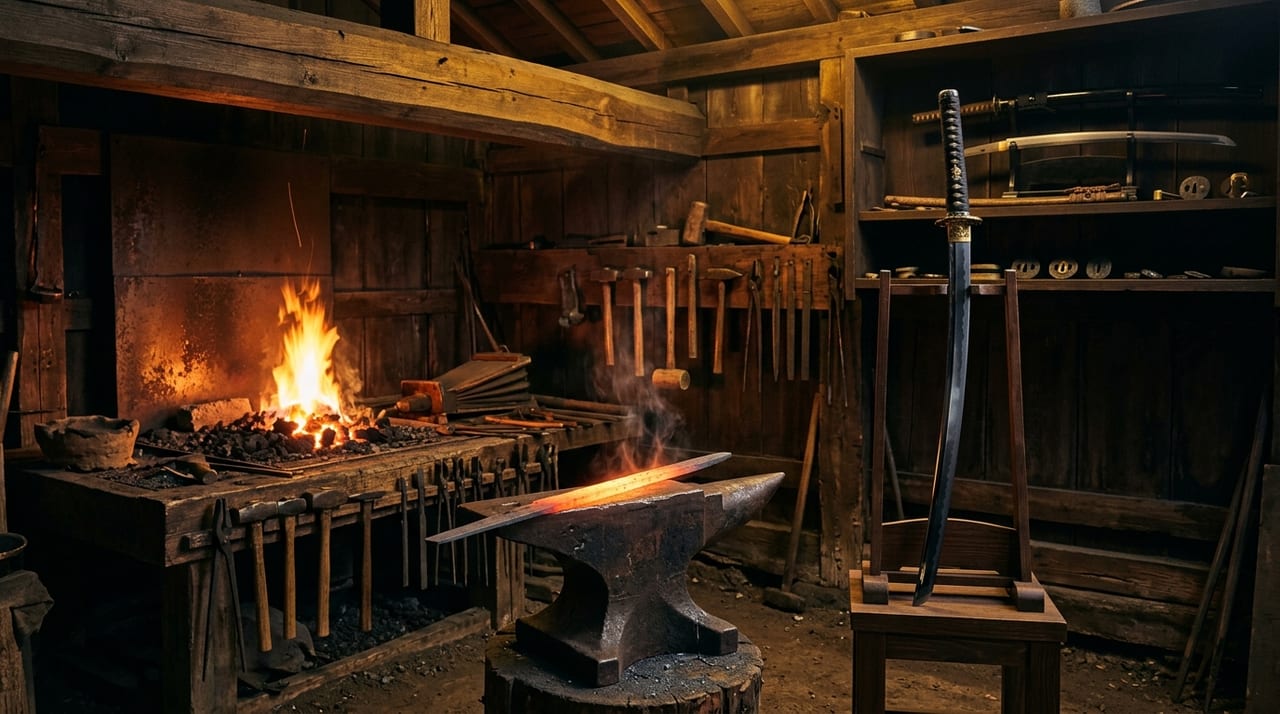
The most direct way to acquire a gendaitō is to purchase it directly from a tōkō. One visits the tōkō's workshop and requests either a commission (custom order) or the purchase of a finished piece.
For a commission: A production period (typically 6 months to 2 years) and an advance payment are required. Prices vary according to the tōshō's rank (including whether they hold mukansa status, and their track record in open exhibitions) and the details of the work; the going rate for a commissioned piece from a mukansa tōshō is 1,000,000 yen or more.
Purchase of stock: There are also cases where a tōkō sells finished swords directly. Because there is no intermediary margin, prices tend to be relatively reasonable.
Consignment to Auction Events
Many tōkō submit their works to events such as the Shinsaku-tō Exhibition and the Tōken Nyūsatsu Kantei-kai (organized by the NBTHK and others). Sword industry professionals, wholesalers, and retailers participate in these auction events as buyers, and the swords that are won proceed to the next stage of distribution.
The Role of Wholesalers and Trading Companies — The Linchpin of Intermediate Distribution
In nihontō distribution, wholesalers (tonya) and sword trading companies function as intermediaries connecting upstream (places of origin and old families) with downstream (retailers and enthusiasts).
Functions of the Wholesaler
Procurement function: Wholesalers acquire large quantities of swords from auction events, old families releasing items from storage, estate disposals, and the like, and hold them in inventory. By procuring several dozen to several hundred swords at once, wholesalers gain economies of scale.
Selection and conditioning function: Wholesalers select the most valuable swords from their acquisitions, and have swords in poor condition serviced by a togishi or shirasaya maker before recirculating them.
Information function: Wholesalers specialize in swords by particular tōkō, schools, or periods, and serve as a bridge to retailers and enthusiasts. There is an unspoken industry knowledge of the type "if you want a sword of such-and-such school, go to such-and-such wholesaler."
Trading Companies (Specializing in Import/Export)
Sword trading companies handle nihontō distribution for overseas markets. They specialize in export procedures to Europe, North America, and Asia (export examination certificates for antique works of art issued by the Agency for Cultural Affairs, and compliance with local laws), and sell to overseas collectors and museums. Separate from domestic-market wholesalers, overseas-specialist sword trading companies exist, and they also manage coordination with overseas auction houses (Bonhams, Christie's, etc.).
Specialized Retail Shops (Downstream) — The Final Stage of Price Determination
The venue where enthusiasts and collectors actually purchase swords is the specialized sword shop (retail).
The Price-Setting Mechanism
When a retail shop sets the price of a sword, the following factors exert a combined influence.
Procurement cost: The price at which the sword was acquired from a wholesaler or auction serves as the baseline. Typically, procurement cost represents 40–60% of the retail price.
Value-adding factors:
- Presence or absence of a kanteisho (NBTHK Hozon Tōken, Jūyō Tōken, Tokubetsu Jūyō Tōken, etc.)
- The artistic value of the koshirae (tōsōgu)
- The tōkō's fame and ranking
- The aesthetic quality of the hamon and jigane
Inventory holding costs: The longer a sword is held in inventory, the greater the costs incurred (storage, insurance, appraisal expenses). Rarer swords tend to remain in inventory for longer, and those costs are passed on to the price.
Diversification of Exhibition and Sales Channels
Sales channels, which were previously limited to walk-in customers, have diversified in recent years to include online sales, social-media sales, and participation in sword fairs.
- Sword dealers' websites: Appealing to buyers in distant locations through high-resolution photographs and video
- Dedicated Yahoo! Auctions storefronts: Expanding sales to the general public
- Overseas-facing e-commerce sites: Cross-border e-commerce operating in Japanese, English, and Chinese
The Structure of Market Prices — Why Prices Differ for the Same Sword
Even for swords by the same tōshō with the same ranking, prices can differ greatly depending on the sales channel. This is due to the following structural reasons.
Accumulation of distribution margins: Each time a sword moves from upstream to downstream, the margin of each stage is added. It is natural that prices through wholesalers and retail shops are higher than direct sales from the tōkō.
Localization of supply and demand: The balance of supply and demand differs between major cities such as Tokyo and Osaka and regional areas. "Inter-regional arbitrage" exists, in which sword dealers in regional areas buy swords cheaply and sell them at higher prices in urban centers.
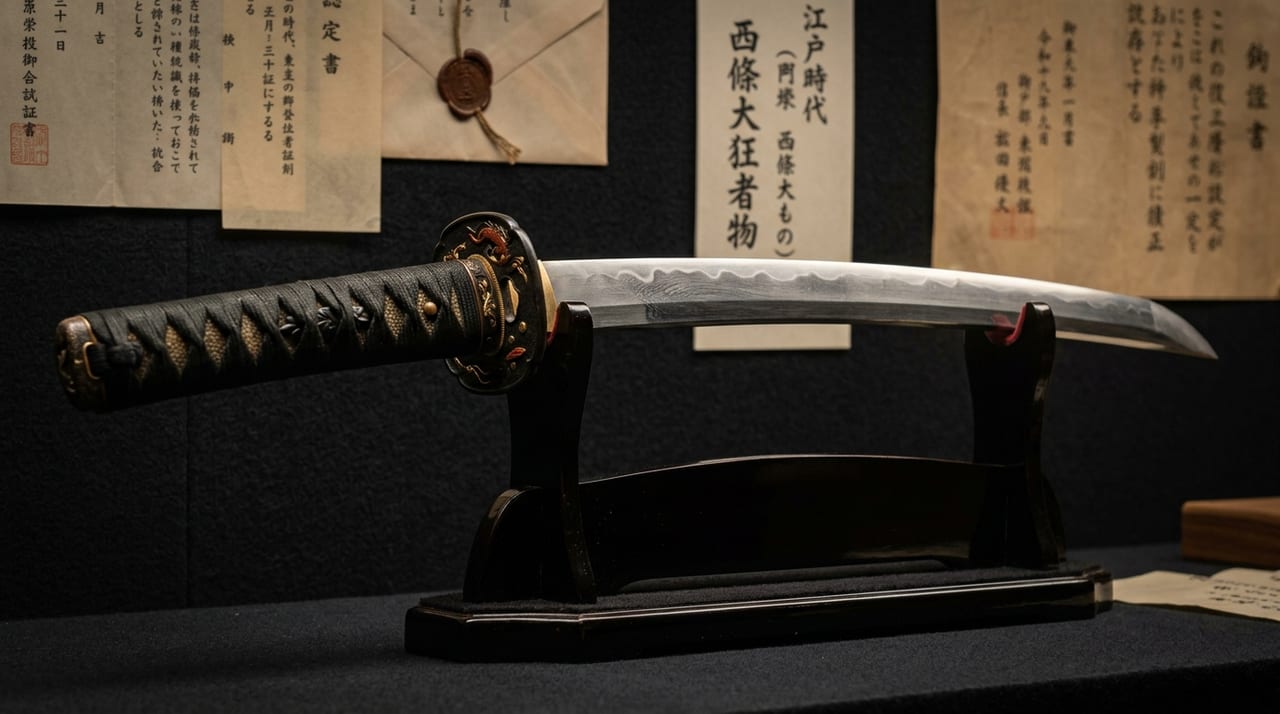
The kanteisho effect: The same sword can vary in price by a factor of 2 to 5 depending on whether an NBTHK Hozon or Jūyō kanteisho is attached. "Investment-oriented appraisal" — calculating the cost of obtaining a kanteisho against the resulting price increase — is practiced at the wholesaler level.
Conclusion — Understanding the Distribution Structure Is the Shortcut to Smart Purchasing
The price of a nihontō is determined not only by "the intrinsic value of the sword itself," but also greatly by "how much margin has accumulated through the distribution channel." By understanding the distribution structure, smarter nihontō purchases become possible: judging whether a price is fair, comparing across multiple shops, and participating directly in auction events.
For sword enthusiasts and collectors, learning to "read the market" alongside the aesthetics of the sword is an extremely important skill for building a collection over the long term.