SNS Strategy for the Japanese Sword Industry — A Practical Guide to Acquiring New Customers via Instagram, YouTube, and TikTok
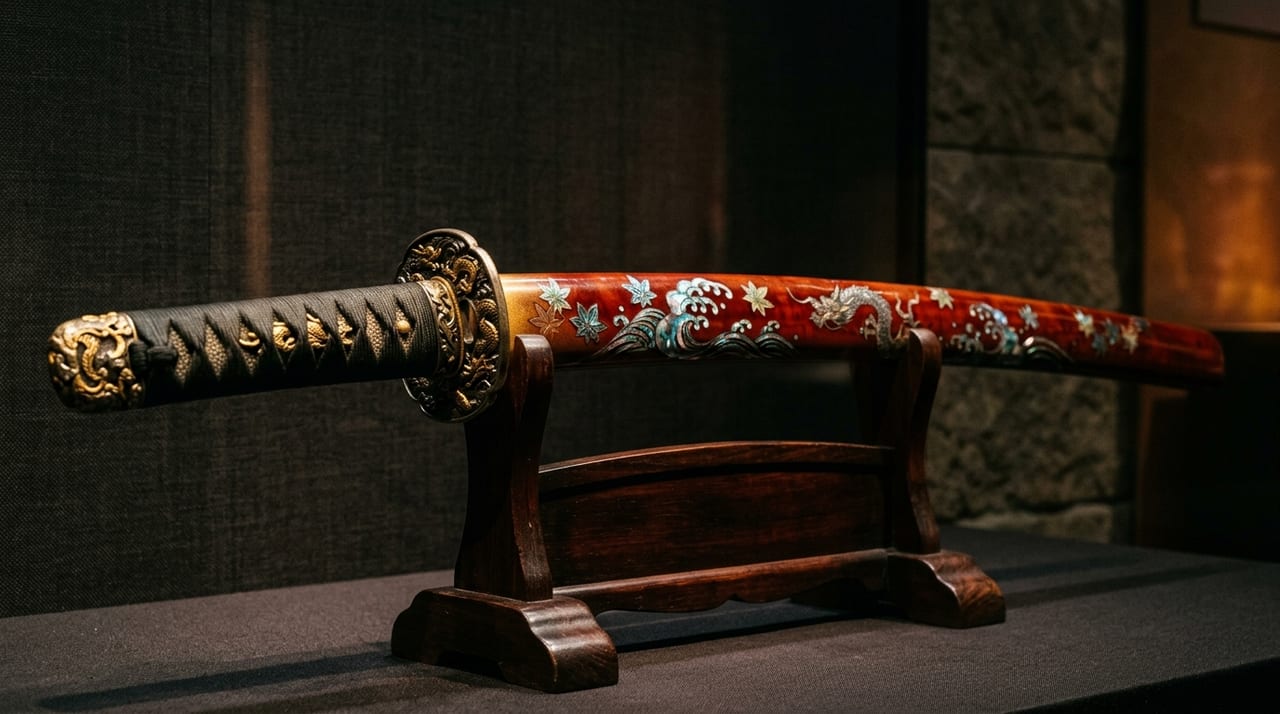 * Image is for illustrative purposes only.
Table of Contents
Why the Japanese Sword Industry Needs Social Media Now
For a long time, nihontō was a world known only to those in the know. Breaking into it required stepping through the threshold of a specialty shop or being introduced by an acquaintance, and new customer acquisition relied primarily on word of mouth and exhibitions. But now that the digitally native generation has real purchasing power, the era in which businesses cannot reach younger customers without social media has well and truly arrived.
As the boom around the game Tōken Ranbu demonstrated, a solid base of latent fans for nihontō exists. Cumulative active players number in the millions, and many of them are women in their twenties to forties — a demographic that differs sharply from the traditional nihontō customer base. The problem is that the industry lacks a pipeline to turn those fans into actual customers and enthusiasts. Social media can serve as that bridge.
What matters is that the barrier to publishing has become extraordinarily low. A single smartphone handles 4K shooting, editing, and posting from start to finish, allowing even a small specialty shop to reach enthusiasts anywhere in the world directly. There is every reason to take advantage of this shift.
Instagram — Showcasing the Beauty of Nihontō Visually
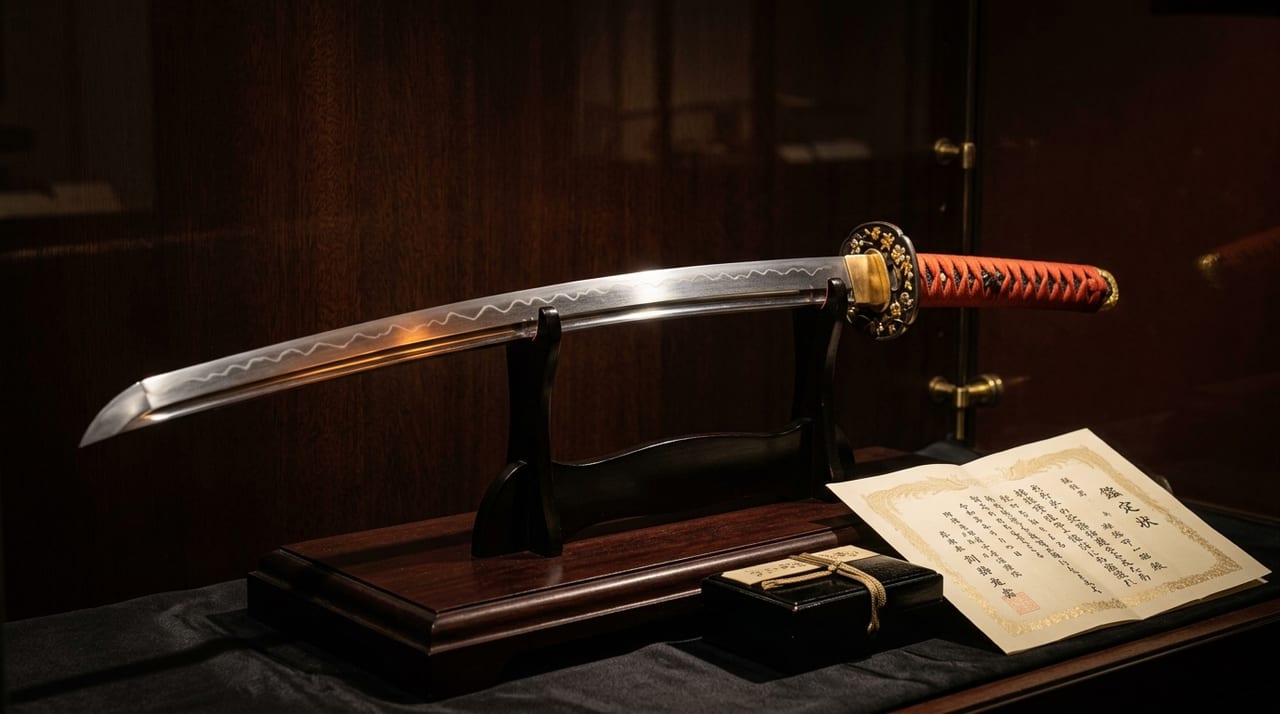
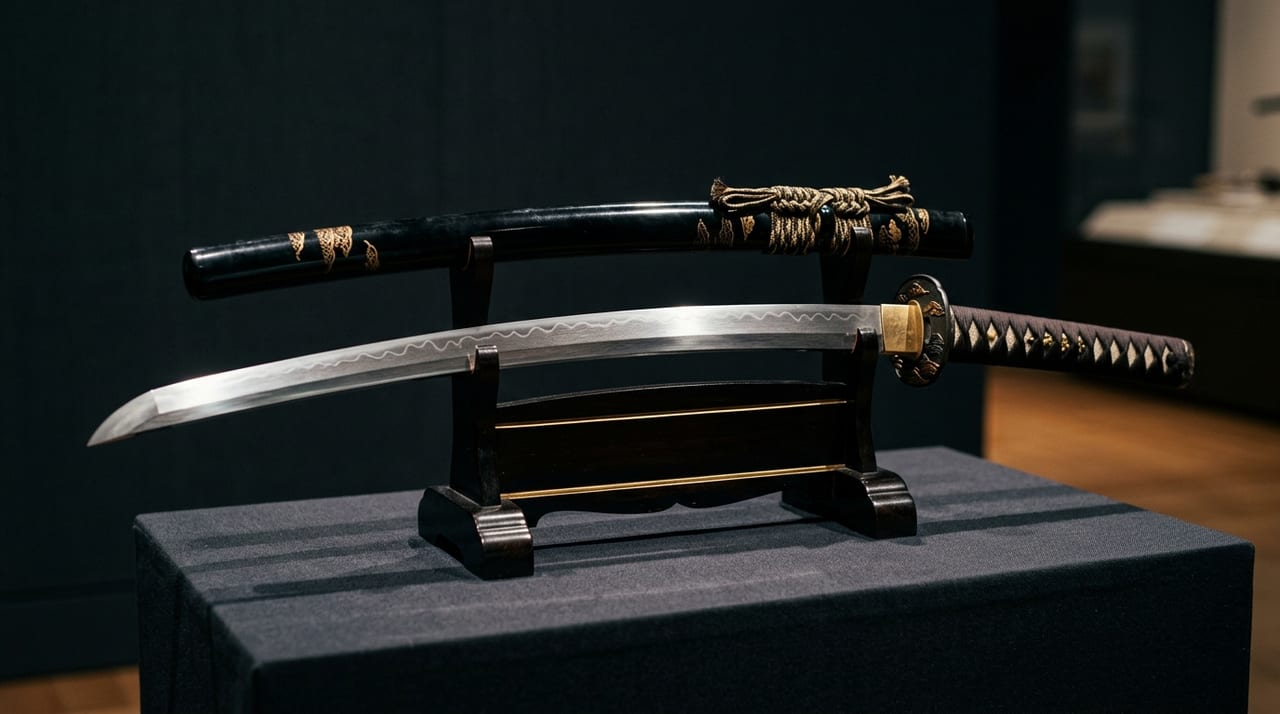
Instagram is the platform best suited to conveying the "beauty" of nihontō. Carefully photographed close-ups of the hamon, jigane, and the fine details of tsuba and other tōsōgu have a visual appeal that draws in even people unfamiliar with nihontō.
Examples of effective content:
- Macro photography of the hamon (multiple shots from varying angles of light)
- Full views of the koshirae alongside close-ups of individual components
- Process shots taken during polishing and forging
- Collaborative posts featuring works held in museum collections
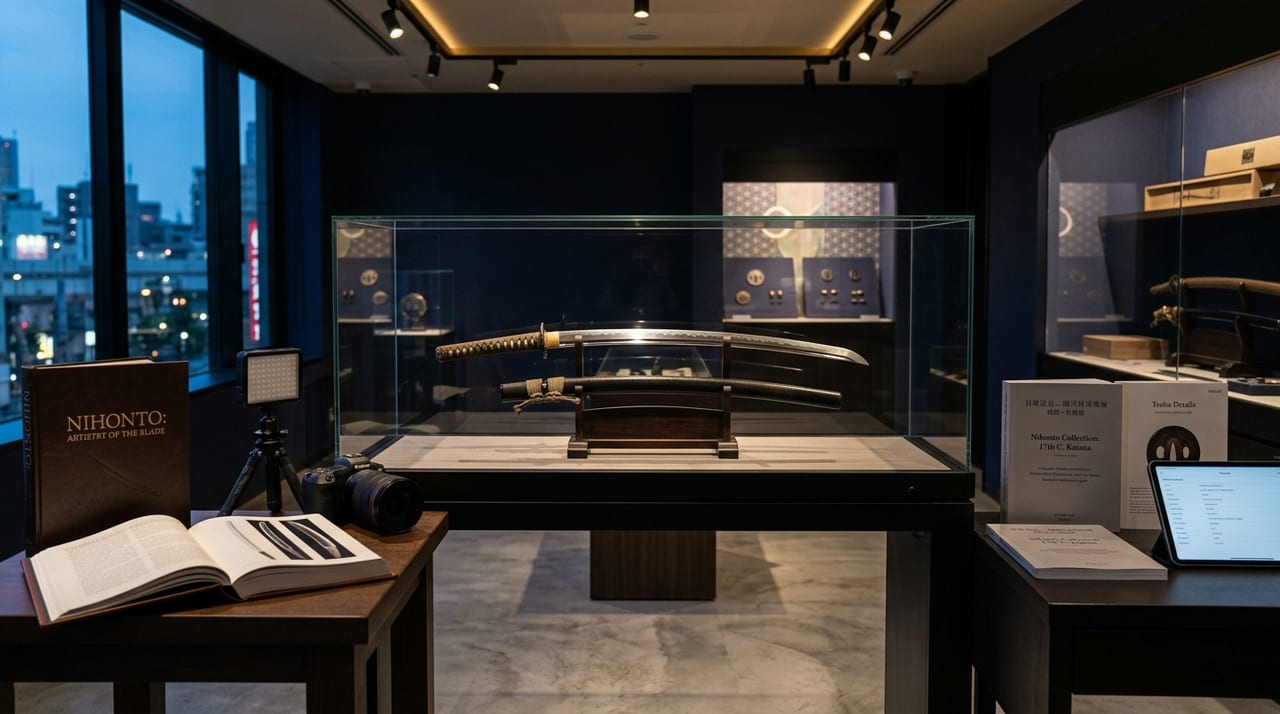
Investing in the shooting environment is also effective. Setting a white cloth or black velvet as the background and angling an LED light at 45 degrees brings the hamon into sharp relief. With a tripod and a macro lens, even a smartphone can produce professional-quality photographs.
Hashtag strategy: Combining English tags such as "#nihonto," "#japanesesword," and "#katana" with Japanese tags such as "#日本刀," "#刀剣," and "#刀剣乱舞" allows you to reach both domestic and international audiences. The nihontō community in English-speaking countries has strong purchasing power and can serve as a foothold for overseas sales.
Using Reels: Quiz-style content — "What is the name of this hamon?" or "How does this scratch disappear through polishing?" — tends to drive high engagement. Because posts with more saves are favored by the algorithm, it is worth designing captions that provide "knowledge worth saving permanently."
YouTube — Long-Form Content That Delivers Deep Expertise
YouTube is well suited to delivering in-depth information to viewers who want to learn. Adding English and Japanese subtitles extends international reach, and explanatory videos of ten to twenty minutes become ongoing "assets" that continue to draw new viewers through YouTube's role as a search engine.
Popular content formats:
- Authentication demonstration videos (step-by-step explanations of "what makes this sword remarkable")
- Documentaries of the tōshō's forging process (from tamahagane to finished blade)
- Unboxing and appreciation videos of newly purchased swords (from a collector's perspective)
- Before-and-after restoration and polishing videos
Particularly effective is an "introductory series." Building a playlist that systematically explains how to appreciate, select, and acquire nihontō allows beginners to develop naturally into prospective customers. Responding to questions in the comment section also directly builds trust.
Monetization and risk management in publishing: Sword videos carry a risk of running afoul of weapons-related policies. It is a prerequisite to clearly state at the opening of the video that the context is fine art, cultural properties, and budō equipment, and to eliminate violent imagery and excessive emphasis on cutting ability entirely. Stating in the channel description that the content concerns fine-art nihontō and cultural properties also works in one's favor during reviews.
TikTok — A Gateway to Younger Audiences
TikTok's short-video format might seem at first glance to be a poor fit for nihontō, but younger communities — including Tōken Ranbu fans, iai practitioners, and history enthusiasts — are already active on the platform. Posts in both Japanese and English receive responses, and the ease with which algorithmic virality can occur is another characteristic of TikTok.
Content that performs well on TikTok:
- A three-part series of "nihontō trivia you didn't know"
- ASMR-style videos of a togishi polishing with a whetstone (no narration, ambient sound only)
- Explanations of "which sword was the model for this game character?"
- Viewer-participation prompts such as "I tried removing the mekugi"
Stopping the scroll within the first three seconds of a video is an absolute requirement. Starting with an unexpected fact — "This sword was actually used by [person] [number] years ago" — significantly reduces the drop-off rate. Actively using the reply-video feature to respond to comments is also important for creating a sense of two-way interaction with viewers.
A Cross-Platform Content Strategy
To avoid burning out in social media operations, a "cross-platform design" that repurposes a single piece of content across multiple platforms is essential. Filming a forging process once allows it to be deployed as a complete fifteen-minute version on YouTube, a ninety-second highlight on Instagram Reels, and a thirty-second compressed version on TikTok. Designing source material from the outset with cross-platform deployment in mind can dramatically reduce editing costs.
Rough posting frequency targets are three to five posts per week on Instagram, two to four videos per month on YouTube, and three to seven videos per week on TikTok. However, if maintaining frequency would mean sacrificing quality, reducing frequency is the right call. In a specialized field like nihontō, the spread of misinformation carries the risk of destroying a brand's credibility in an instant. It is essential to make a habit of verifying facts against primary sources — oshigata, meikan (signature reference books), and sword registration certificates issued by each prefecture. Statements relating to specialized knowledge, such as the active period of a tōkō or the characteristics of their style, should be handled with particular care.
Legal Compliance and Long-Term Trust Building
Introducing nihontō on social media requires legal awareness. It is advisable to state clearly that the sword in question is a registered fine-art sword, and to display one's permit number as a licensed sword dealer when directing viewers toward purchase inquiries. For content aimed at overseas audiences, it is good practice to mention export regulations (the Act on Protection of Cultural Properties and the Foreign Exchange and Foreign Trade Act) and to note that "this content pertains to ownership and sale within Japan."
Because expressions that promote swords as "weapons" on each platform's terms of service can be subject to removal, the overriding principle is to keep the context of fine art, craftsmanship, cultural property, and budō consistently at the forefront. Making it a habit to review wording before posting is also advisable in order to avoid the risk of account suspension.
Social media operations are not a high-speed marketing tool. However, consistent information publishing directly contributes to building long-term relationships with future customers, collectors, and cultural property enthusiasts. The reason the nihontō industry should commit seriously to social media lies not only in sales promotion but in a sense of mission to pass on nihontō culture itself to the next generation. At TOUKENZA as well, we aim to communicate carefully and thoughtfully so that the appeal of the swords listed in our online catalog reaches as many people as possible. Continuing to publish accurately and honestly should contribute to raising the entire industry's standing.