Estate Planning for Japanese Sword Collectors: Donation, Sale, and End-of-Life Options
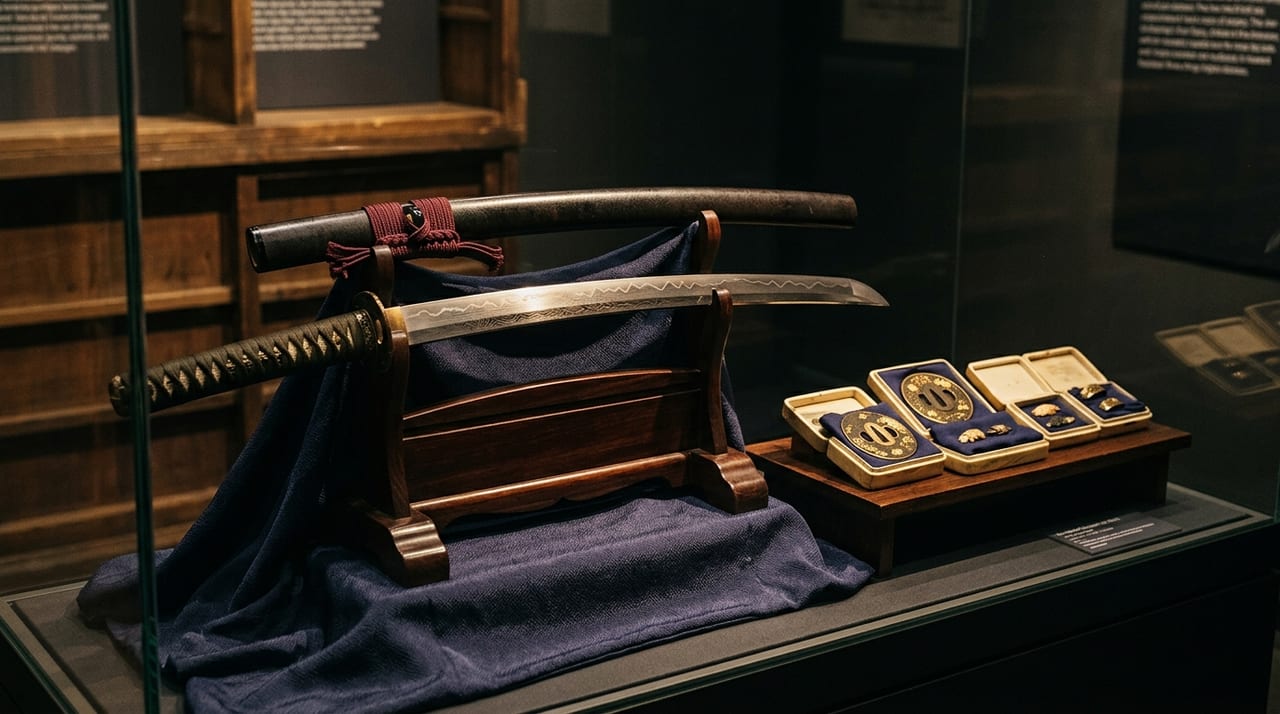 * Image is for illustrative purposes only.
Table of Contents
Why "Shukatsu" (End-of-Life Planning) Is Now Essential for Japanese Sword Collectors
Japanese sword collectors are aging rapidly. As the generation captivated by swords in the postwar period reaches their eighties, the question "what will happen to my swords after I'm gone" has emerged as a pressing theme within collector communities.
Unlike general antiques, Japanese swords are cultural properties managed in conjunction with the Certificate of Registration for Firearms, Swords, and Blades (Registration Certificate). Swords without a Registration Certificate risk becoming illegal possession under the Firearms and Sword Control Law. Situations of "long-term storage without use" or "being left as inherited items" can inadvertently expose heirs to legal risk.
Organizing Japanese swords in end-of-life planning is not simply disposing of possessions, but rather the safe inheritance of cultural property. Beginning preparation early is the collector's final responsibility.
Option ① Donation to Museums and Art Museums
One of the most honorable options is donation to public museums or specialized sword museums. Works designated as Important Swords or Important Art Objects may have inheritance tax valuations approaching zero, providing tax benefits in some cases.
Key Points for Selecting Donation Recipients
- Facilities specializing in swords (Japanese Sword Museum, Bizen Osafune Japanese Sword Museum, Tatsuno Historical and Cultural Materials Museum, etc.) are preferable
- General history museums have varying capacities for sword storage and management, so confirm their acceptance policy in advance
- It is ideal to confirm "guarantee of public display after donation" in writing
The donation process generally follows these steps. First, hold a preliminary meeting with the facility and send a list of works and copies of the Registration Certificate. Once acceptance is confirmed, execute a gift agreement and change the name on the Registration Certificate (filing with the Board of Education). After donation, you may be eligible for charitable donation deductions for specified public interest promotion organizations in your tax return.
Option ② Consignment Sale to Sword Dealers or Auction Houses
As a method of converting the collection into funds to leave to heirs, there is the option of consignment sale to sword dealers or offering items for auction.
Key Points for Consignment Sales
When consigning to a sword dealer, the commission is typically around 10–15% of the sale price. However, "outright purchase" and "consignment" are fundamentally different. Outright purchase offers immediate payment but tends to be lower than market price. Consignment can achieve market-price sales but takes time to complete. For pre-death organization, pursuing consignment sales over a span of several years is realistic.
Auction houses (Osaka Fine Art Club, Tokyo Fine Art Club, NBTHK Auction) can offer favorable prices for rare swords. However, several months are required from registration to sale.
Tax Treatment of Sale Proceeds
Sale proceeds from Japanese swords are taxed as "transfer income." If the acquisition cost is unknown, 5% of the sale price is calculated as the estimated acquisition cost (per the Special Taxation Measures Law). If held for over one year, a 500,000 yen special deduction applies as long-term transfer income.
Option ③ Lifetime Gifts or Inheritance to Family or Successors
When inheriting swords within the family, you must consider whether lifetime gifting or inheritance is more advantageous.
Points to Note on Lifetime Gifts
For lifetime gifts, it is important whether the value falls within the annual 1.1 million yen basic exemption. High-value named swords often exceed the basic exemption in a single piece, requiring gift tax reporting. Following 2024 tax reforms, a 1.1 million yen annual exemption was added to the Inheritance Time Average Tax System, making its use an alternative option.
Valuation Method at Inheritance
The standard for inheritance tax valuation of Japanese swords is "fair market value." Important swords with appraisals are valued based on market prices according to NBTHK (Japanese Art Sword Preservation Society) or Hon'ami family appraisals. If no appraisal exists, consulting a sword dealer or appraiser is necessary.
Even if the heir has no interest in swords, the name change on the Registration Certificate (filing based on inheritance) must be submitted to the Board of Education. Failing to complete this procedure risks the inherited sword being treated as unregistered.
Option ④ Loaning to Educational Institutions or Regional Cultural Activities
There is also the option of utilizing swords through "loaning" rather than permanent disposal. Long-term loans to university research labs, regional history preservation organizations, shrine cultural property departments, and similar institutions provide a way to honor the collector's wishes while contributing to society.
Ownership remains with the collector (or heir) during the loan period, providing flexibility to change policy as circumstances evolve. However, it is essential to clearly specify management responsibilities and procedures for theft or damage in the loan agreement.
Practical Checklist for Pre-Death Organization
Below is a summary of practical procedures for organizing sword collections as part of end-of-life planning.
Step 1: Create an Inventory
For all swords you own, create a list including: Registration Certificate number, sword type, swordsmith name, blade length, presence or absence of appraisal, and estimated market price.
Step 2: Verify Registration Certificates
Verify that the Registration Certificate matches the actual sword and that any address changes have been filed. Unfiled address changes represent missing filings with the prefectural Board of Education and can cause problems in subsequent name-change procedures.
Step 3: Consult with Professionals
Once your sword disposal plan is finalized, consult with a sword dealer, tax accountant, attorney (or notary). Explicitly stating in your will "the swords ○○ are donated to □□ Museum" can significantly reduce the burden on heirs.
Step 4: Communicate Your Intentions to Family
Clearly inform your family of the existence of your sword collection, its storage location, and where the Registration Certificates are kept. Especially important is making sure family members know the proper procedure if a sword is discovered without a Registration Certificate (contacting police or the Board of Education).
Summary: The Responsibility of Passing Japanese Sword Culture to the Next Generation
Japanese swords are not merely property. They are cultural heritage embodying Japanese forging techniques and aesthetic sensibilities, and their inheritance requires conscious action by the owner. Organizing swords as part of end-of-life planning is the collector's final, and most important, responsibility.
By consulting with professionals early, maintaining meticulous care of Registration Certificates, and providing accurate information to heirs or recipients—executing these three points alone can prevent most legal and financial problems surrounding Japanese swords.