Japanese Swords as Investment — Realities and Possibilities
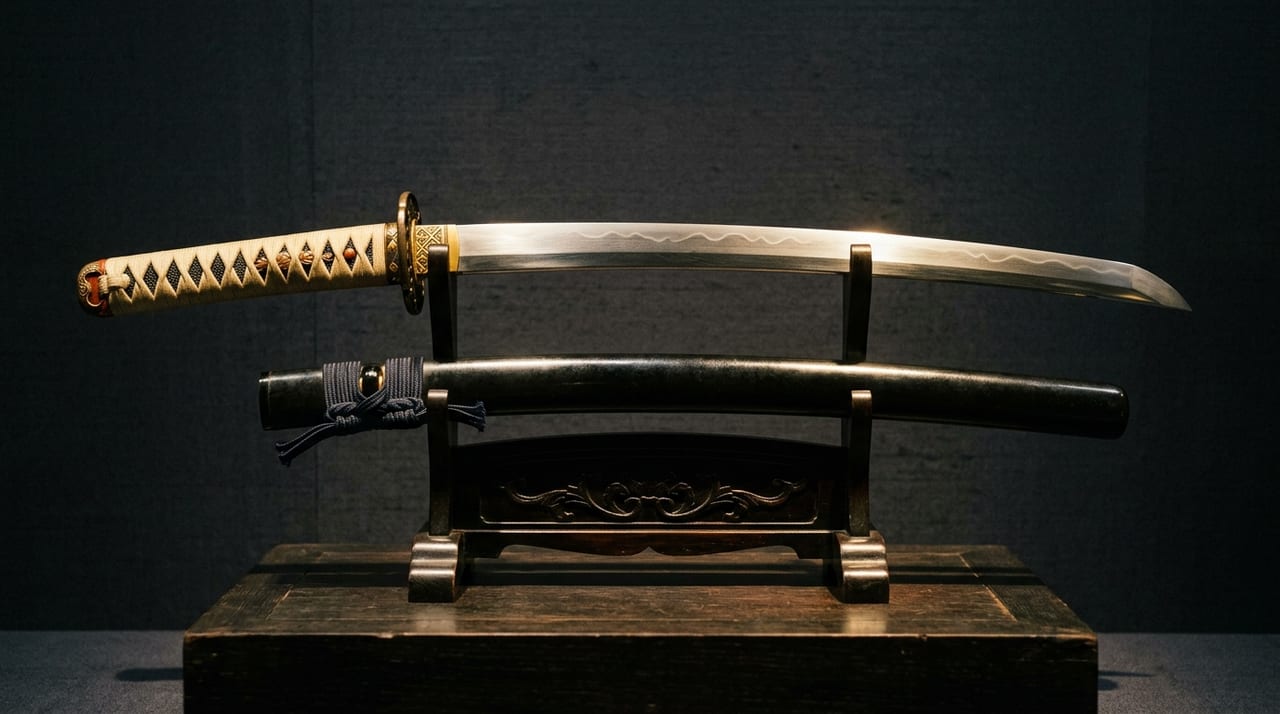 * Image is for illustrative purposes only.
Table of Contents
The Characteristics of Japanese Swords as Tangible Assets
Japanese swords are simultaneously works of art and possess unique aspects as tangible assets. Unlike stocks or bonds, they can be held as physical objects, and the ability to possess them while gaining aesthetic enjoyment is a major attraction of fine art investment. In the case of Japanese swords, their rarity, historical significance, and international recognition form the foundation supporting their asset value. In particular, important katana and higher classes with certificates of authenticity from NBTHK (the Society for the Preservation of Japanese Art Swords) have established clear markets supported by global demand, and the maintenance or appreciation of value can be expected through long-term ownership. However, it is important to correctly understand the risks and characteristics common to fine art investment in general before engaging in it.
The Expansion of International Market Demand and Price Trends
NBTHK important katana-class Japanese swords have steadily increased in value over the past 30 years. During the economic bubble period of the 1990s, domestic demand surged, and throughout the 2000s the market followed a relatively stable trajectory. However, since the 2010s, international collectors from Europe, the Middle East, and emerging Asian nations have made a serious entrance into the market, causing demand in the international market to expand rapidly. Combined with the yen depreciation trend, Japanese swords appear comparatively affordable to foreign buyers, and strong purchasing intent for high-quality katana continues. As a result, auction prices for important swords in international auctions have shown marked upward trends over the past decade.
Conditions for Appreciating Swords
There are several clear conditions for improving the asset value of Japanese swords. First, possessing certification as an NBTHK important sword or special important sword. Higher certification grades result in higher valuation in the international market. Second, being a mei-inscribed work by a renowned sword smith (a work of high authenticity where the smith inscribed his signature himself). Compared to mumei (unsigned) works, mei-inscribed pieces have higher certainty in appraisal and are easier to trace provenance, so they tend to have higher demand from collectors. Third, excellent preservation condition. Swords in good condition with minimal reduction from polishing and virtually no damage or rust command higher market valuations. Fourth, clarity of provenance (transmission history). Swords with recorded former owners or exhibition histories in renowned collections or museums receive an added provenance premium. The more of these conditions a sword meets, the more it tends to receive high evaluation in international competitive auctions.
Ongoing Costs Associated with Maintenance and Care
When holding a Japanese sword as a long-term asset, it is necessary to factor in ongoing operational costs in addition to the initial purchase price. Monthly maintenance tool expenses (uchiko powder, clove oil, polishing paper) are relatively modest, but requests for professional polishing by a sword polisher once every few years can amount to tens of thousands to hundreds of thousands of yen depending on the sword's condition. Establishing an appropriate storage environment (humidity and temperature control equipment, shirasaya, sword boxes) also requires initial investment. Furthermore, for high-value swords, obtaining moveable property insurance is important, and annual insurance premiums vary according to the sword's appraised value. Costs for updating and re-certification of authentication certificates and intermediary fees at time of sale should also be considered as long-term holding costs. Anticipating these hidden costs in advance and adding them to the purchase price to estimate total cost forms the foundation for realistic investment decisions.
Accurate Understanding of Investment Risks
Japanese sword investment carries risks common to other fine art investments. The greatest risk is low liquidity. Even after deciding to sell, it can take months to years to find a buyer at an appropriate price. The risk of false signatures (gisho) or later-added signatures (ato-mei—signatures incised later into the blade) cannot be eliminated, and verification by multiple trusted appraisers is essential. Market prices are sensitive to domestic and international economic trends, currency rate fluctuations, and changes in import regulations across countries, and can fluctuate significantly due to external factors. Additionally, swords with lower grades or in poor condition face limited market demand and can become difficult to distribute. The prerequisite for purchase with investment intent is that these risks be fully understood beforehand.
The Philosophy of Long-Term Collecting and Asset Building
Purchasing a Japanese sword purely for short-term investment purposes is not recommended. The most desirable stance is to regard deep understanding of and appreciation for the blade's beauty, historical significance, and the sword smith's craftsmanship as the primary motivation, while also expecting asset value maintenance and appreciation as a consequence. The essence of sword collecting lies in dialogue with cultural heritage that has endured for hundreds of years. By carefully selecting fine swords, managing them appropriately, and building long-term relationships with trustworthy experts, the Japanese sword becomes more than mere assets—it becomes "a treasure that enriches one's life." As time passes without rushing and one's discernment is cultivated, when encountering a sword one truly falls in love with, investment and passion become bound together in the same joy.
The Actual Sales Process and Exit Strategy
When considering future sale, it is also important to plan your exit strategy to some degree in advance. The main sales channels include direct sale to trusted sword dealers, listing with sword-specialized auctions (domestic and international), and transactions between individual collectors. While domestic auctions incur fees, they can be expected to reach appropriate buyer pools. Listing with overseas auctions requires obtaining export permits, but in a weak yen environment, high bids from foreign buyers can sometimes be expected. At the time of sale, possessing the most current authentication certificate tends to result in higher valuation. If significant time has passed since the certificate was issued, consider undergoing re-certification to obtain the latest valuation. Additionally, the more comprehensive the maintenance records and provenance documents during the holding period, the easier it becomes to gain buyer confidence, increasing the likelihood of concluding the sale under more favorable terms.