The Great Divide: Showa-To Industrial Swords vs. Traditional Nihonto and the Smiths Who Preserved Authentic Craft
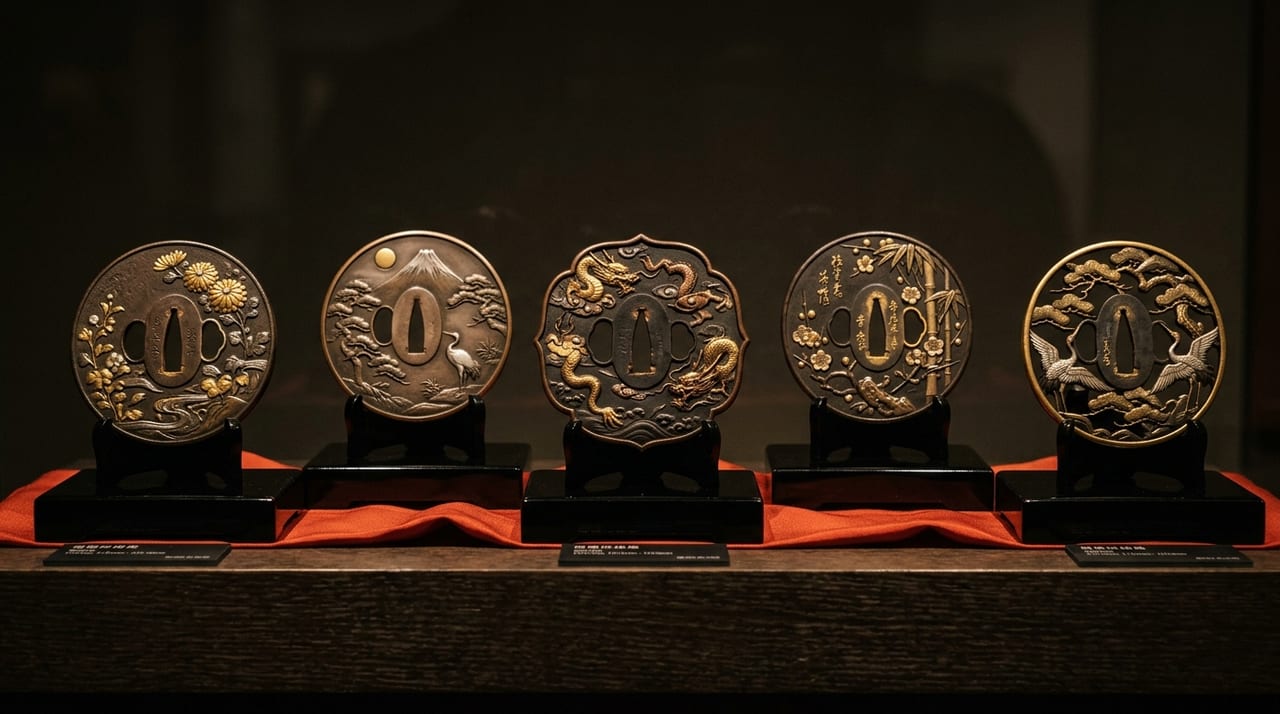 * Image is for illustrative purposes only.
Table of Contents
The Emergence of "Showa Swords"——The Wave of Industrialization Born from Military Demand
"Showa swords" is a collective term for swords with blades manufactured using mechanical and industrial methods during the Showa period (particularly around 1930-45). Strictly speaking, they refer to swords finished into blade form through cutting and grinding, rather than forging, using standardized industrial steel materials (artillery steel, spring steel, chrome steel, etc.) as raw materials instead of tamahagane or traditional Japanese steel.
The background to the mass distribution of Showa swords to the market lies in the enormous demand from the military. Following the outbreak of the Second Sino-Japanese War (1937), the demand for military swords far exceeded the traditional production capacity. While a skilled swordsmith required a minimum of several weeks to forge a single blade, as the war expanded, the mandatory issuance of swords to all officers meant demand swelled to tens of thousands of blades annually. To compensate for this extreme supply shortage, weapons factories in Osaka, Tokyo, Sendai, and elsewhere began industrial production of blades, and mass-produced military swords exemplified by the "Type 98 Military Sword" and "Type 3 Military Sword" were manufactured one after another. While their appearance imitated the form of Japanese swords, their manufacturing method and materials were entirely different from tradition.
Decisive Differences from Traditional Swords——Materials, Process, and Hamon
The differences between Showa swords and traditional Japanese swords are not merely matters of appearance.
| Perspective | Traditional Japanese Swords | Showa Swords |
|---|---|---|
| Materials | Tamahagane (Japanese steel from tatara iron-making). A unique steel material whose carbon has been uniformized through 1,500 to 3,000 iterations of folding and forging, with complex metal structure that cannot be replicated in industrial steel. The skin patterns of "jigane (ground steel)" born through the forging process——itame, mokume, masame, and others——represent the evidence that captivates the expert's eye | Industrial steel materials (artillery steel, spring steel, chrome steel, etc.). Carbon distribution, impurities, and microstructure are fundamentally different from tamahagane |
| Process | Multi-stage process: fire-forging → folding and forging → sword extension → finishing fire-forging → tsuchिoki (clay application) → quenching. Through "tsuchिoki" (clay application to achieve different quenching depths at the edge and spine), a hardness difference between edge and spine is created | After cutting from a mold, finishing is accomplished through uniform quenching and polishing only. Since tsuchिoki is omitted, no hardness difference between edge and spine is created |
| Hamon | The natural boundary line of metal structure that occurs through selective quenching by tsuchioki, with the swordsmith's individuality residing in the depth of the nioi-guchi and the grain formation of nie | Either lacks hamon entirely, or possesses only a "fabricated hamon" mimicked through polishing, which can be distinguished at a glance by experts |
Swordsmiths Who Continued to Guard Authenticity in the Age of Industrialization
Swordsmiths who maintained traditional forging techniques during the Showa period were forced to wage a solitary battle against the tide of mass production.
- Getsuyama Sadakazu (2nd generation) (1907-1995): Inheriting the Getsuyama school in Osaka, he maintained the traditional ayasugiha throughout the Showa period. Ayasugiha is a wavy, complex ground steel pattern known as a distinctive technique of the Getsuyama school. During the war, he was known for adhering to tamahagane and refusing to use industrial steel materials. In 1971, he was designated as a Preserver of Important Intangible Cultural Properties (Living National Treasure).
- Miyairi Yukihira (1913-1977): A swordsmith from Sakaki Town, Nagano Prefecture, who also devoted himself to reviving tatara iron-making technology. Even amid military sword demand, he maintained quality, and his work was praised as "a treasure of the contemporary sword world." He was designated a Living National Treasure in 1963 and passed away in 1977 fourteen years later. Successors including his student Miyairi Kozaemon Yukihira have carried on the technique.
- Sumitani Masamine (1921-1998): One of the representatives of the post-war Japanese sword world, he thoroughly researched and restored ancient transmission techniques. His blades frequently include works that revived the Bizen tradition of the Kamakura period to the present day, highly praised by sword researchers.
The existence of such swordsmiths became the technical foundation for the post-war revival of the Japanese sword.
The Rise and Organization of the Sword Preservation Movement
Sword enthusiasts and researchers concerned about quality deterioration began organizing preservation movements from during the wartime period. In 1941, the "Dainihon Tooken Hozonkai" (Greater Japan Sword Preservation Association) was established, promoting research, preservation, and appreciation activities of traditional swords. This later became the foundation for the Society for Preservation of Japanese Art Swords (NBTHK, established in 1948).
As of 2026, the NBTHK continues to function as the most authoritative organization responsible for sword certification, examination, and preservation activities. The certificates issued by the association include the following, which command high credibility in the international collector market and serve the role of officially distinguishing Showa swords:
- Exceptional Important Sword
- Important Sword
- Special Preservation Sword
- Preservation Sword
To secure tamahagane following the war, the Nihonto Hozon Tatara in Shimane Prefecture resumed operations in 1977. This established a system enabling contemporary swordsmiths to continuously procure authentic tamahagane, and the transmission of traditional techniques came to be supported as a matter of institutional policy.
Post-War Evaluation——The Resolution of the "Showa Sword Problem" and Contemporary Perspective
After the war, the Japanese sword world faced the difficult question of "how to treat Showa swords."
When the Firearms and Swords Control Law took effect in 1953, a registration system for Japanese swords was established. At this time, the treatment of "Showa swords" was debated, and ultimately the prototype of the current standard was established: "While eligible for registration certificates, they do not receive evaluation as art swords." While sword registration certificates target "blades with a cutting edge of 15 cm or more made by ancient Japanese methods or similar methods," in practice, many Showa swords have been registered, and their possession is legal.
In today's collector market, Showa swords do not possess evaluation as "cultural property of the Japanese sword." On the other hand, a persistent perspective recognizes them as possessing collector value from the standpoint of "remnants of Showa history" in terms of military and social history. Particularly Showa swords with famous smiths' signatures on officer blades or with complete officer fittings enjoy a certain popularity among military equipment collectors. The discerning eye that distinguishes between the two——the ability to read ground steel patterns, perceive the authenticity of hamon, judge the uniformity of quenching——is one of the core elements of a sword appraiser's expertise.
The Showa era, buffeted by the waves of industrialization, was the greatest trial for the Japanese sword. Yet that trial paradoxically highlighted the true value of swordsmiths devoted to preserving tradition, and laid the foundation for post-war cultural property protection systems and revival movements. The traditional Japanese swords that live in the present day of 2026 are, through overcoming that history of hardship, truly "a craft that survived."