Swords of the Sengoku Period — Battles and the Evolution of the Tōkō
 * Image is for illustrative purposes only.
Table of Contents
The Sengoku Period and the Age of Upheaval for Japanese Swords
The Sengoku period (1467–1615) was the most turbulent era in the history of the Japanese sword, yet it was also the time when the creativity of tōkō flourished most fully. During this period, large and small battles continued without pause across Japan, and tōkō were called upon to manufacture swords at an unprecedented scale. The sudden surge in demand brought the challenge of establishing mass-production systems; at the same time, outstanding master craftsmen emerged through competition, raising the technical standards of sword-making to new heights. This era, where practical use and artistic value intersected, continues to captivate many collectors to this day. As the authority of the Muromachi shogunate wavered, daimyo across the country sought to strengthen their military power by inviting or patronizing influential tōkō within their spheres of influence. Tōkō, in turn, sometimes relocated to the domains of powerful daimyo in search of more stable work and patronage, giving rise to exchanges of technique that transcended regional boundaries.
The Rise of Kazuuchimono and the Establishment of Mass Production
As battles grew more frequent, large numbers of swords were needed. Centered on Mino Province (present-day Gifu Prefecture) and Bizen Province (present-day Okayama Prefecture), quantity-produced goods known as "kazuuchimono" were manufactured in large numbers. Kazuuchimono prioritized cost and production efficiency over uniformity of quality, but for the soldiers of the day they were the lifeline on which their lives depended. Seki in Mino (present-day Seki City, Gifu Prefecture) flourished especially as a large-scale sword production center, with many tōkō gathering there to establish a division-of-labor system that kept pace with demand. The establishment of this mass-production system also became the foundation for sword distribution in the later Edo period. In terms of sword production centers, beyond Mino and Bizen there long existed the traditional sword-making lineages known as "Gokaden," which also included Yamashiro, Yamato, and Sagami (Sōshū); the tōkō of the Sengoku period also engaged in the production of kazuuchimono while inheriting the techniques of their respective schools. Securing tamahagane, the raw material for blades, and coordinating with craftsmen who handled exterior fittings such as saya and tsuka were also important elements supporting the mass-production system.
Masterworks Born from Commissioned Blades and the Pride of Master Tōkō
In contrast to kazuuchimono, swords made to order — chūmonuchi — commissioned by warriors and daimyo from specific tōkō are the crystallization of the finest techniques of the age. Chūmonuchi forged with care from select tamahagane both elevated the reputation of the tōkō and served as symbols of the patron's authority. Many of the Sengoku-period swords designated today as kokuhō or jūyō bunkazai are such commissioned works. Even in an age of mass production, master tōkō refused to compromise and continued to pour the best of their skills into chūmonuchi. Warriors used commissioned swords as rewards for retainers and as gifts to strengthen alliances with other houses, and swords thus carried political significance as well as being practical objects. When evaluating a commissioned sword, the following points are taken as guides.
- The presence or absence of mei, and the history and achievements of the tōkō
- The quality of the steel used and the care of the forging
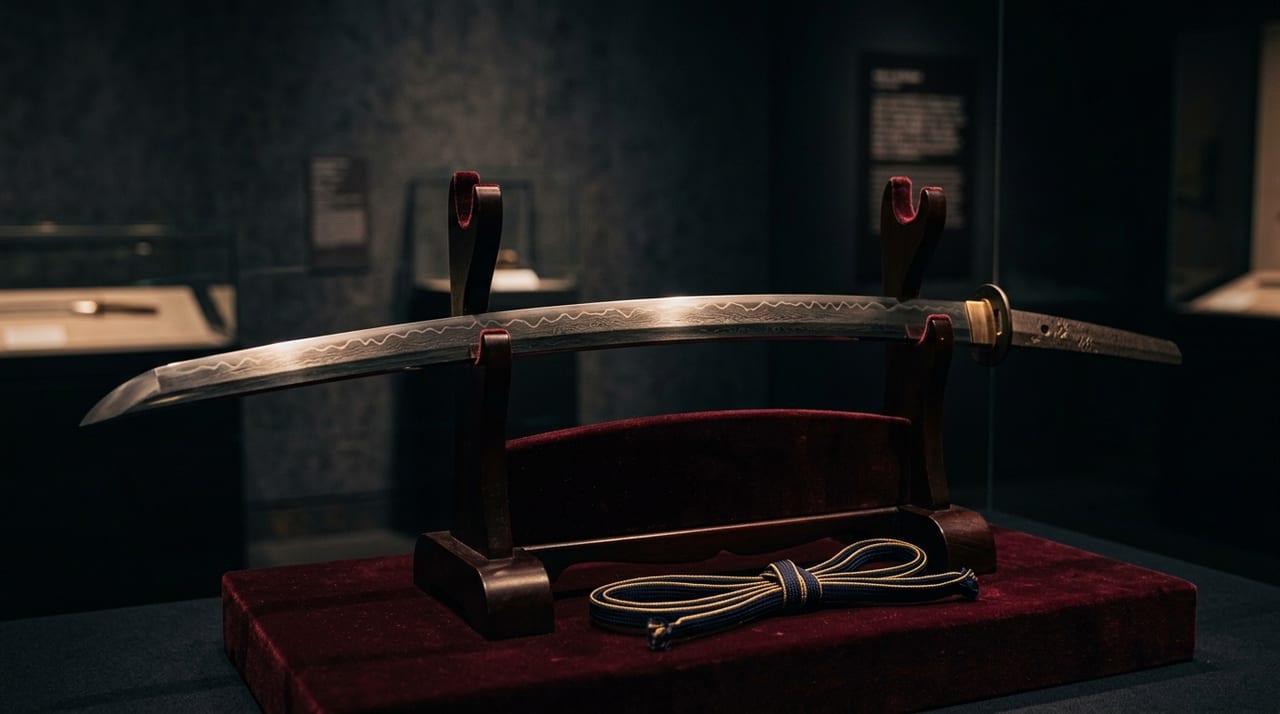
- The completeness of the sugata (shape) and hamon
- Consistency with koshirae added in later ages and the state of preservation
The Historic Shift from Tachi to Uchigatana
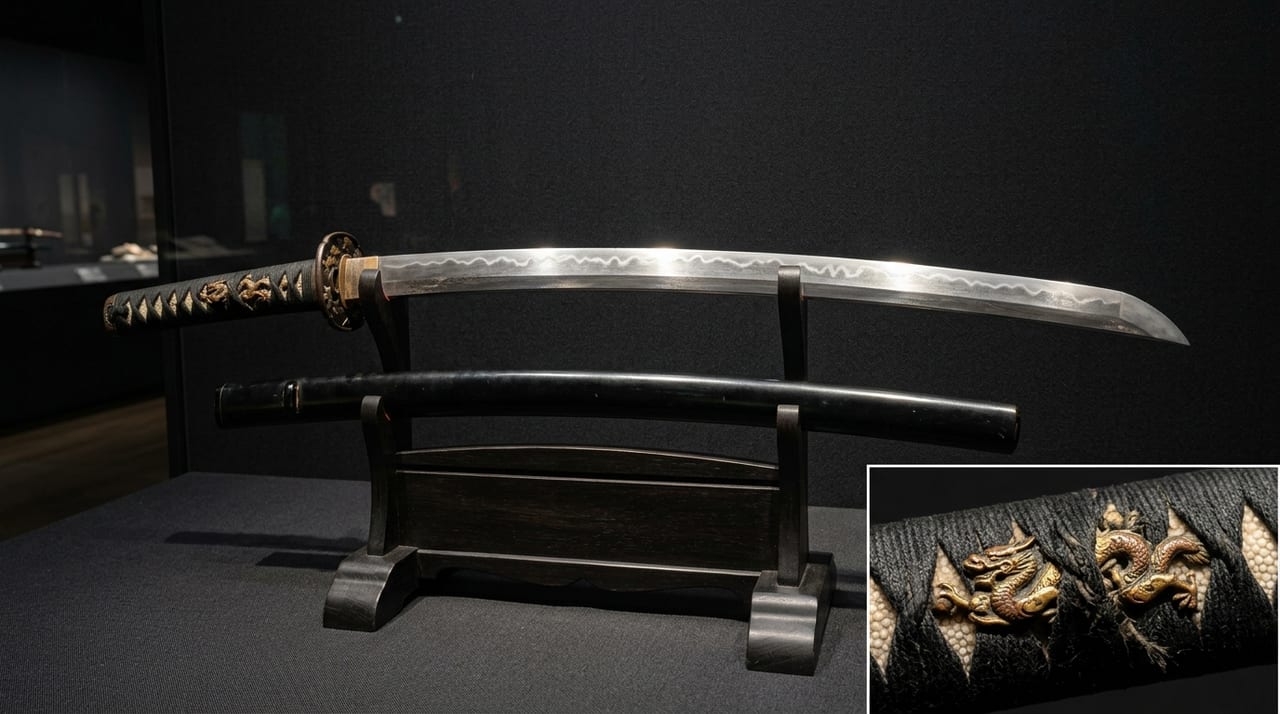
The Sengoku period also brought great changes to the way Japanese swords were carried. The tachi, which had continued since the Heian and Kamakura periods, was suspended at the hip with the blade facing downward; but with the increase in infantry combat and close-quarters fighting during the Sengoku period, the uchigatana, which could be drawn more quickly, became the mainstream. The uchigatana is thrust through the belt with the blade facing upward, greatly shortening the time from the draw to the first strike. This transition was a rationalization of the sword as a weapon, and also brought changes to the aesthetics of the Japanese sword; a cleaner form with less sori than the tachi became the preference of the age. Moreover, as the uchigatana spread, the custom of wearing a long sword and wakizashi together at the hip — "daishō" — also spread, becoming established as a form that expressed a warrior's status and refinement. These changes in the manner of carrying swords also influenced the styles of koshirae (mounting), and simple koshirae emphasizing functionality in actual combat came to be preferred.
The Role of the Sword in Actual Combat and the Reality of the Battlefield
Contrary to common perception, the primary weapons of the Sengoku period were the spear and bow and arrow. Swords came into their own mainly in close-quarters combat and in situations where spears were difficult to use amid the chaos of battle. In grappling with armored opponents, swords were used not only for cutting but also for thrusting and pinning, and they also served as a weapon of last resort. Chips, bends, and togi marks — "evidence of use" — are proof that a sword survived actual battlefields, and in modern appraisal they are sometimes noted from the perspective of historical evaluation. The gravitas unique to a sword that has seen actual combat holds a special appeal for many collectors.
Master Tōkō of the Sengoku Period and Their Legacy for Posterity
Master tōkō of the Sengoku period — such as Kanesada and Kanemoto (famous as "Magoroku Kanemoto") of Mino Province, and Tadamitsu of Bizen — continued to maintain high aesthetic standards while meeting the harsh demands of actual combat. The swords made by Kanemoto, known as "Seki no Magoroku," are known for their distinctive hamon called "sanbonsugi," and remain the aspiration of many enthusiasts today. The techniques of tōkō were in many cases handed down from parent to child and from master to apprentice through the generations, and it was not uncommon for a family's name to be passed on within the mei. The works left by these tōkō have been transmitted to the present day as works of art that transcend mere weapons, speaking to us today of the spirit and aesthetic sensibility of the Sengoku era.
Checkpoints When Selecting a Sengoku Sword
For those who have developed an interest in Sengoku-period swords and are considering actually handling one, we recommend checking the following points.
- Presence of a kanteisho: Confirm whether a kanteisho from an appraisal institution such as NBTHK is included, and whether it matches the blade.
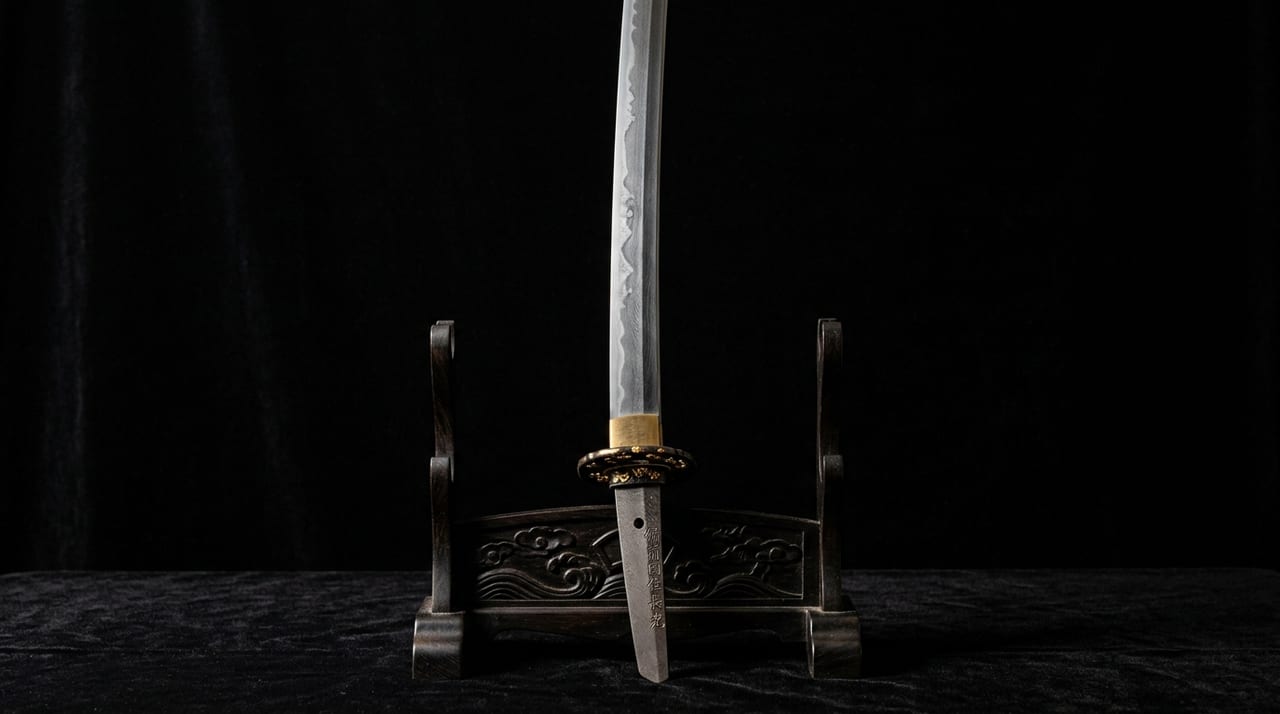
- Condition of the mei: If mei is present, check that there are no signs of wear or alteration, and that there is no inconsistency with the tōkō's lineage.
- State of preservation: Understanding conditions due to age — rust, chips, and bending — makes it easier to plan subsequent maintenance.
- Presence of koshirae: Understanding whether the koshirae accompanying the blade is a later addition or from a different period makes it easier to evaluate the piece as a whole.
- Provenance (denrai): If there are materials that document the history of ownership and provenance, checking these as well will give you peace of mind.
The Modern Appeal and Market Value of Sengoku Swords
Swords of the Sengoku period hold a unique appeal in their "fusion of utility and beauty." Designs that prioritize functionality and durability over ornate decoration are loved by many collectors, and because the price range is wide, this is a field that can be enjoyed by everyone from beginners to advanced collectors. Zaimei commissioned works in particular have high rarity value and tend to have high collection value as well. TOUKENZA offers accessible introductions to the appeal of Sengoku swords, and those with an interest are welcome to contact us. By holding one sword in your hands, you can feel close to the breath of the warriors who lived through that turbulent age.