Nodachi and Ōdachi: The Art, Warfare, and Sacred Legacy of Japan's Giant Swords
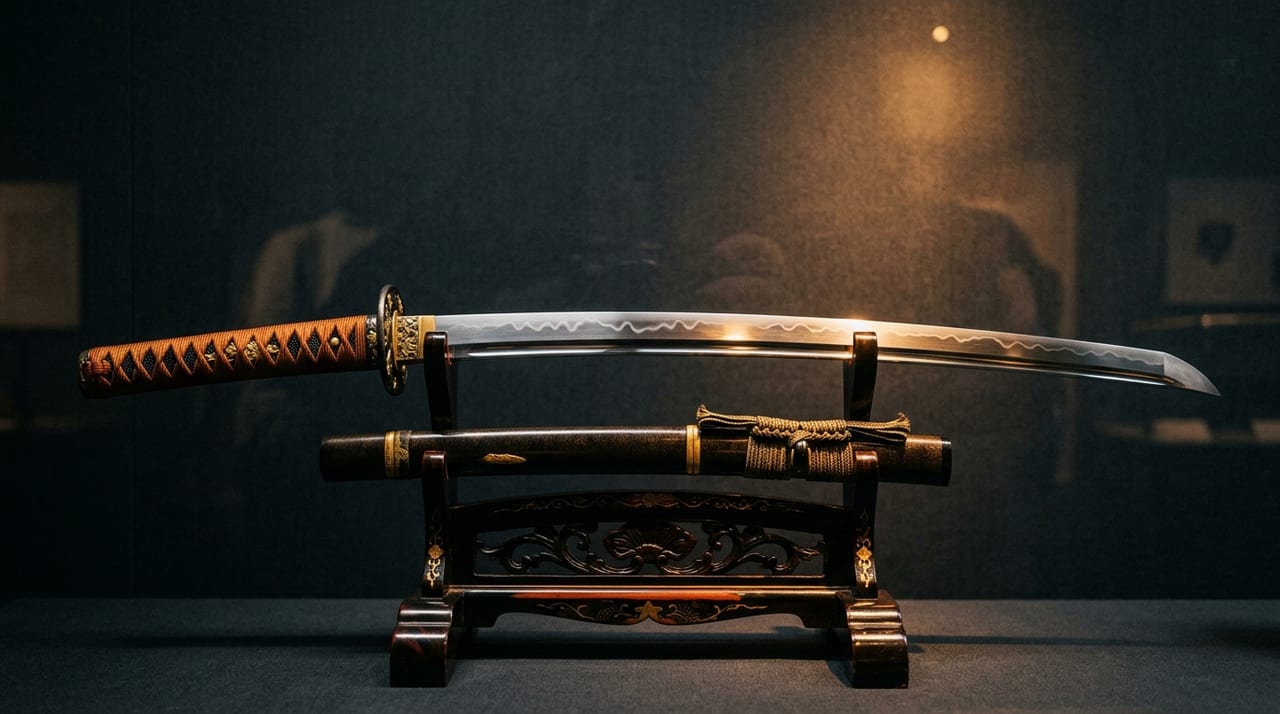 * Image is for illustrative purposes only.
Table of Contents
Definition and Historical Background of Nodachi and Ōdachi
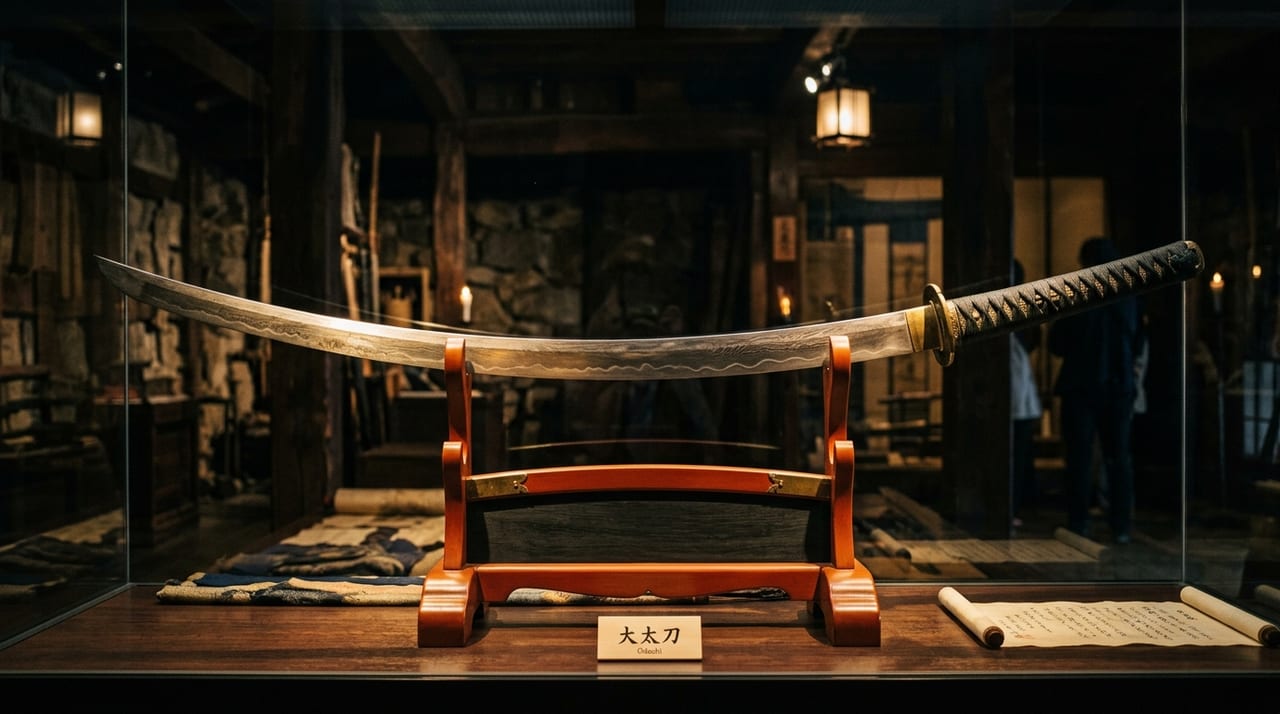
In the classification of Japanese swords, those with a blade length exceeding three shaku (approximately 90.9 cm) are generally called "ōdachi" (大太刀). "Nodachi" (野太刀) is often used with nearly the same meaning, but originally it was a practical term referring to large swords used in battle (野) fields. Among the largest extant examples, works with blade lengths exceeding 150 cm are known, and these stand out in Japanese sword history in both manufacturing difficulty and visual impact.
The production of ōdachi reached its peak during the Nanboku-chō period (1336–1392). During this era, the conflict between the Southern and Northern courts prolonged, and large-scale warfare unfolded nationwide. Amid large-scale coordinated battles by mounted warriors, long swords powerful enough to sweep the legs of horses or overwhelm groups of infantry were in demand. The use of "nodachi" is explicitly mentioned in the Taiheiki, a military chronicle depicting the Nanboku-chō civil war, confirming their actual existence in the warrior society of the time.
Manufacturing Technique Uniqueness—The Difficulty of Forging Long Blades
Compared to ordinary tachi and uchigata, ōdachi production requires significantly higher technical skill. The greatest challenge is the quenching process. The longer the blade, the more likely uneven thermal stress develops during rapid water cooling, dramatically increasing the risk of the blade cracking or warping (sori). If quenching fails even once, weeks of forging work are wasted.
Sword-smith groups from Bizen Province (present-day eastern Okayama Prefecture), particularly the Osafune school (長船派), were renowned for ōdachi production from the late Kamakura through the Nanboku-chō periods. The ōdachi crafted by master smiths such as Osafune Nagamitsu and Kanemitsu required even more refined jihada and hamon than ordinary works. The Shōmei lineage of the Sōshū tradition (Sagami Province, present-day Kanagawa Prefecture) also produced ōdachi with bold hamon.
Forging requires using 2–3 times the amount of tamahagane as normal swords, and the folding and hammering process becomes significantly longer. Even after completion, skilled polishing expertise is essential to uniformly polish such long blades.
Battlefield Deployment—The Giant Sword Confronting Mounted Warriors
Ōdachi and nodachi were most effective in anti-cavalry combat on open plains with few obstacles. Unlike ordinary tachi, ōdachi with their long blades could not be worn in the belt and were carried by two main methods.
- "Seoi" (背負い): carrying the sheath on the back
- Having an attendant carry it: receiving it on the battlefield
In use, gripping the hilt with both hands and performing wide sweeping motions was the basic technique. Such sweeping strikes were effective for targeting the legs of horses or subduing multiple infantrymen simultaneously. However, due to its weight and length, there was a large gap in defense after a missed strike, making it extremely difficult to handle in confined terrain or castle warfare. Furthermore, since it required exceptional physical strength, its users were necessarily limited to select elite warriors.
After the Nanboku-chō period, as warfare shifted to ashigaru (conscript infantry) mass tactics, the battlefield effectiveness of ōdachi declined. From the Azuchi-Momoyama through early Edo periods, many ōdachi were shortened by a process called "suriage" and reforged into more practical uchigata or wakizashi.
Dedicated Ōdachi—The Memory of Giant Swords Sleeping in Shrines
Many ōdachi that became difficult to use in battle were preserved for later generations through dedication to shrines and temples. While the custom of military leaders dedicating swords for victory prayers and long martial fortune dates to the Heian period, dedication of ōdachi became particularly active during the Nanboku-chō and Muromachi periods.
The Ōyamaduimi Shrine (大山祇神社) in Imabari, Ehime Prefecture is known for housing one of Japan's largest sword collections. The shrine's collection of dedicated swords includes numerous works from the late Heian through Muromachi periods, preserving valuable extant examples of ōdachi to the present day. Kasuga Taisha in Nara has also received numerous sword dedications from military and court nobility throughout history, and houses multiple tachi and ōdachi designated as National Treasures and Important Cultural Properties.
Among ōdachi specially manufactured for dedication, many were created without any consideration for actual combat use, pursuing instead aesthetic and religious perfection as offerings to the divine. Such works are highly valued as demonstrations of the sword smith's technical mastery and serve as indispensable historical records of Japanese sword craftsmanship.
Warlords and Schools Who Wielded Nodachi
Warlords noted as users of ōdachi and nodachi are particularly numerous during the Nanboku-chō and Sengoku periods. The Kusunoki forces led by Kusunoki Masashige (?–1336) are known for diverse unconventional tactics and are said to have flexibly deployed various weapons including ōdachi.
In terms of sword schools, the Shinkage-ryū founded by Kamiizumi Ise-no-kami Nobutsuна (1508?–1577?) had a training system accounting for various blade lengths and included techniques applicable to nodachi. The Nodachi Jigen-ryū, also known as Yakumaru-ryū, which developed in Satsuma domain, embodies a philosophy that maximizes the characteristics of ōdachi as a sword method centered on nodachi. The Jigen-ryū proper is a sword method premised on ordinary swords, with Yakumaru-ryū being the direct connection to nodachi. Independent schools of nodachi technique existed, but many declined as opportunities for actual combat diminished during the Edo period, and many have not transmitted their technical details adequately.
Historical Significance of Ōdachi and Legacy to the Modern Era
Nodachi and ōdachi are symbolic of "challenges to the limit" in Japanese sword history. Their production embodies the challenge to sword smiths' technical limits, and their battlefield use required exceptional physical ability and courage. In the modern era, through research and exhibition activities by organizations such as the NBTHK, the history and cultural value of these giant swords continue to be widely disseminated. The spirituality and technical skill of medieval Japanese embodied in these massive blades pose to the modern world questions about the depth and complexity inherent in the culture of the warrior.