Japanese Sword Valuation Guide: 7 Key Factors That Determine Your Sword's Selling Price
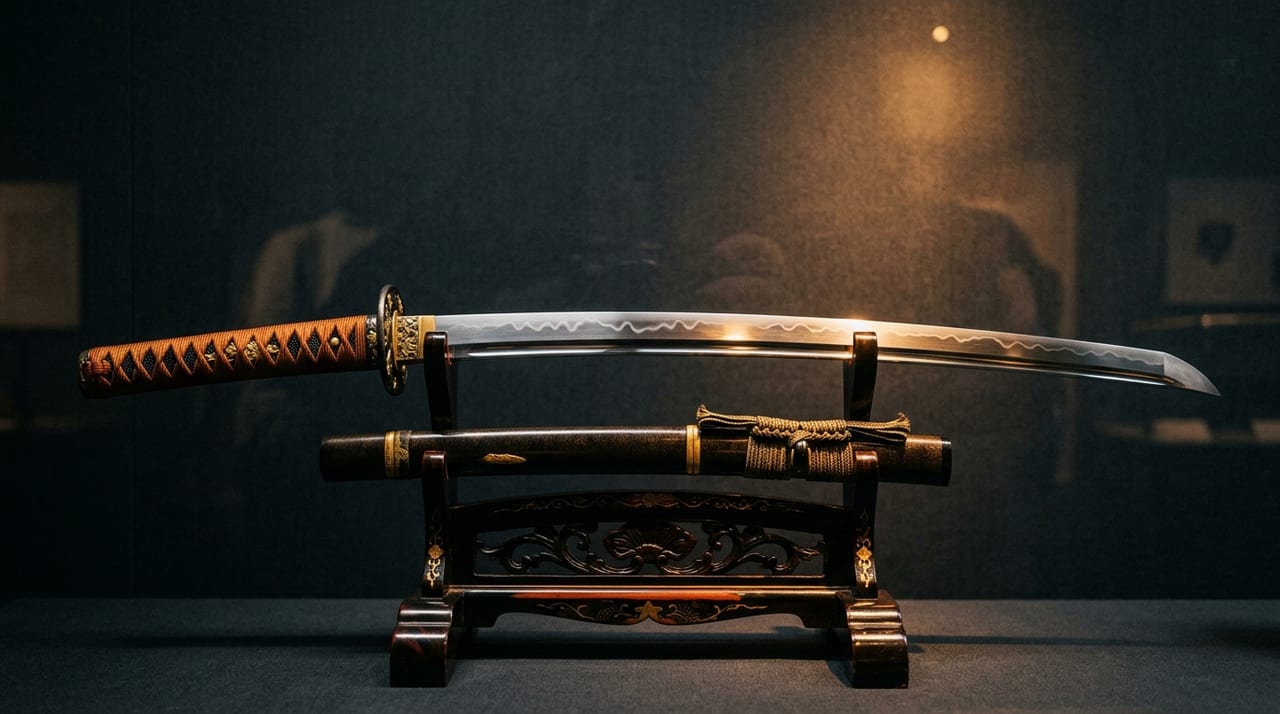 * Image is for illustrative purposes only.
Table of Contents
Why Does the Appraisal Price Differ Depending on the Sword Dealer?
Even for the same sword, appraisers may offer significantly different purchase prices. This is because the "buying price" varies depending on the dealer's inventory situation, sales ability, and expertise. However, at the root of price differences lies the "valuation standard" that appraisers use to assess value. By understanding this standard, the accuracy of judgment when requesting appraisals from multiple dealers improves, and it becomes possible to avoid selling at unfairly low prices.
For those requesting appraisal, what matters more than the stated amount itself is understanding the reasoning behind "why that amount was offered." Even when the same sword is shown to multiple dealers, the final quoted price will vary depending on which of the following criteria receive emphasis. Below, we examine each of these criteria and organize the points to check before sale.
Appraisal Factor 1: Certification Document Grade
The certification grade from the Japan Art Sword Preservation Society (NBTHK) is the most critical factor directly reflected in price.
Impact by grade on appraisal:
- Especially Important Cultural Sword (Tokuju): Appraisal amount rises significantly. The zone where transactions exceed 10 million yen occur
- Important Cultural Sword: Standard high-price range of 3 to 20 million yen
- Especially Preservation Sword: The main market range of 1 to 5 million yen
- Preservation Sword: Entry to mid-level range of 200,000 to 1 million yen
- Without certification: Market evaluation is uncertain. Specialist dealers conduct independent assessment
Even without a certification document, the value may be clarified by undergoing "Honami appraisal" by a sword dealer or "appraisal request to the Public Interest Incorporated Foundation Japan Art Sword Preservation Society."
Certification documents record findings regarding the blade's shape, signature, dimensions, and other details. At appraisal, the contents of this documentation are cross-referenced with the actual blade. If the certification has been lost or the blade's condition has changed since certification was issued due to resharpening, re-certification may be recommended. It is advisable to confirm both the certification and blade together before appraisal.
Appraisal Factor 2: Sword Smith Evaluation and "Jobhin" Rank
Sword smith evaluation is referenced through the traditional "jobhin ranking" dating from the Edo period. There are four levels: Saikoku Daigyo-mono, Daigyo-mono, Ryo-gyo-mono, and Gyo-mono. Confirmed works by sword smiths designated as Saikoku Daigyo-mono (such as Nagasone Kotetsu, Osafune Kanmitsu, Hidemitsu) command substantial premiums.
Additionally, works by Cultural Property protection holders designated by the Agency for Cultural Affairs (living national treasures) receive particularly high evaluation in contemporary swords.
Even if a signature (mei) is carved, this alone does not serve as proof for identifying the sword smith. It is well known that a certain number of forged signatures imitating famous sword smiths exist among transmitted pieces, and the authenticity of the signature itself becomes the subject of appraisal. Therefore, "having a signature" and "having a sword smith confirmed with a certification document" must be considered separately.
Appraisal Factor 3: Condition
Condition is an important factor that can influence appraisal value by 30 to 50 percent.
Conditions leading to negative appraisal:
- Blade chips (edge breaks)
- Whiteness (hakuke) (indistinct blade pattern)
- Scratches (cracks, fissures and other structural issues)
- Rust (ranging from minor to severe depending on degree)
- Re-tempering (traces of re-hardening)
Conditions leading to positive appraisal:
- Beautiful polishing finish
- Vivid blade pattern
- Clear skin texture (jihada) of the steel
Swords in condition requiring resharpening may be quoted at a price reduced by the cost of polishing (several hundred thousand to over one million yen).
It is advisable to avoid removing rust by yourself or reapplying oil before appraisal. Improper maintenance can damage the blade or obscure the steel skin and blade pattern, which are subjects of appraisal evaluation. It is best to have a specialist confirm at the time of appraisal whether maintenance is necessary.
Appraisal Factor 4: Presence and Quality of Koshirae (Fittings)
Shirasaya only (naked blade): Evaluated by blade value alone Complete koshirae: If the scabbard, handle, and metal fittings (tsuba, seppa, kashira, menuki) are all present, added value equivalent to 30 to 100 percent of the blade price may be generated Grade of koshirae: When metal fittings by renowned metalworkers (Goto family works, Shoami works, etc.) are included, the koshirae alone may become the subject of high-value appraisal
Even if some parts of the koshirae are missing, remaining components (tsuba, menuki, kozuka, etc.) should be stored together. When components become separated, information about provenance and assembly is lost, and value that should have been recognized as a complete set becomes compromised.
Appraisal Factor 5: Provenance
When origin from former daimyo families, former imperial families, or renowned collections can be proven, market evaluation rises. Concrete evidence includes "catalogs," "historical documents," "photographic records," and "auction winning records." Price differences of 10 to 50 percent can occur between swords with unclear provenance and those with documented provenance.
Materials showing provenance are often stored separately from the sword itself. When considering sale, it is advisable to preserve papers accompanying the sword—such as purchase documents or explanatory notes from inheritance—and bring them together to appraisal. Provenance passed down only through oral family tradition is weaker in supporting appraisal evaluation compared to documented records.
Appraisal Factor 6: Market Trends (Timing)
The Japanese sword market tends to peak around the times of major international art auctions (Bonhams twice yearly, Christie's, etc.). Additionally, in periods of yen weakness, foreign collectors' purchasing power increases, and the overall market price level tends to rise. The yen weakness environment from 2024 to 2026 particularly drove up prices for high-value export swords.
It is difficult for individuals to accurately assess market trends and select the optimal time to sell. Rather than judging the overall market level from a single dealer's quote, obtaining and comparing estimates from multiple dealers is a more practical approach than attempting to time the market.
Appraisal Factor 7: Appraiser Expertise and Sales Ability
For the same sword, specialty dealers focused on a particular category (old swords, contemporary swords, koshirae, etc.) and general dealers may offer different appraisal amounts. Additionally, dealers with stronger sales ability (possessing channels to sell inventory quickly) can offer higher purchase prices.
Recommended appraisal approach:
- First request estimates from multiple sword dealers (2-3 companies)
- If there is no NBTHK certification document, consider having appraisal done first
- If there is no urgency to sell, consider auction listing as an option
- Trust dealers who can explain the reasoning behind their quotes (why that price)
- In addition to the quoted appraisal amount, also confirm payment method and time to payment
- Even if pressed for an immediate decision, take time to reconsider if necessary
Appraisal is merely "evaluation at that point in time by that dealer" and is not an absolute, sole price. By comparing multiple perspectives and proceeding with a dealer who provides explanations you find satisfactory, the result will be a fair sale.