Nihonto Price Trends 2026: How Yen Depreciation, Global Demand, and Certification Are Reshaping the Market
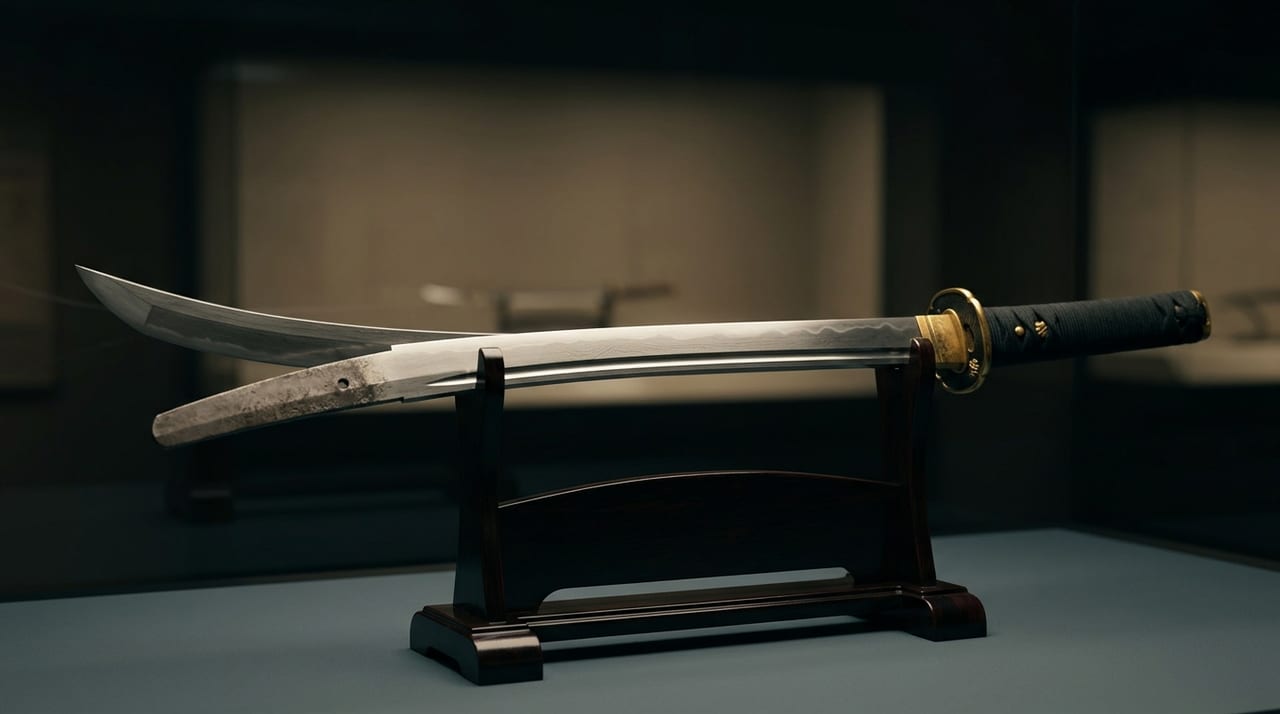 * Image is for illustrative purposes only.
Table of Contents
How Yen Weakness Changed the Japanese Sword Market Structure
The weakening of the yen from 2024 to 2026 brought dramatic changes to the Japanese sword market. As the purchasing power of the yen declined relative to the US dollar, euro, and Taiwan dollar, Japanese swords came to be viewed by overseas collectors as "undervalued cultural asset investments." Foreign demand, which was once limited to a small segment of the wealthy, has now grown to exert influence over price formation in the market itself.
Interviews with major domestic auction houses and long-established sword dealers reveal consistent testimony that "inquiries from foreign buyers have increased 2–3 times compared to 2–3 years ago." Demand is particularly pronounced from Chinese character cultural spheres such as Taiwan, Hong Kong, and Singapore, as well as from Japanese culture enthusiasts in Europe and North America. Cross-border transactions through online platforms have become increasingly active, and mid-tier swords (in the 5–30 million yen range), which were traditionally assumed to circulate domestically, now increasingly face competitive bidding from overseas buyers.
However, the benefits of yen weakness extend not only to "sellers." For domestic collectors purchasing in yen, intensified competition with foreign bidders has triggered price increases, and particularly for top-tier master blades, there are reports that final prices have risen by a perceptible margin.
Price Trends by Category
Old Swords (–1596)
Old swords centered on tachi and uchigatana from the Kamakura and Muromachi periods maintain strong prices, but only those accompanied by NBTHK "Important Sword" certification or higher. Particularly fierce domestic and international competition surrounds master blades in the Bizen tradition (Osafune and Yoshii schools) and Soshu tradition (around Masamune and Sadatoshi), with final prices of 50 million yen to tens of millions of yen not uncommon. At major auctions in 2025, cases have been reported where late Heian period tachi exceeded 100 million yen with certification, indicating that prices at the highest tier move in an entirely different dimension.
Meanwhile, old swords without certification are often avoided due to authenticity risk, and price polarization is evident. Unsigned blades and those with questionable attribution often trade at 30–40% of historical levels, and an attitude of "we do not buy uncertified old swords" is becoming established, particularly among overseas buyers.
New and Newer Swords (1596–1876)
New and newer swords from the Edo period maintain steady demand as "symbols of samurai culture." Confirmed authentic works by renowned smiths (Nagasone Kotetsu, Suishinshi Masahide, Katayama Munetsugi, and others) command strong prices, while unsigned or questionable works continue to show weakness. Tenpō Fukko ("Tenpō Revival") swords from the newer sword period often display clear ji-hada and hamon and good polishing conditions, attracting persistent interest from mid-tier collectors. The 10–30 million yen zone offers relatively high liquidity and favorable conditions for transaction completion.
Modern Swords (1953–)
Modern swords maintain demand from iaijutsu and martial arts practitioners as "usable Japanese swords," while their evaluation as crafts and fine art has also increased. Works by Living National Treasure smiths (Nisei Getsuyama Teichi, Osumi Shunpei, and others) command prices of several million to over ten million yen. Works by promising young smiths typically range from 5–15 million yen, with increased purchasing motivated by growth potential. Works by smiths holding unexamined and special honorific qualifications are particularly attracting attention as "advance investments" betting on price appreciation in coming years.
The Price Premium Generated by NBTHK Certification
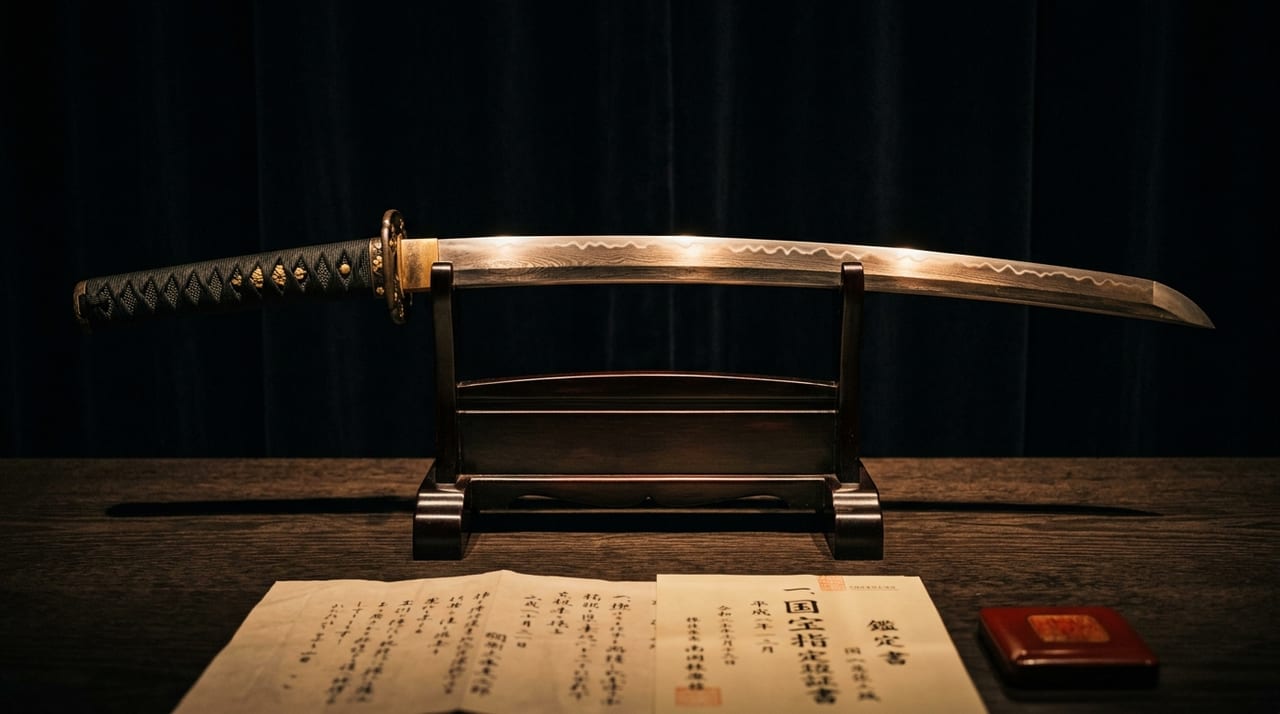
The certification document from the Japan Sword and Art Sword Association (NBTHK) is the most critical document with direct impact on market prices. As of 2026, its influence on pricing has only strengthened.
- Special Important Sword: price premiums of 300–500% or more compared to uncertified equivalents are not uncommon
- Important Sword: 150–300% premium compared to uncertified equivalents
- Special Preservation Sword / Preservation Sword: approximately 10–50% premium, with major benefits to liquidity enhancement
Overseas buyers particularly prioritize certification status, and in some markets, being "NBTHK certified" is becoming a prerequisite for transaction itself. Additionally, cultural agency registration certificates (art registration under the Swords and Firearms Control Law) function as evidence of authenticity in overseas export procedures, so swords with a complete set of provenance documents demonstrate substantially different market circulation characteristics.
The number of NBTHK certification applications has shown an upward trend in recent years, and efforts to channel previously uncertified storage releases through official channels are becoming active. A "storage release rush" of swords that have lain dormant following inheritance or house renovation is expected to continue at increasing pace.
Japanese Swords as Investment—Conditions and Limitations
The answer to the question "Can a Japanese sword be an asset?" is "yes, conditionally."
Price appreciation can be expected only when the following conditions converge. First, the blade must be a confirmed authentic work by a renowned master or famous school. Second, it must be accompanied by NBTHK Important Sword certification or higher. Third, superior polishing condition and mounting must be present. Fourth, provenance must be clear with documentation preserved—only when all these conditions align is a sword evaluated as having "asset value."
Conversely, swords without certification, with unknown provenance, or with damaged polish have low liquidity and often face difficulties in resale. Polishing alone costs 1–3 million yen or more, making post-purchase cost calculation essential. Additionally, storage environment (humidity and temperature control) and regular maintenance cannot be neglected without sacrificing value. One should recognize that sword maintenance is an investment with "holding costs."
Future Market Outlook—Changes Brought by AI and Transparency
As long as yen weakness persists, price support from foreign demand is expected to continue for the time being. However, if domestic collection liquidation sales increase due to aging demographics, there is a risk of oversupply. Large-scale releases concentrated in specific periods due to inheritance may not be ruled out, raising the possibility of temporary softening in mid- and lower-tier prices.
What deserves attention in the medium to long term is the popularization of AI-assisted authentication support technology. Video analysis of sword blades and machine-learning-based hamon pattern screening for authenticity have already begun pilot implementation. If this becomes practical, authenticity risk for uncertified swords would be reduced, potentially increasing the liquidity of mid-tier blades that have previously been excluded from the market.
Additionally, some sword dealers are considering adoption of blockchain-based provenance management, and a future in which an unalterable ownership history record functions as a "digital certification document" is becoming increasingly realistic. Should such technological innovation enhance market transparency and broaden the base of new entrants, the Japanese sword market may maintain positive price trends over the medium to long term.
The value of a sword is supported not only by the beauty born from steel and flame, but also by the "value of documentation"—records, trust, and transparency. The 2026 market stands at precisely the turning point where both of these wheels are being tested.