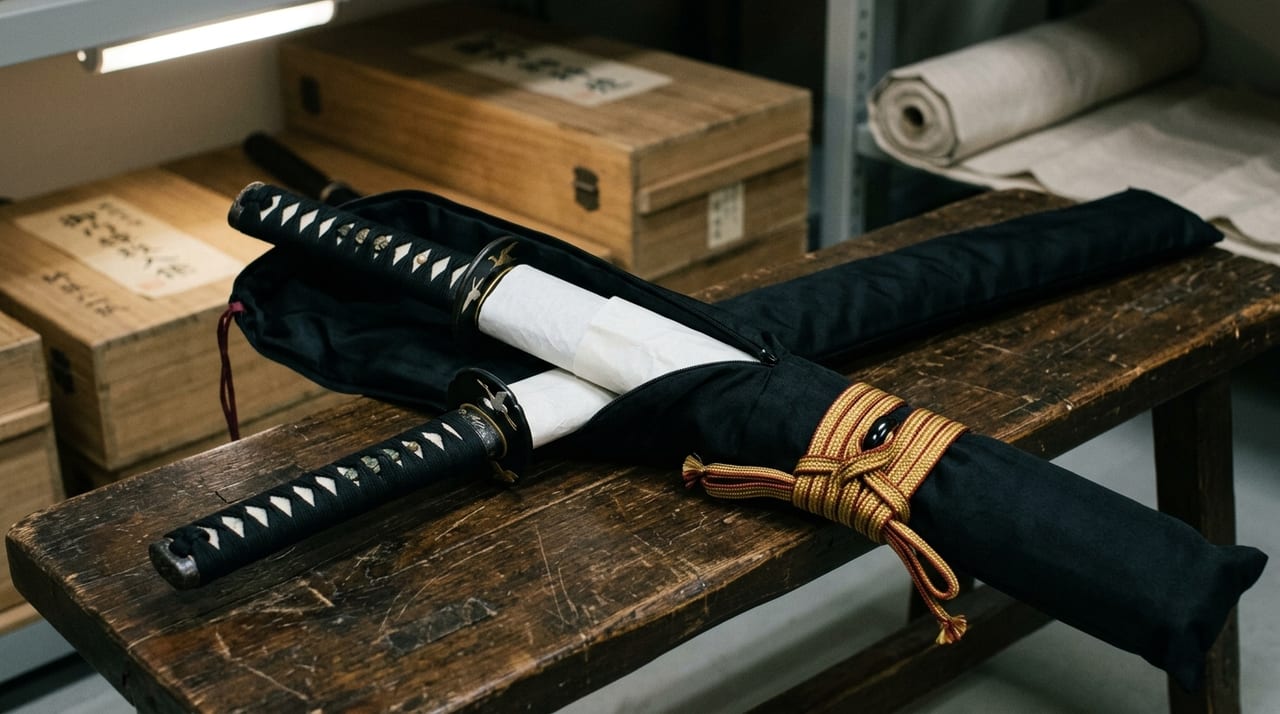
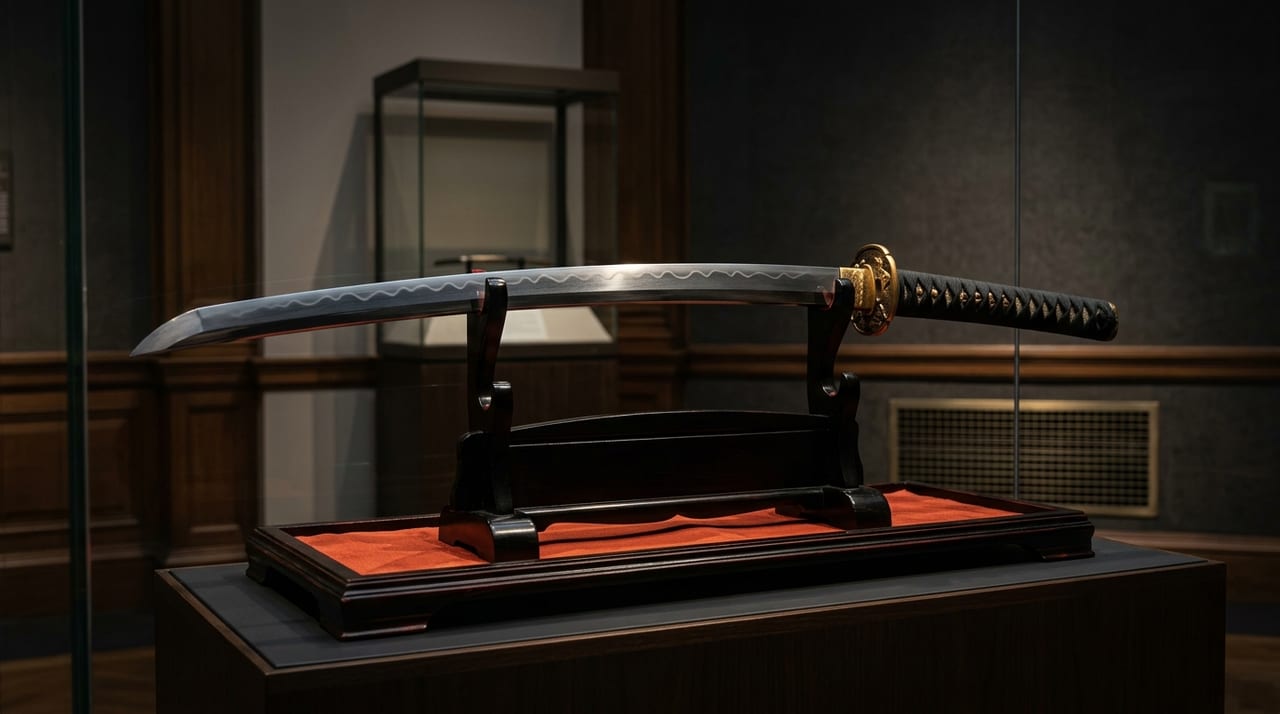
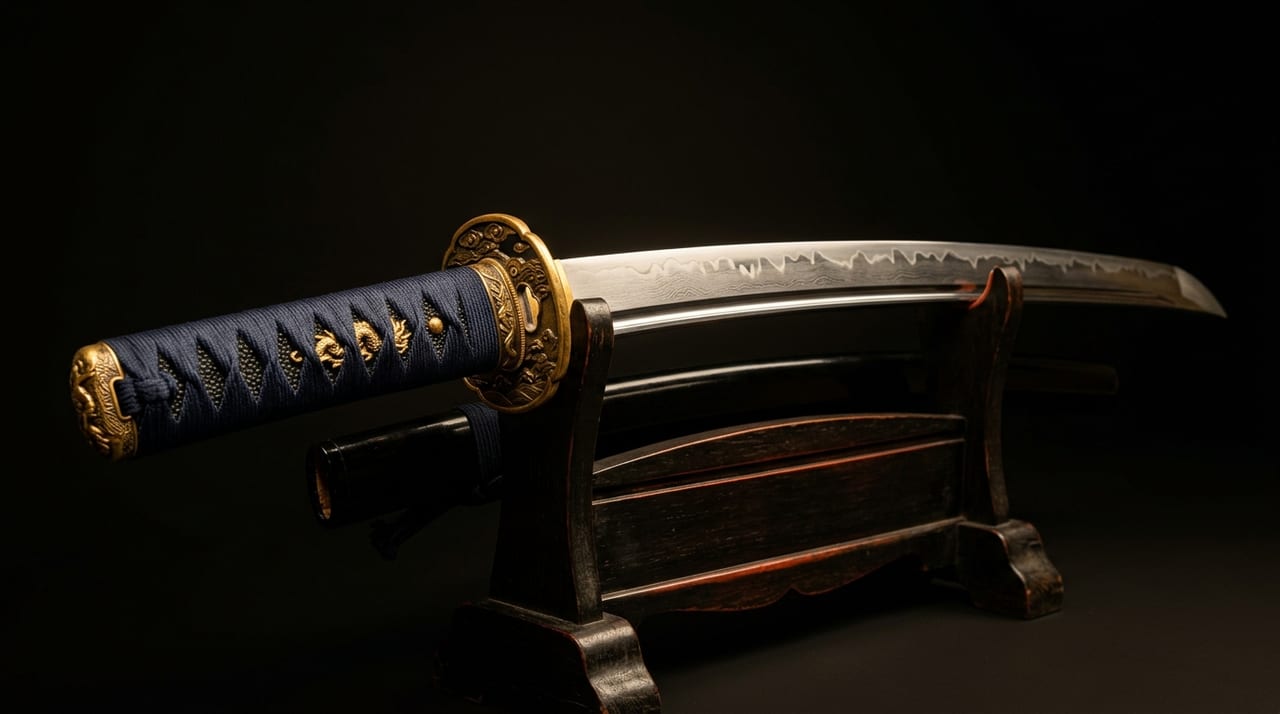
Nihontō Repair and Restoration Coordination Business — A Complete Guide to the Costs and Process of Togi, Saya Repair, and Metalwork Repair
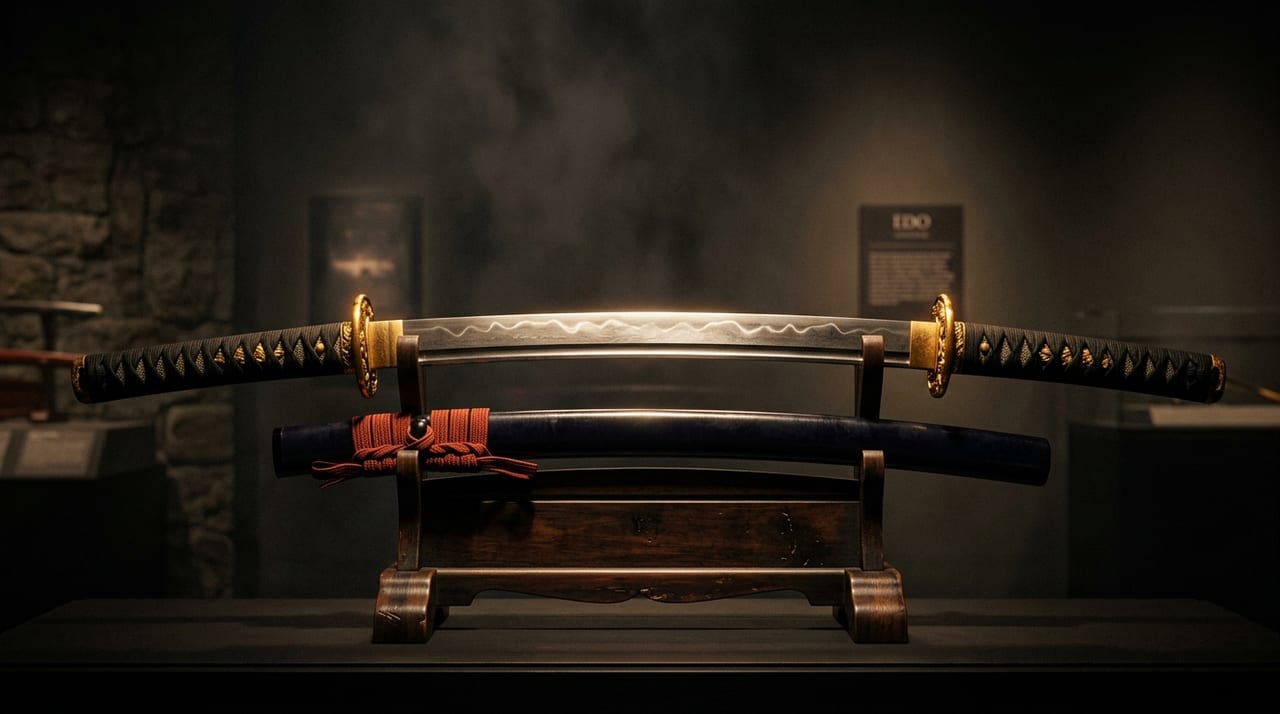 * Image is for illustrative purposes only.
Table of Contents
What Swords Need Restoration: The Basics of Condition Assessment
When you acquire a nihontō, or when you take a fresh look at a sword that has been stored for many years, how do you determine whether restoration is needed? Start with a visual check you can do yourself.
The main checkpoints are as follows:
- Chipping and damage: From fine chips at the edge to larger damage — assess whether togi can address it
- Rust (sabi): Light surface rust can be removed with routine care, but deep rust requires togi
- Cloudiness and dullness: Can sometimes be improved with proper oiling, but togi may be the best course
- Hike: Fine scratches. These tend to arise when the previous togi was coarse or uchiko was overused
- Saya damage: Cracks, warping, paint flaking, loose fittings, and so on
- Loose tsuka: A loose mekugi poses a danger of the blade coming free during handling. Prompt attention is required.
The important thing is not to assess these symptoms in isolation. For example, leaving a crack in the saya unaddressed allows moisture to affect the blade, accelerating rust. Conditions are interconnected, so a comprehensive diagnosis is essential. In any case, the final restoration plan should always be determined after having a specialist — a craftsman or sword dealer — examine the sword.
Types of Craftsmen and Their Roles
Nihontō restoration is not handled by a single craftsman. Each process has its own specialist, and each requires advanced skill and years of training.
Togishi (Polisher)
The togishi is responsible for polishing the blade. From rust and damage removal to bringing out the hamon, togi involves multiple stages: rough stone (arato) → intermediate stone (nakato) → finishing stone (shiageto) → wiping (nugui). In the final nugui stage, uchiko and a soft cloth are used to bring the hamon out in sharp relief. Because togi physically removes material from the blade, unnecessary togi shortens a sword's life. Whether it is truly needed should be judged carefully.
Sayashi (Scabbard Maker)
The sayashi handles the creation and repair of saya. They split wood such as magnolia (ho no ki) in two, carve the interior to fit the blade, then glue and shape the pieces. Some sayashi carry out the entire process — lacquering, polishing, and decoration — while others outsource the lacquering to a nurishi (lacquerer). They may also take on repair of the koshirae as a whole.
Kinkoshi (Metalwork Craftsman)
The kinkoshi handles the repair and creation of tosōgu such as tsuba, fuchi-kashira, and menuki. Repairing metal fittings on old koshirae requires knowledge of materials (shakudō, gold, silver, etc.) as well as forging and engraving techniques; a general metalsmith cannot handle this work. Commission from a kinkoshi specializing in tosōgu is essential.
Tsukamakishi (Hilt-Wrapping Craftsman)
The tsukamakishi is responsible for re-wrapping the tsuka ito (hilt cord). They are commissioned when the cord is worn or loose, or when the material is to be changed. Today it is common for sayashi to take on this work as well.
Estimated Costs (as of 2026)
Restoration costs vary considerably depending on the sword's condition, size, and the craftsman's skill level. The figures below are for reference only.
| Work | Estimated Cost |
|---|---|
| Full togi (one sword) | 300,000–1,000,000+ yen |
| Cosmetic togi (light polishing) | 50,000–200,000 yen |
| Saya repair (minor crack repair, etc.) | 30,000–100,000 yen |
| New saya | 100,000–500,000+ yen |
| Mekugi replacement | A few thousand to approx. 10,000 yen |
| Tsuka re-wrapping | 30,000–100,000 yen |
| Tsuba rust removal and cleaning | 10,000–50,000 yen |
| Fuchi-kashira repair and restoration | 50,000–300,000 yen |
Togi in particular is expensive, and commissions to well-regarded master craftsmen often entail a wait of several years. In addition, for swords designated as jūyō bunkazai (Important Cultural Property) or Jūyō Tōken, notification to the Agency for Cultural Affairs may be required. This should be confirmed before any restoration work begins.
Commissioning a less skilled craftsman in order to keep costs down is a serious mistake. Cases of irreversible damage — hamon destroyed by improper togi, blade nicks caused by a saya made to the wrong dimensions — are never-ending.
How to Think About Restoration Priorities
When the budget is limited, where should one start? The criteria, in order, are: safety, preservation risk, and impact on appreciation and valuation.
Top priority — items posing a preservation danger If deep rust is actively progressing, it will erode into the interior of the blade if left unaddressed. A loose mekugi poses a danger of the blade flying free during handling. If there is a risk of the saya cracking and leaving the blade exposed, immediate attention is also required.
Second priority — impact on appreciation and valuation When the hamon is so clouded as to be invisible, or when hike is conspicuous, consider full togi or cosmetic togi. Since this directly affects the sword's appraised value, prompt action is rational if a sale or formal appraisal is planned.
Lower priority — aesthetic issues only Fading of the tsuka ito, minor scratches on the saya, and similar issues that affect only appearance without impeding function or preservation are low priority.
Note: always consult a specialist before undertaking any restoration. Attempting rust removal or togi on one's own judgement widens damage and greatly diminishes value. Whetstones — and commercial rust removers — must never be used on a blade.
The Coordination Process: The Role of the Sword Dealer and Broker
For individual collectors to contact each craftsman directly is realistically difficult. Togishi, sayashi, and kinkoshi all work entirely by appointment, and many are cautious about accepting individual clients who come without an introduction.
In such situations, sword dealers typically act as coordinators. The process unfolds as follows.
- Submission and condition assessment: Bring the sword to the dealer for a diagnosis of its current state.
- Drafting a restoration plan: The dealer presents an estimate of which craftsmen are needed for which areas, along with costs and timelines.
- Commissioning craftsmen: Orders are placed in sequence with trusted togishi, sayashi, and kinkoshi (some work may proceed in parallel).
- Progress management: The dealer checks the quality of each craftsman's output and coordinates the handoff to the next stage.
- Completion and delivery: Once all stages are finished, the sword is returned to the owner through the dealer.
A dealer's commission is added to the cost, but the benefit of having them handle individual negotiations with craftsmen, schedule management, and quality checks is considerable. Engaging a coordinator is a practical choice particularly when restoration spans multiple stages or when a complete renewal of the koshirae is being considered.
In recent years, an increasing number of sword dealers also handle appraisal and brokerage for resale or auction consignment after restoration. It is important to choose a partner with whom one can discuss not only the restoration itself but also an exit strategy, treating restoration as an investment.
Conclusion: Restoration as an Investment in a Sword's Future
Nihontō restoration is not mere "repair." With proper togi and conservation treatment, a sword can survive the next hundred years. If rust advances, the hamon disappears; if the saya decays, the blade is exposed and damaged. The longer restoration is deferred, the greater the cost grows, and irreversible damage can result.
As the responsibility of those who inherit a sword, carrying out proper restoration and maintenance is also a mission to pass nihontō down to future generations as cultural heritage. Acquiring a sword in good condition from the outset is itself an effective measure for lightening the burden of future restoration. If you have any concerns, please feel free to reach out via the contact form. We hope to continue protecting the history and value of each sword with the right hands.