Serving Foreign Collectors — The Complete Picture of Inbound Support the Sword Industry Must Build Now
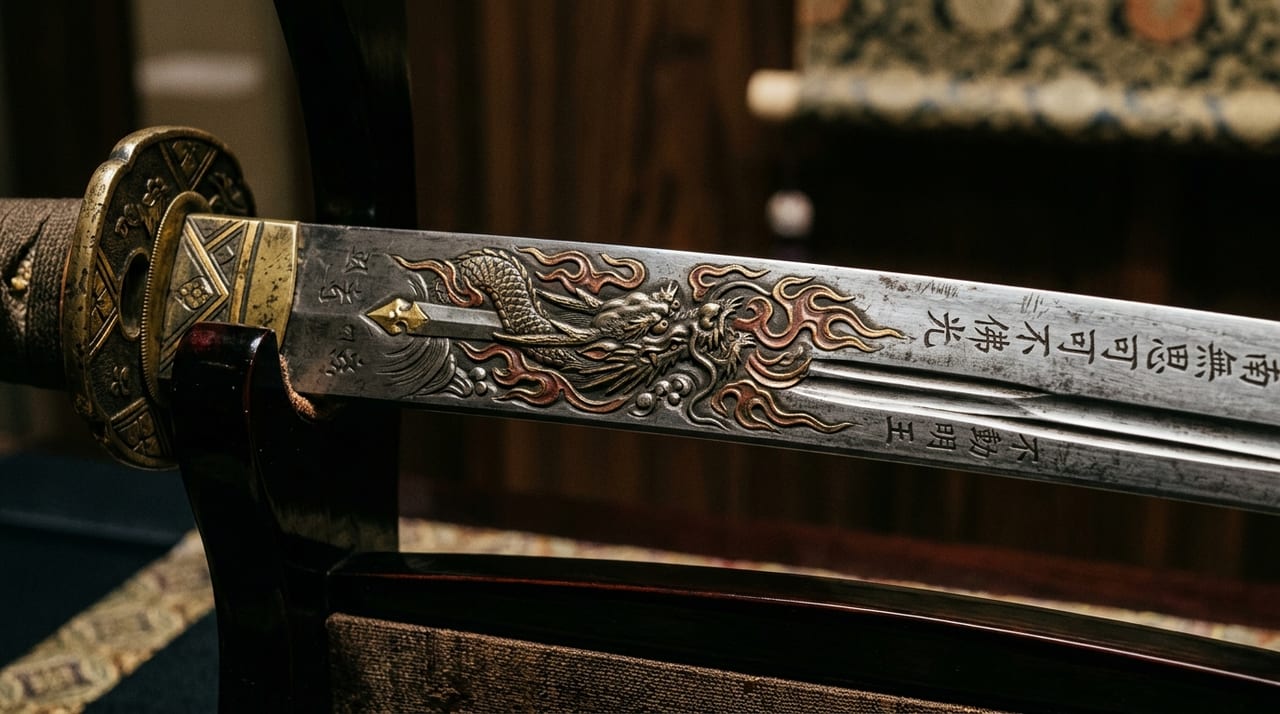 * Image is for illustrative purposes only.
Table of Contents
Growing Foreign Clientele, an Industry Ill-Prepared to Serve Them
In the latter half of the 2020s, foreign collectors seeking nihontō have been steadily increasing. Foreign buyers from diverse backgrounds have been entering the market: enthusiasts of Japanese culture in Europe and America, wealthy collectors in Taiwan, Hong Kong, and Singapore, practitioners of martial arts, and younger generations influenced by films and video games. The growing number of nihontō transactions at overseas auctions and the rising number of people accessing Japanese-language sword information on overseas collectors' forums are signs of this trend.
However, many sword dealers in Japan fall short in English communication, are unable to guide clients through export procedures, and often lack overseas payment systems. This lack of preparation leads to losing potential customers. During periods of yen depreciation, nihontō become more price-attractive to foreign buyers, and the gap between dealers who can and cannot serve them will likely widen further.
Multilingual Product Descriptions — Standardizing English Notation
At a minimum, product descriptions in English are essential. The information to include is as follows.
- mei / mumei distinction (signed / unsigned)
- blade type (tachi, uchigatana, wakizashi, tantō, etc.)
- estimated period and school
- dimensions such as nagasa, sori, motohaba, and sakihaba (listed in cm or shaku)
- condition (polish condition, presence of scratches or rust)
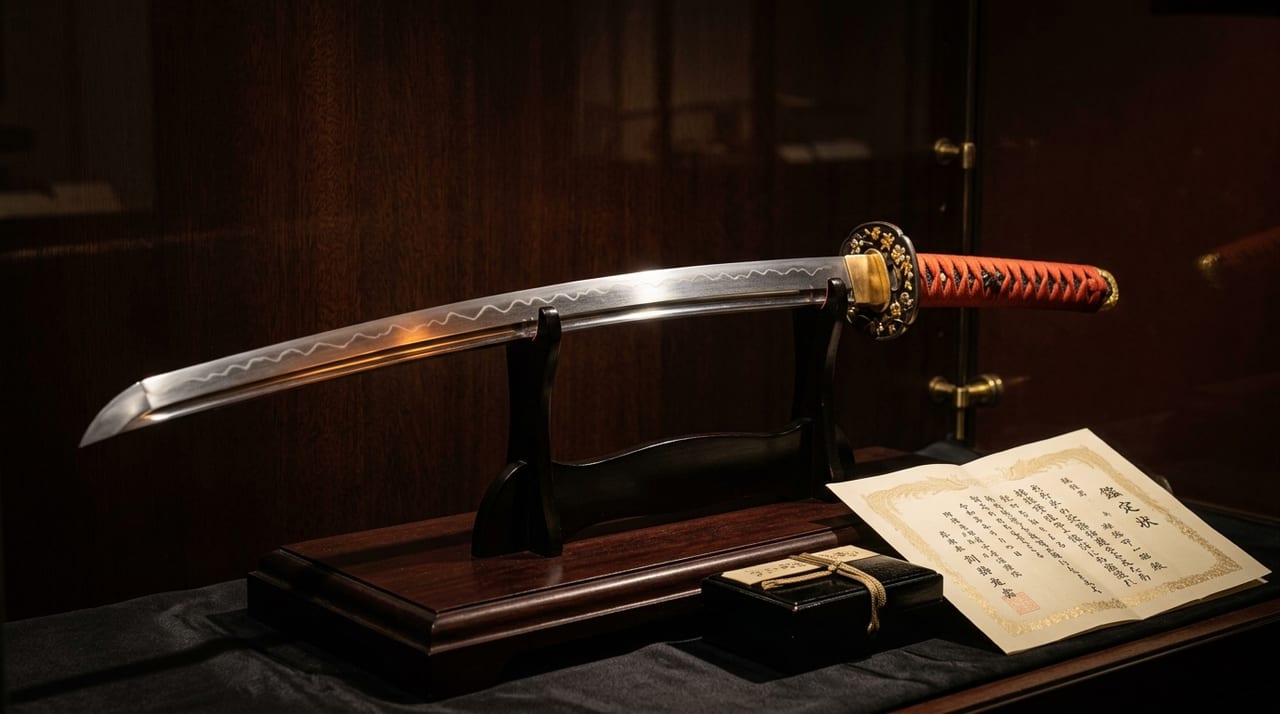
- presence of a kanteisho (NBTHK, NTHK, etc.)
- presence of a registration certificate and its number
- presence and condition of koshirae
Machine translation is often insufficient, and it is important to use accurate English notation for technical terms. The hamon is written as hamon, the jigane as jigane, the nie as nie, and the nioi as nioi, and these are already accepted in international markets. On the other hand, translating kanteisho simply as "certificate" fails to convey the grade difference between NBTHK Hozon Tōken and Tokubetsu Jūyō Tōken. Simply having supplementary materials that explain the meaning of each grade in English will significantly improve the quality of inquiries.
Photo quality is also important. Foreign buyers often make purchasing decisions before seeing the item in person. At a minimum, four types of photos should be standardized: a full-length shot against a white background, a close-up of the bōshi, an oblique-light shot that reveals the texture of the jigane, and a macro shot of the mei.
Export Procedure Assistance and Information Systems
For a foreign collector to bring a nihontō back to their home country, they must obtain the Agency for Cultural Affairs' "Old Art Objects Export Examination Certificate" and return the registration certificate to the Board of Education of the prefecture where the sword was registered (Tokyo Metropolitan Board of Education, "When Exporting Firearms and Swords"). It is also a prerequisite to individually confirm the import regulations of the destination country. The procedures are complex and practically difficult for a foreigner to complete on their own. An overview of the related systems is also organized in How to Take Nihontō Abroad.
The specific steps for strengthening export support are as follows.
Preparation of export application documents: Have the documents required for the application (photographs of the sword, copies of the registration certificate, the prescribed application forms, etc.) prepared as a standard set and provide them as part of the guidance and proxy service. Since obtaining the certificate takes a certain amount of time, creating schedule explanation materials that include this period is also essential.
Coordination with customs brokers: Establish relationships in advance with customs brokers that handle international shipping, particularly those with a track record of exporting art objects and weapons. For the actual shipping after completing export procedures, an international shipping company with experience in art object transport should be selected.
Standardization of shipping specifications: Wooden boxes and cushioning materials dedicated to nihontō are essential. The original Old Art Objects Export Examination Certificate must not be placed inside the package but submitted to customs at the time of export declaration (Agency for Cultural Affairs, "Old Art Objects Export Examination Certificate"). Services such as arranging wooden boxes fitted to the nagasa and including a sword bag and uchiko kit can be provided as ancillary services that enhance customer satisfaction for collectors.
Providing proxy services for a fee can function as a value-added business. The fee structure should be considered based on the price range of the items handled and the scope of procedures, and dealers handling higher-priced swords can also differentiate themselves by including the cost in the sale price.
International Payments and Credit Management
Accepting credit cards (Visa, Mastercard, Amex) is a minimum requirement. For high-value items, card issuers' usage limits can become an issue, so it is necessary to have systems in place to smoothly guide clients through international wire transfer procedures (SWIFT/TT transfers). PayPal has higher fees but can be effective for small or initial transactions.
In transactions with foreign customers, it should be clearly stated in the contractual terms that goods will not be shipped before transfer is confirmed and that full payment or a substantial proportion of it must be received in advance before proceeding with export procedures. Preparing English Terms and Conditions and clearly stating the returns and cancellation policy will help prevent disputes.
Some cases of accepting cryptocurrency payments do exist, but this is not recommended in ordinary commercial transactions due to exchange rate risk and legal uncertainty.
Practical English Communication and Cultural Considerations
English responses to emails and inquiries from foreign customers can be handled at a reasonable quality level even by non-English speakers using AI tools (such as ChatGPT). However, in legal, contractual, or price negotiation contexts, errors in nuance can be fatal, so a native speaker review is recommended.
Cultural considerations are also important. While collectors in Europe and America tend to actively engage in price negotiation, collectors in Asia (particularly Taiwan and Hong Kong) tend to place greater emphasis on detailed disclosure of photographs and provenance. Rather than a one-size-fits-all approach, communication tailored to the customer's background builds long-term trust.
It is also useful to have a specialized English glossary on hand. Since the English notation of sword terminology varies within the industry, it is recommended to standardize by referring to NBTHK's English materials and publications from overseas sword research organizations. English posts on social media (Instagram, X) are also effective both for building customer trust and for attracting new customers.
Inbound Support Is an Investment — The Advantage of Starting Now
Building up foreign customer support requires initial investment, but once the infrastructure is in place, one can acquire a customer base not limited to the domestic market. A period of yen depreciation can also be seen as a good opportunity to strengthen inbound support. A track record of transactions with prominent overseas collectors and museums directly translates into higher standing in the domestic market as well.
Building support infrastructure while competition is still limited leads to medium- to long-term differentiation. The international spread of nihontō culture and business growth point in the same direction. The management decision now required of sword dealers is to position inbound support not as a "cost" but as a "strategic investment" and to build it out systematically.