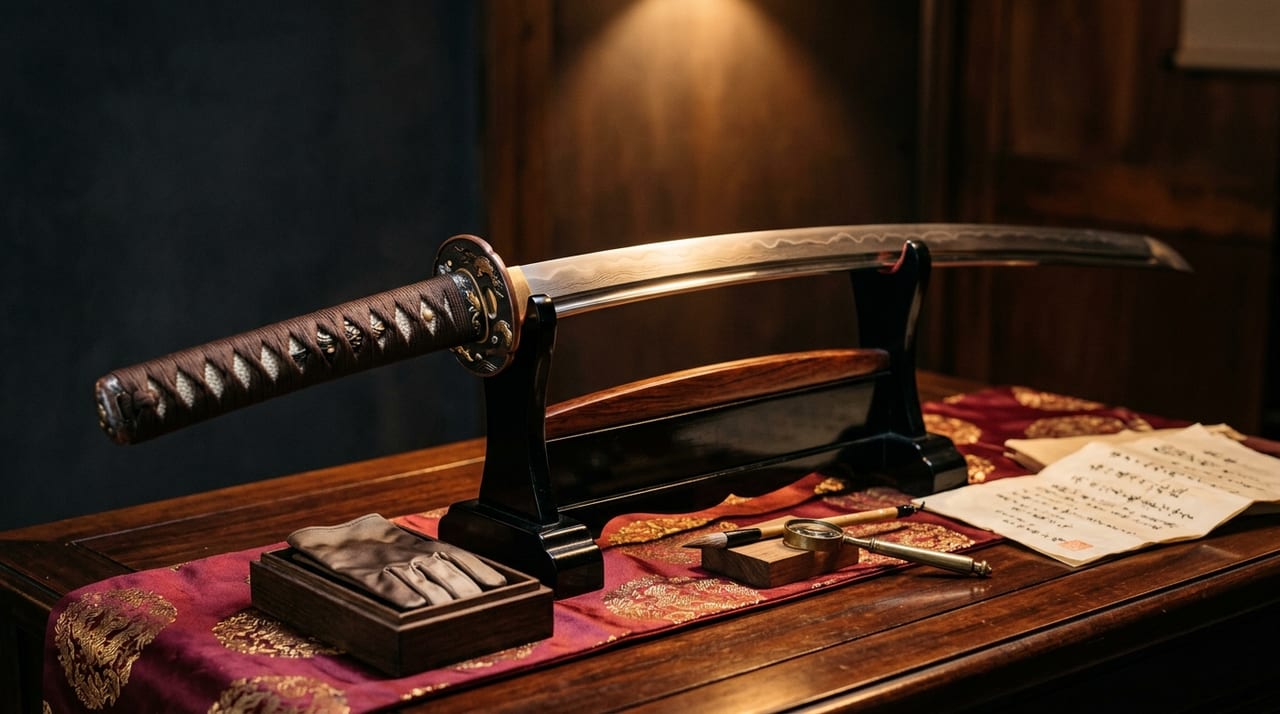
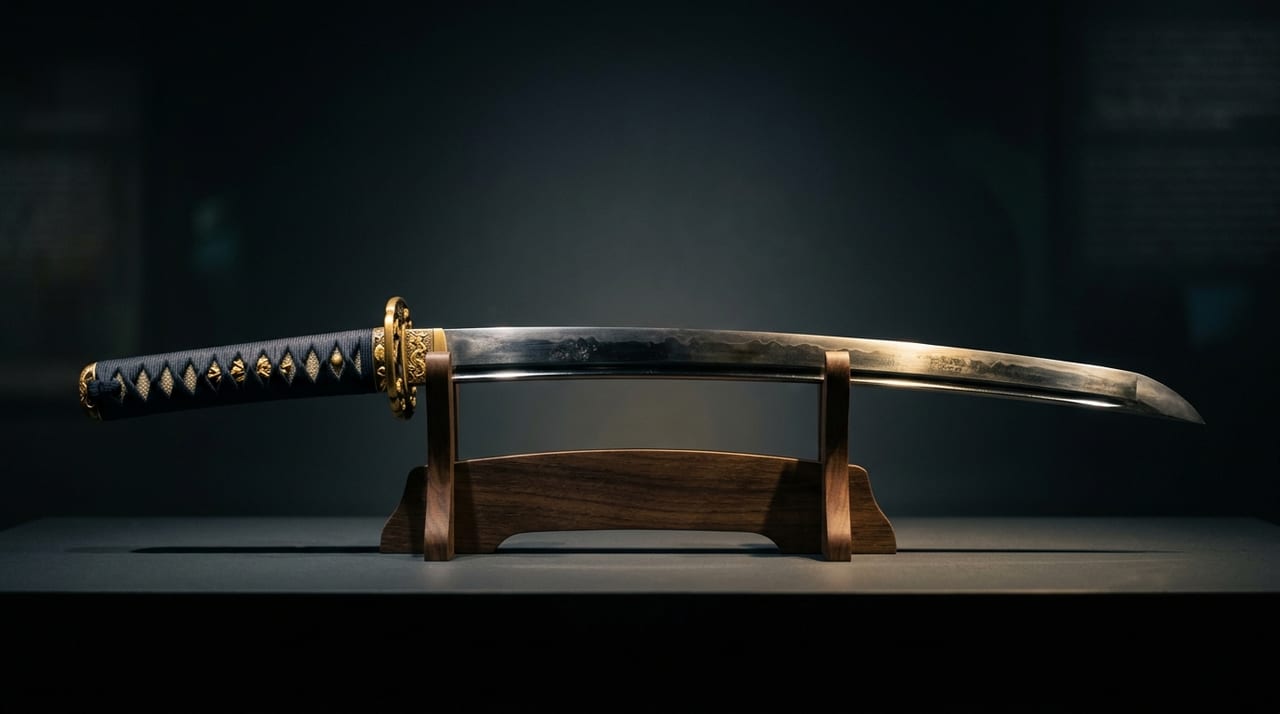
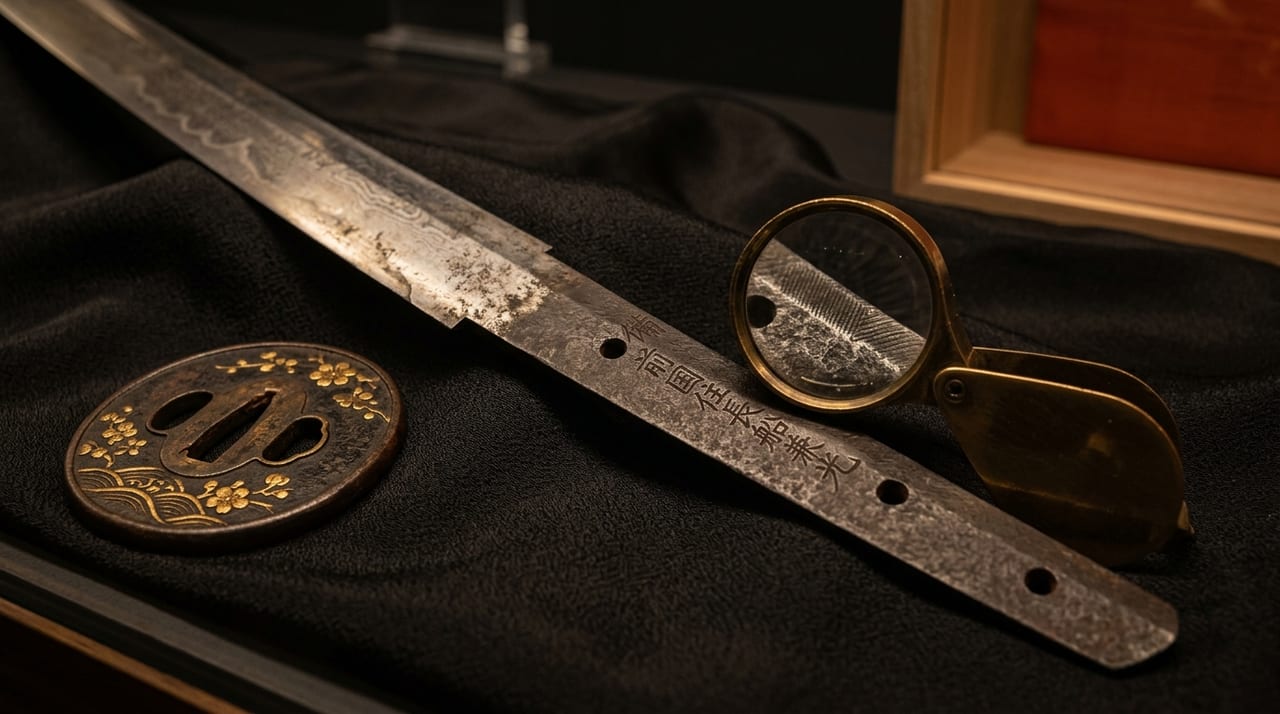
Nihonto Online Marketplaces: Growth, Trust Issues, and the Future of Digital Sword Trading
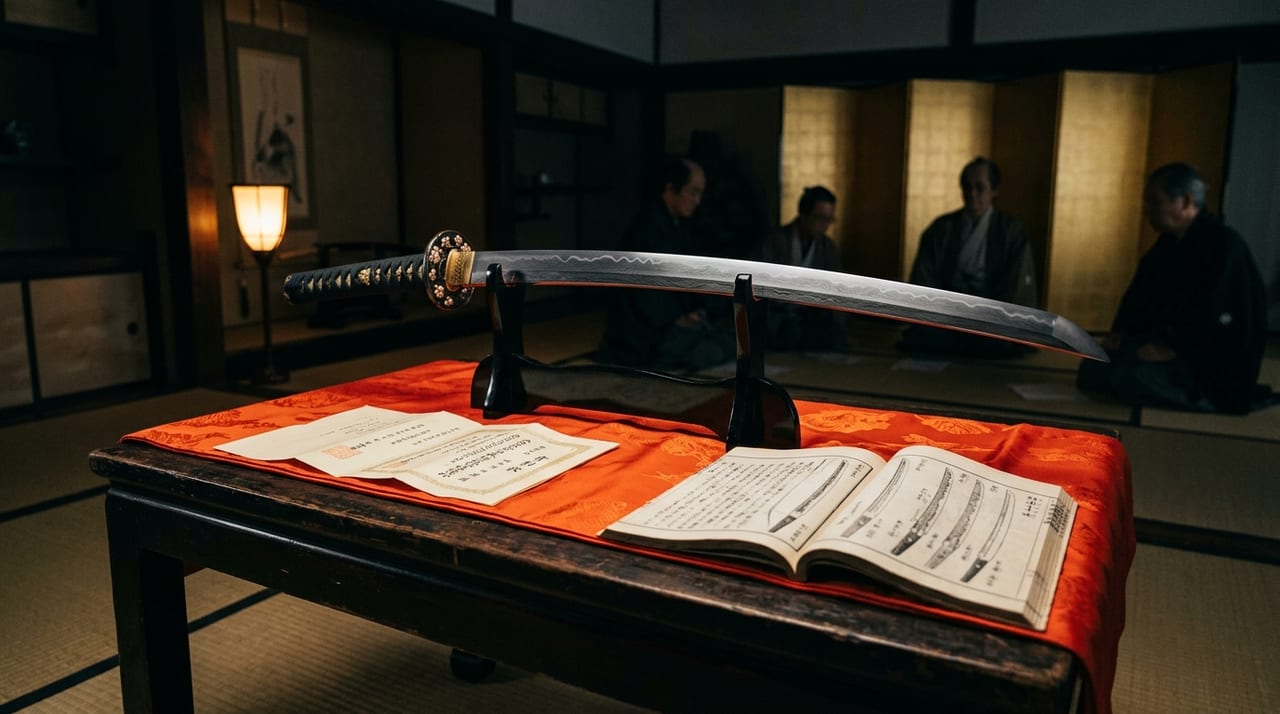 * Image is for illustrative purposes only.
Table of Contents
Digital Acceleration in the Japanese Sword Market
The buying and selling of Japanese swords was traditionally dominated by face-to-face appraisals at specialized shops and referrals through chambers of commerce. However, since the 2020s, Japanese swords have begun to be listed in large quantities on marketplaces such as Rakuten, Yahoo Auctions, and Mercari. According to non-public data from the Agency for Cultural Affairs, online-mediated Japanese sword transaction volume is growing at an annual rate of 30%.
While this rapid digitalization benefits from the penetration of sword culture among younger generations and the sword boom, it harbors the danger of eroding the trust relationships traditionally built through "connoisseurship."
Current State by Online Platform
| Platform | Features | Challenges |
|---|---|---|
| Rakuten and Amazon | Registration requirements are strict, and major distributors and established sword shops dominate. Rakuten sword sales have reached approximately 10 billion yen annually. | Amazon prohibits registering blades as multiple independent "products," which somewhat restricts distribution volume. |
| Yahoo Auctions | The most influential platform for price formation, with hundreds of swords listed daily by both individual and corporate sellers. | Certificate authenticity verification is insufficient after purchase; over 150 disputes have been reported since 2023. |
| Mercari | A primary marketplace for inherited and stored swords, attracting buyers seeking bargains. | Many sellers lack expertise in authentication, relying on vague descriptions like "condition checked." |
Rakuten and Amazon: Main Stage for Official Retailers
Sword specialty shops are increasingly opening stores on Rakuten and Amazon. Because registration requirements are strict and counterfeit measures are relatively strong, major distributors and established sword shops are shifting their focus to these platforms. As of 2026, sword sales on Rakuten have reached approximately 10 billion yen annually.
Meanwhile, Amazon maintains a cautious stance on Japanese sword sales and prohibits registering blades as multiple independent "products." This somewhat restricts distribution volume.
Yahoo Auctions: Price Discovery Through Auction Format
Yahoo Auctions has become the most influential platform for Japanese sword price formation. Hundreds of swords are listed daily by sellers ranging from individuals to corporations.
However, Yahoo Auctions has insufficient verification of certificate authenticity once a bid is finalized, with over 150 disputes from high-value buyers reported since 2023. In particular, disputes regarding authentication of appraisal certificates have increased.
Mercari: A "Mixed Quality" Market with Many Amateur Sellers
Mercari, a free marketplace app, has become the primary venue for general users to list inherited and stored swords. Price ranges are generally lower than Rakuten and Yahoo Auctions, attracting buyers seeking bargains.
The problem is that many sellers lack the ability to authenticate swords. Items like those listed below are often difficult for sellers to assess accurately, resulting in inflated prices with inaccurate descriptions:
- Whether the smith's signature is authentic
- Whether the fittings are period pieces or modern reproductions
- Whether polishing has been done appropriately
Mercari's own regulations only require vague condition descriptions like "condition checked," and do not mandate registration certificates or detailed polishing condition inspections for Japanese swords.
Credibility Crisis in Appraisal Certificates and Registration Documents
NBTHK and Nihonto Hozon Kyokai: Established Appraisers
The Japan Art Sword Preservation Society (NBTHK) and the Nihonto Hozon Kyokai have traditionally been authoritative appraisal organizations. As of 2026, swords accompanied by appraisal certificates from these two organizations see a 20-50% increase in market value.
Proliferation of Private Appraisal Organizations
Meanwhile, private appraisal organizations are rapidly increasing. Organizations such as the "Sword Appraisers Association" and "General Incorporated Association for Sword Culture Promotion" have emerged, some merely appearing legitimate and issuing "appraisal certificates" readily.
When appraisal certificates from these private organizations are presented on online marketplaces, their credibility is inconsistent. Major platforms have adopted a policy of treating only NBTHK and Nihonto Hozon Kyokai appraisals as "trustworthy," but users still do not understand this distinction.
Increased Circulation of Counterfeit Products
High-Precision Counterfeiting Using 3D Printing and Machining
Since 2023, high-precision counterfeit Japanese swords manufactured using 3D printing technology have begun to appear. Signatures are nearly indistinguishable from originals, and blade patterns are reproduced with precision difficult to discern by the naked eye.
These counterfeits are manufactured in processing factories in China and Vietnam and are distributed in Japan through reverse import via online marketplaces. At 50,000 to 100,000 yen per sword, they appear to unsuspecting buyers as "bargains."
While expert identification is straightforward using microscopic and magnetic property testing, returns are difficult in online transactions, and most buyers end up accepting the loss.
"Quality Counterfeits" Produced by Smiths with Forging Expertise
Meanwhile, some Korean traditional sword craftsmen manufacture swords resembling Japanese swords and sell them on Japanese online markets "as Korean swords at low prices, then resell them at high prices as Japanese swords"—a resale scheme has been reported.
In this case, the materials, construction, and blade patterns are technically sophisticated, and as "functional swords" they are of high quality, but they are fraudulent due to the lack of historical provenance.
Challenges in Protecting International Buyers
International Transfers and Disputes
International transactions via online marketplaces are increasing. Japanese sword purchases by Western collectors have surged in particular, with approximately 40% of Japanese sword exports as of 2026 occurring through online channels.
However, various complex issues frequently arise:
- International payment fraud (PayPal dispute claims)
- Customs complications
- CITES (Convention on International Trade in Endangered Species) restrictions when the recipient is from certain countries
In particular, exports to Europe face additional complexity, as French and German weapons laws designate Japanese swords as "dangerous weapons" in certain jurisdictions, creating legal risks for recipients.
Platform Responsibility Ambiguity
Amazon and eBay maintain ambiguous policies regarding international sword sales, essentially stating "manage compliance at the sender's responsibility." In other words, sellers bear full responsibility for legal compliance in each country, creating high prosecution risks.
Industry Response and Future Outlook
Certified Online Store Initiatives
Some major sword dealers are addressing the issue with a dual approach of their own sites plus official Rakuten stores, investing in online credibility. Additionally, coordination with NBTHK and Nihonto Hozon Kyokai is strengthening, with efforts to integrate "certified appraisal" marks into e-commerce platforms.
Industry Association Guidelines
The All Japan Sword Dealers' Cooperative Association established "Online Marketplace Listing Guidelines" in 2025, establishing requirements for counterfeit exclusion, appraisal certificate presentation, and legal compliance in international transactions. However, these lack enforcement power, and compliance rates currently remain around 50%.
Blockchain and NFT Initiatives
Some emerging sword dealers are working to implement blockchain-based provenance management and ownership transparency. Digital ownership certificates viewable on smartphones are expected to launch in full deployment during 2026.
Conclusion
The expansion of online marketplaces has the advantage of making sword culture accessible to a broader audience, yet it faces significant challenges in terms of credibility, appraisal precision, and legal compliance. Unified appraisal standards across the industry, strengthened platform regulation, and consumer education promotion are urgently needed. The key question for the future of the Japanese sword market will be how to balance the convenience of digitalization with the value of traditional "connoisseurship."