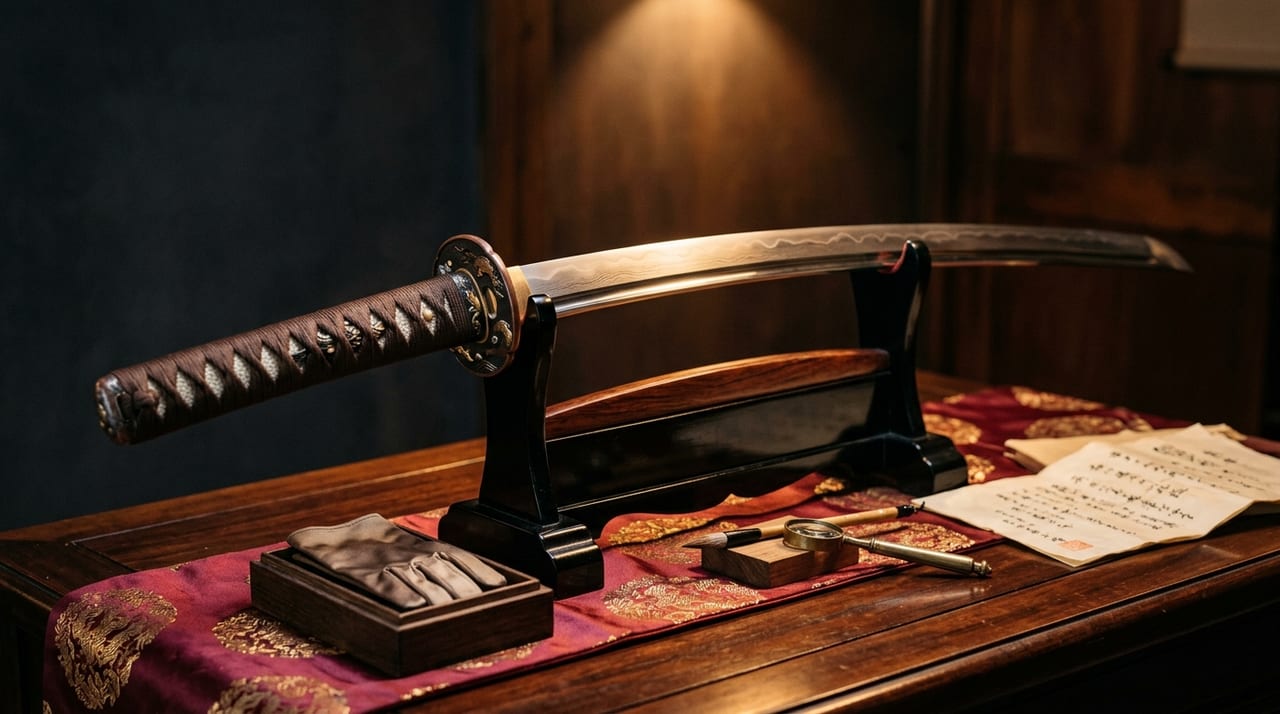
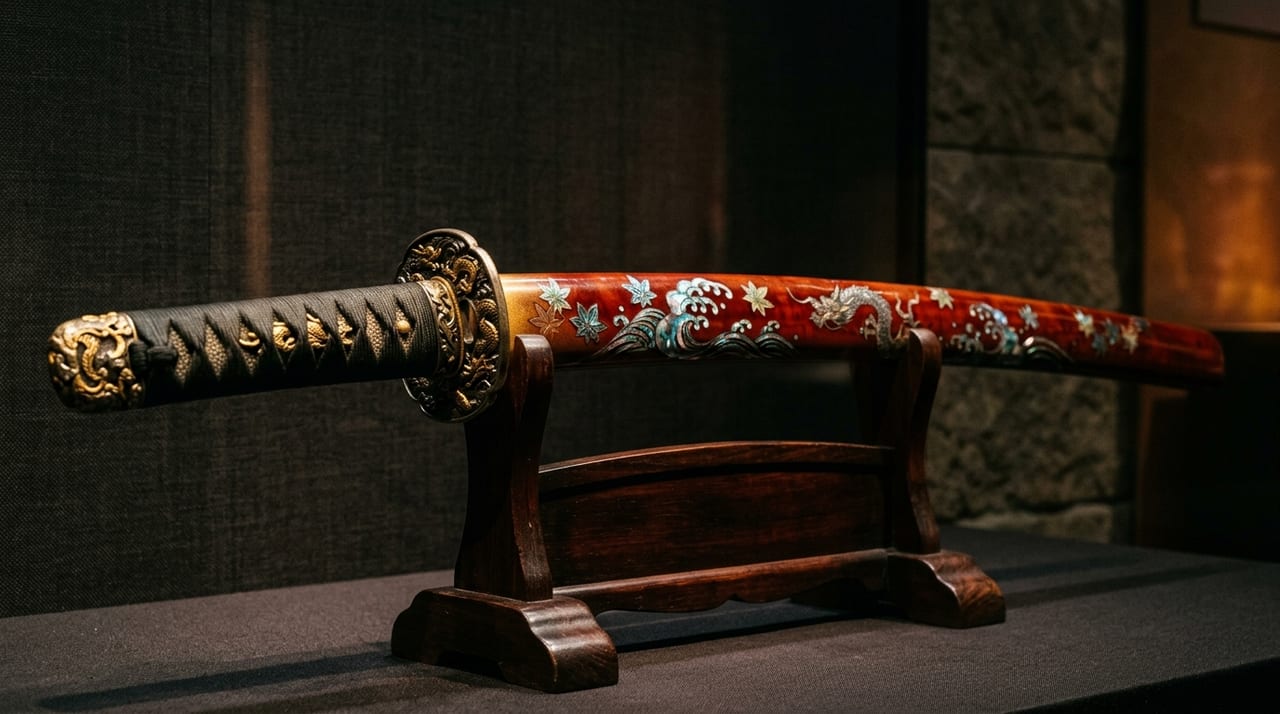
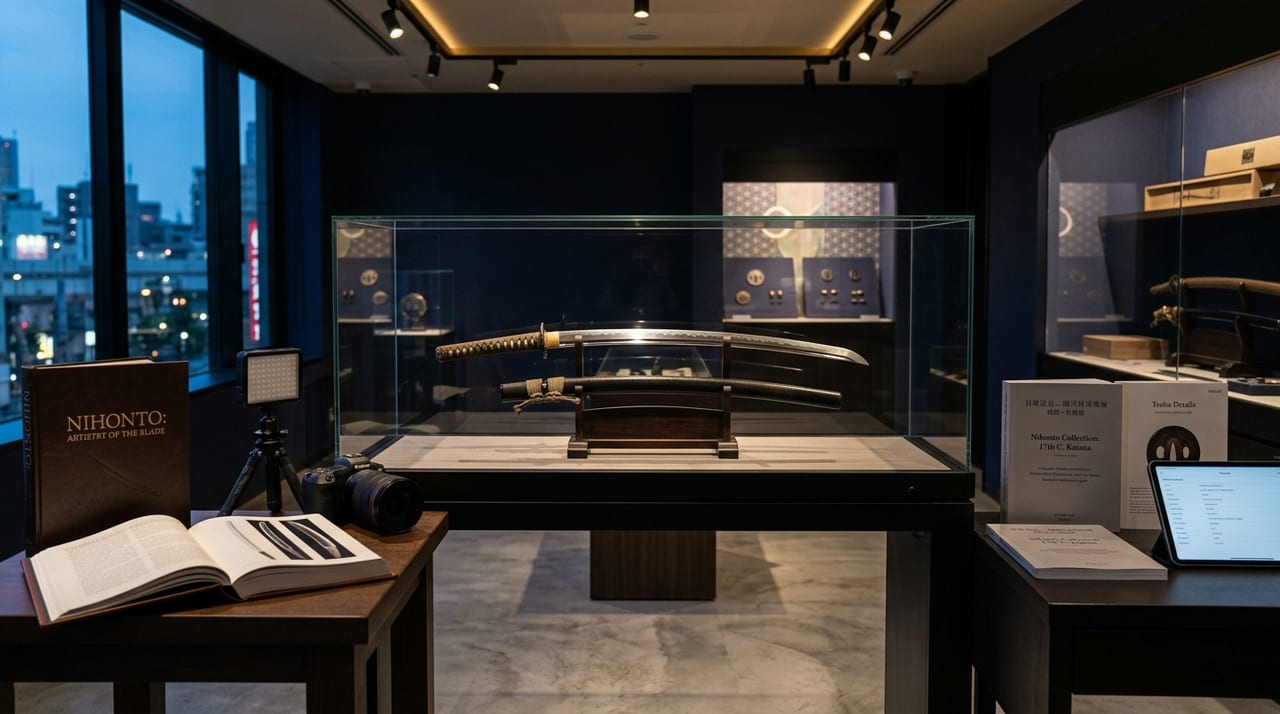
A Practical Guide for Japanese Sword Investors—Reading Market Indicators, 10-Year Price Trends, Sword Selection, and Purchase Routes
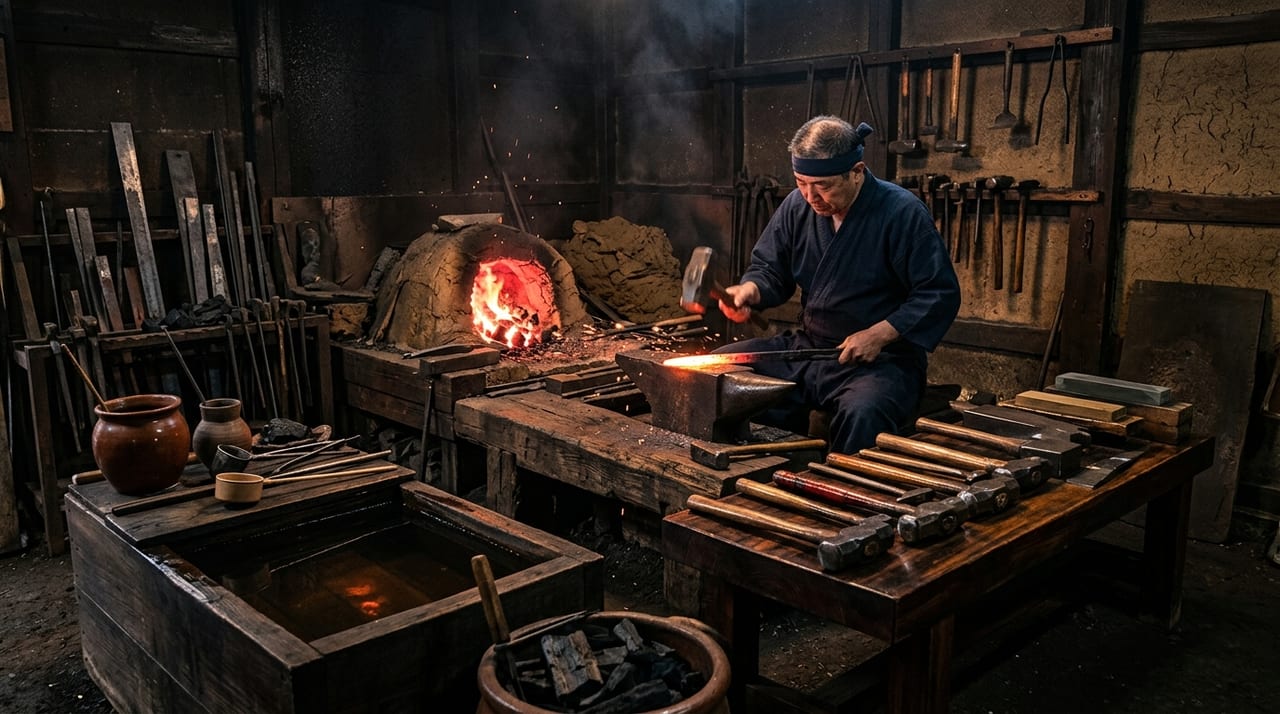 * Image is for illustrative purposes only.
Table of Contents
Surveying the Japanese Sword Market as an Investment Asset
The Japanese sword market lacks a price index like stock markets, making it appear "opaque" to outsiders. However, by combining several indicators and information sources, you can grasp market trends.
Primary market information sources:
| Source | Characteristics | Application |
|---|---|---|
| NBTHK-hosted auctions (4x annually) | Japan's largest official auction | Verify benchmark prices |
| Domestic sword dealer showroom & catalog prices | Retail prices; reflects market demand | Understand price ceilings |
| Sword exhibitions (nationwide) | Negotiation venues & price negotiation possible | Sense prevailing market prices |
| International auctions (Bonhams, etc.) | International demand & foreign exchange value | Gauge global demand |
| Yahoo Auctions & specialist e-commerce | Lower-grade trading prices | Understand price floors |
By regularly observing these sources, you can grasp the "market standard" for the sword you intend to buy or sell.
Price Trends Over the Past 10 Years (2016–2026)
While complete statistics don't exist due to non-public and fragmented data, the following trends are observed as industry consensus.
2016–2019 (Expansion Period): Against a backdrop of yen depreciation and rising international tourists, prices began rising particularly for swords in the Special Preservation to Important Sword Designation classes. European, American, Taiwanese, and Hong Kong collectors entered domestic auctions, intensifying competition for top-tier grades.
2020–2022 (COVID Period): While inbound tourism loss temporarily increased domestic supply, online bidding by overseas collectors narrowed the domestic-international price gap. This period also confirmed solid underlying demand.
2023–2026 (Surge Period): With ultra-weak yen (140–160 range) now entrenched, Japanese swords have become effectively "on sale" in foreign currency terms. Multiple cases report sales exceeding ¥100 million for swords of the highest designation, with some examples reaching 2–3 times 2010s price levels.
Grades with Largest Price Swings: Special Important Sword Designation (Tokujū) and Important Sword Designation → Directly track international demand, so price volatility is large Special Preservation Sword Designation → Centered on domestic demand; relatively stable
Selecting Swords—Five Evaluation Criteria for Investment Purposes
When selecting Japanese swords for investment, use the following five criteria as evaluation axes.
1. NBTHK Certification Grade
Certification is paramount as a liquidity guarantee. Higher grades command higher prices and greater liquidity, but acquisition and maintenance costs also increase. For beginners, "Special Preservation" and above is recommended.
2. Sword School and Bladesmith Renown
Major schools such as Bizen Osafune (Fukuoka Ichimonoji, Osafune Nagemitsu), Soshu tradition (Masamune, Sadayoshi), and Yamato tradition (Senjuin, Taima) maintain stable demand. Lesser-known regional smiths tend to have opaque pricing.
3. Condition (Edge separation, rust, blade chipping)
Polishing and preservation condition directly affect value. "Blade chipping (hagire)" significantly reduces value. Before purchase, verify with the physical object or obtain assessment from a trusted specialist.
4. Universality of Dimensions and Aesthetic Form
Whether tachi or katana, the beauty of "stance (sugata)" is a key factor in international demand. Notably, tachi with graceful deep curvature and katana with bold, turbulent edge patterns tend to command higher prices in overseas markets.
5. Completeness of Accessories
Whether the scabbard, hilt (tsuka), hand guard (tsuba), and fittings are complete, and whether both white scabbard (storage sheath) and fittings are present—these matter from cost-of-ownership and management perspectives.
Purchase Route Comparison
| Route | Advantages | Disadvantages |
|---|---|---|
| NBTHK auctions | Fair pricing, certified documentation | Competition, only 4x yearly |
| Domestic specialist dealers | Physical inspection possible, after-sale support | Retail prices (tendency toward markup) |
| Sword exhibitions | Price negotiation, multiple comparisons | Several times yearly, crowded |
| International auctions | Market price discovery, diverse selection | Complex import procedures, exchange rate risk |
| Private individual sales (online) | Potential for lower prices | High risk of counterfeit, authentication issues |
For beginners, starting with NBTHK auctions or domestic specialist dealers is strongly recommended. Private sales carry high risk of "fakes and reproductions," and without specialist knowledge, losses are likely.
Risk Management and Exit Strategy
Storage Costs
Improper storage of Japanese swords causes rust, mold, and warping changes. Minimum necessary management includes:
- Humidity-controlled storage case with desiccant (silica gel, etc.)
- Periodic dusting and oil application (once every six months to one year)
- Professional sword polishing when needed (typically ¥50,000–¥200,000 per blade)
Sale Channels
Primary options for selling your sword include:
- Direct sale to domestic specialist dealers: Immediate cash available. Price is negotiation-based.
- Submission to NBTHK auctions: Market fair value achievable. Consignment fees apply.
- International auctions: Suitable for high-grade swords with strong international demand, but export procedures required.
Critical to exit strategy is planning from purchase who you'll sell to. Rare pieces with limited demand are harder to sell than major-school swords or NBTHK upper-tier designations with large collector populations.
Japanese swords are assets premised on long-term holding and unsuited to short-term capital gains strategies. Success in Japanese sword investment requires a 5–10 year investment horizon that balances appreciation value with aesthetic and collection appeal—a shared characteristic of successful Japanese sword investors.