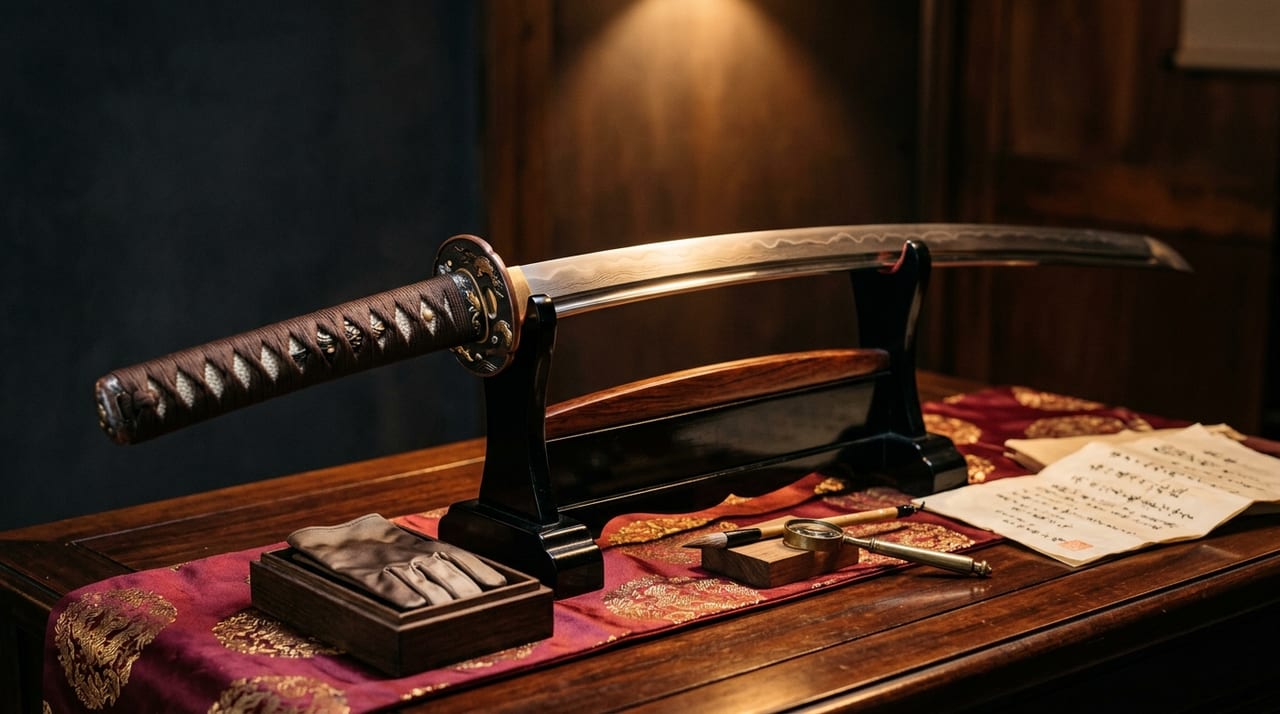
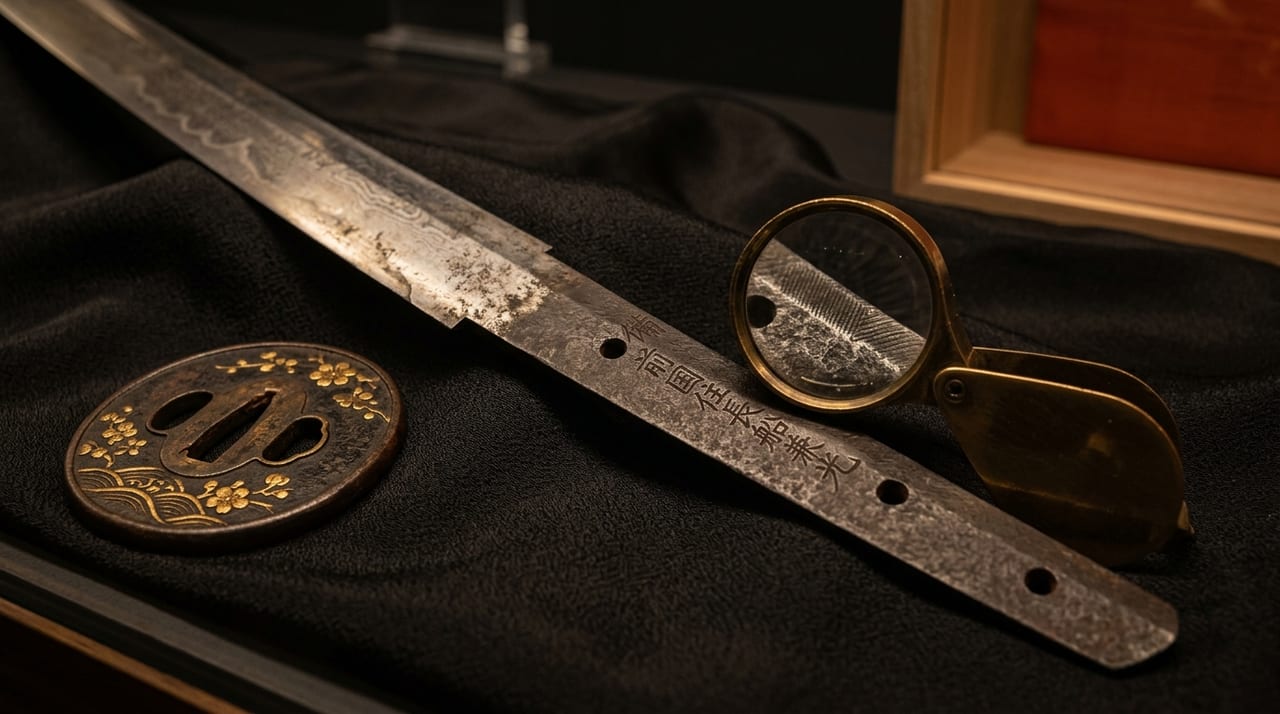
Nihonto Investment Tax Guide: Inheritance, Gift Tax, and Cultural Property Deductions for Japanese Swords
 * Image is for illustrative purposes only.
Table of Contents
How Japanese Swords Are Treated for Tax Purposes—A Basic Overview
Japanese swords are classified as "artworks and antiques." Their tax treatment differs in many ways from general financial assets (stocks, bonds) or real estate, and misunderstandings can lead to unexpected tax burdens. This article provides practical explanations of the major tax issues facing sword investors and collectors.
Note that tax treatment varies by individual circumstances, fiscal year, and tax law changes. Always consult a tax professional for final decisions.
Appraisal of Japanese Swords in Inheritance Tax—"Fair Market Value" as the Standard
When a person owning a Japanese sword passes away, that sword becomes an inherited asset subject to inheritance tax. The appraisal method is as follows.
Appraisal Principle: Fair Market Value Under inheritance tax law, artwork is appraised at "fair market value at the time of taxation" (Inheritance Tax Act Article 22). For Japanese swords, fair market value is determined by:
- Appraisal based on expert certificates: If an appraisal certificate from a recognized organization such as NBTHK exists, the appraised value stated in the certificate or market prices for swords of similar quality serve as reference
- Recent transaction records: Quotations from domestic auctions (Osaka Art Club, etc.) or sword dealers
- Prior consultation with tax professionals or tax authorities: For high-value appraisals, the prior consultation system can prevent discrepancies in understanding with the tax office
Difficulty in Appraisal: Even swords by the same smith vary significantly in price depending on condition, presence of appraisal certificates, and provenance. In tax audits, "market prices with appraisal certificates" are emphasized as evidence, so obtaining NBTHK appraisals before inheritance is effective from both tax savings and dispute prevention perspectives.
Gift Tax Treatment of Japanese Swords—Points on Lifetime Gifts
When a Japanese sword is gifted to another party (children, grandchildren, etc.) during one's lifetime, gift tax is imposed.
Gift Tax Calculation Method: Gift tax is imposed when the annual amount gifted to a recipient exceeds ¥1.1 million (basic deduction) (under the calendar-year taxation system).
Example: Gift of a sword valued at ¥5 million
- Taxable amount: ¥5,000,000 - ¥1,100,000 = ¥3,900,000
- Gift tax rate: 30% (rate for ¥3,900,000)
- Tax credit: ¥650,000
- Gift tax: ¥3,900,000 × 30% - ¥650,000 = ¥520,000
Gifts Over Multiple Years: Gifting a high-value sword all at once results in substantial gift tax. Spreading gifts over multiple years can distribute the tax burden, but if the tax authorities determine there is "intent to split the gift," it can become problematic. Consultation with a professional is essential.
Use of the Inheritance-Time Settlement Gift Tax System: The "inheritance-time settlement gift tax" system, applicable to gifts from parents aged 60 or older to children or grandchildren aged 18 or older, allows cumulative gifts up to ¥25 million without gift tax (though settled at inheritance). This can be effective for transferring high-value swords during one's lifetime.
Tax Incentives for Swords Designated as Important Cultural Properties—The Greatest Benefit
The most notable tax incentive for Japanese swords is the special treatment applied to swords designated as Important Cultural Properties (bunkazai) or National Treasures.
Inheritance Tax Exemption: Based on the Cultural Properties Protection Law, measures for "inheritance tax deferral and exemption related to inheritance of Important Cultural Properties" are established under certain conditions. Specifically:
- If an Important Cultural Property is donated to the state or a local public body, the inheritance tax is waived
- In certain cases, inheritance tax may be deferred if the property is loaned long-term (10 years or more) to a museum or similar institution
If a Japanese sword designated as an Important Cultural Property is owned, consultation with both the Agency for Cultural Affairs and the National Tax Agency is essential to confirm applicable incentive measures.
Fixed Asset Tax Exemption: Tangible cultural properties designated as Important Cultural Properties are exempt from fixed asset tax (Local Tax Law Article 348). Since swords are tangible assets, fixed asset tax is exempted upon Important Cultural Property designation.
Tax Savings Through Donation: When a high-value Important Cultural Property sword is inherited, inheritance tax may be reduced if donated to the state, local government, or certified NPO. However, since ownership transfers upon donation, careful judgment is required.
Tax Treatment at Sale of Japanese Swords—Capital Gains Taxation
When a Japanese sword is sold and a profit is realized, that profit is treated as "capital gains" subject to income tax and resident tax.
Capital Gains Calculation: Capital gains = Sale price - Acquisition cost - Transaction expenses (sales fees, etc.) - Special deduction (¥500,000)
Tax Rate Differences by Holding Period:
| Holding Period | Category | Tax Rate |
|---|---|---|
| 5 years or less | Short-term capital gains | Progressive taxation (maximum 55.945%) |
| Over 5 years | Long-term capital gains | 1/2 subject to taxation (effective maximum 27.97%) |
Swords held for more than 5 years are treated as "long-term capital gains," with the taxable amount cut in half. Japanese swords are assets that tend to benefit from long-term holding under the tax system.
Non-Taxation of Household Chattels: Under income tax law, transfer gains from "chattels ordinarily necessary for living" are non-taxable (Income Tax Act Article 9). However, artworks and antiques priced at more than ¥300,000 per piece or set are excluded from non-taxable treatment. Sale gains from high-value Japanese swords are generally subject to taxation.
Corporate Sword Ownership—Tax Savings and Precautions
When a corporation owns a Japanese sword as an asset, different tax treatment applies.
Possibility of Loss Deduction: Artworks were traditionally not subject to depreciation, but the 2015 tax reform allowed depreciation for artworks with acquisition costs under ¥1 million. Japanese swords exceeding ¥1 million are generally not depreciable.
Treatment as Entertainment Expenses or Advertising Expenses: When a corporation purchases a Japanese sword as a gift to business partners, it may be deductible as entertainment expenses (subject to caps).
Risks of Corporate Sword Ownership: When a corporation capitalizes a sword as an asset, proper valuation is required. Risks include issues from undervaluation and allegations of private use by officers. Consultation with both a tax professional and a sword appraiser is necessary.
Summary—Practical Tax Strategies for Sword Investors to Implement Now
Practical tax strategies for holding Japanese swords as assets:
- Obtain NBTHK appraisal certificates: Clarify appraisal basis and smooth fair market value determinations at inheritance and gift time
- Preserve acquisition records: Keep purchase receipts and price certificates to prepare for future acquisition cost documentation for capital gains calculations
- Consider Important Cultural Property application: For valuable swords, explore NBTHK Important Sword certification followed by Important Cultural Property designation application to the Agency for Cultural Affairs
- Plan lifetime gifts: Consult with a tax professional on planned gifts within the ¥1.1 million basic deduction range and use of the inheritance-time settlement gift tax system
- Remember the 5-year holding rule: If considering sale, be mindful of the long-term capital gains treatment for holdings exceeding 5 years
Japanese swords are subject to unique tax rules distinct from financial assets. Asset management coordinated with sword-specialist tax professionals and cultural property experts is the best way to protect and maximize your collection.