A Comprehensive Guide to Japanese Sword Inheritance and Gift Procedures: Registration Certificates, Tax, and Name Transfer
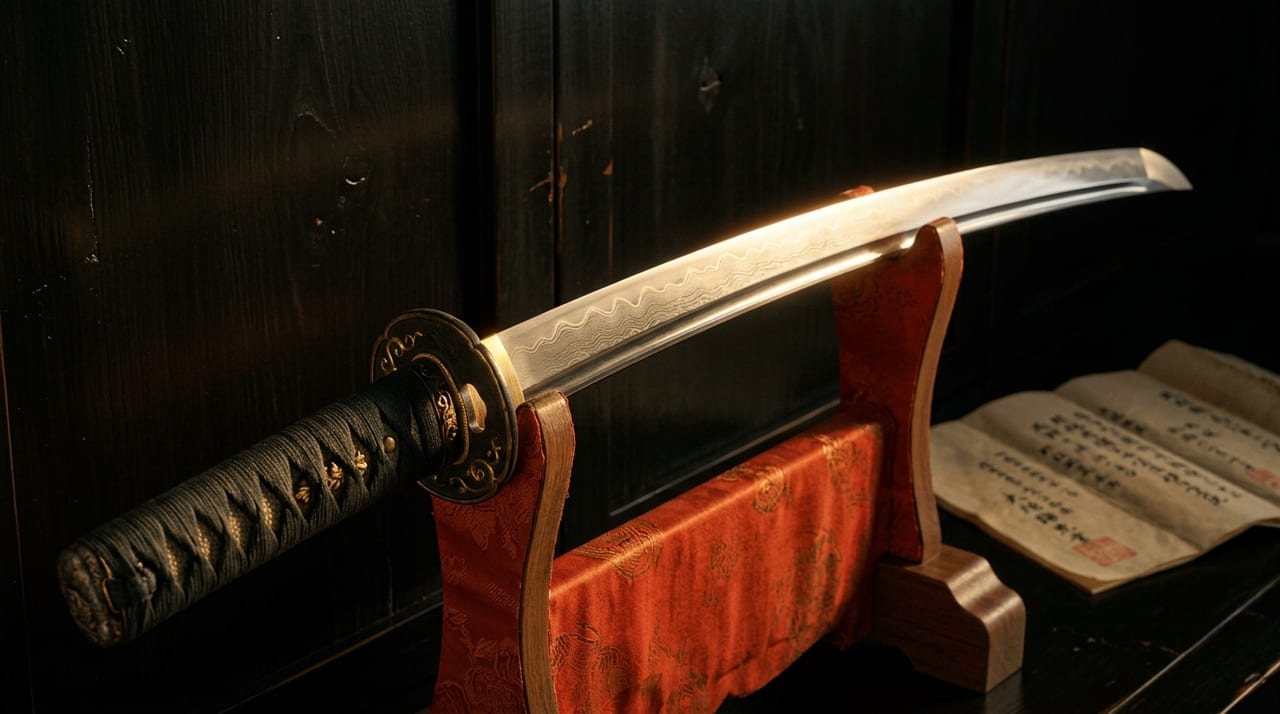 * Image is for illustrative purposes only.
Table of Contents
Japanese Sword Inheritance — Key Points You'll Regret Not Knowing
Inheriting a Japanese sword that was owned by parents or grandparents is a situation that any collector's family may face. Japanese sword inheritance and gift transfers involve procedures distinct from ordinary personal property, and there are not a few cases where failures occur due to insufficient knowledge.
This article provides a detailed explanation of how swords are handled in inheritance and gift transfers from three perspectives: legal, tax, and practical.
The Legal Status of Japanese Swords — The Importance of the Firearms and Swords Registration Certificate
Possessing a Japanese sword requires a "Firearms and Swords Registration Certificate (Registration Certificate)" (based on the Firearms and Swords Possession Control Law). Detailed procedures for obtaining and updating the registration certificate are also explained in this article.
In inheritance and gift transfers, the registration certificate is treated as a single unit with the sword itself. A sword that has not been registered may not, in principle, be possessed (Article 3, Paragraph 1 of the Firearms and Swords Possession Control Law), and even for a registered sword, a lost registration certificate must be promptly reissued (Article 15, Paragraph 2 of the same law). Confirming whether or not a registration certificate exists is the first step.
Risk of Lost Registration Certificate
If the deceased did not properly store the registration certificate, there may be cases where the certificate cannot be found. In such cases:
- First, carefully organize the inherited items and search for the registration certificate (near the sword, in documents, in a safe, etc.)
- If not found, consult the Board of Education of the prefecture where the registration certificate was issued about "Application for Reissuance of Registration Certificate" (Tokyo Metropolitan Board of Education: Procedures for Reissuing a Registration Certificate)
- You must promptly have the registration certificate reissued (Firearms and Swords Possession Control Law (e-Gov Legal Search), Article 15, Paragraph 2), and the registration certificate must be carried whenever the sword is carried (Article 24 of the same law), so keep the sword stored without moving it until the procedures are completed
Handling of Swords in Inheritance
Basic Flow When Inheritance Occurs
The procedural flow for Japanese swords when inheritance occurs:
- Confirmation of Registration Certificate: Collect and confirm the registration certificate for each sword
- Entry in Inventory of Estate: Enter the Japanese sword in the inventory of estate (list of inherited property)
- Inheritance Tax Valuation: If inheritance tax filing is necessary, calculate the appraised value of the sword
- Estate Division Agreement: Discuss and agree on who will inherit the sword
- Submission of Notification of Change of Owner (Legal Obligation): Under Article 17, Paragraph 1 of the Firearms and Swords Possession Control Law, you are obligated to file a notification with the Board of Education of the prefecture that conducted the registration within 20 days of acquisition. Failure to file subjects you to imprisonment of up to one year or a fine of up to 300,000 yen (Article 32, Firearms and Swords Possession Control Law (e-Gov Legal Search))
- Inheritance Tax Filing (if inheritance tax is incurred)
Method of Inheritance Tax Valuation
The inheritance tax appraised value of a Japanese sword is based on "fair market value (market price)":
Priority order of valuation methods:
- Professional appraisal evaluation report: An appraisal report by a sword merchant or certified appraiser is most reliable
- Recent auction sale results: Refer to the recent sale prices of similar works
- Appraisal rank from NBTHK certificate: The appraisal ranks of preserved, special preservation, important, and exceptionally important provide a guideline for price ranges
Estimated valuation amounts (reference):
- Preserved sword (standard): 50,000 to 500,000 yen
- Exceptionally preserved sword (superior): 300,000 to 2,000,000 yen
- Important sword: 1,000,000 to 10,000,000+ yen
- Important Cultural Property / National Treasure: Valuation is difficult and consultation with specialized institutions is necessary
Handling of Swords in Estate Division
Swords are treated as "artworks, each with an independent appraisal value." Because they cannot be divided simply for monetary purposes, the division method is generally one of the following three:
- Actual division: Each heir inherits a specific sword
- Compensatory division: One person acquires the sword and pays compensation to other heirs
- Sale division: The sword is sold and the proceeds are divided
Because balancing emotional value (keepsake of the deceased) and economic value is difficult, early discussion among family members is recommended.
Handling of Swords in Gift Transfers
Gift Transfer and Gift Tax
If you receive a Japanese sword through a lifetime gift transfer, it may be subject to gift tax.
Basic deduction for gift tax (calendar year taxation): 1,100,000 yen per year. If the total amount of gifts received between January 1 and December 31 of a single year is 1,100,000 yen or less, no gift tax is incurred (National Tax Agency No.4402 When Gift Tax Applies).
Simultaneous gift transfer of multiple swords: Gifts received in the same year, including property other than swords and gifts from other people, are judged by the total amount.
Practical Gift Transfer Procedures
- Preparation of gift transfer agreement: Prepare a written document stating "I gift ○○" (not legally required but valid as tax evidence)
- Delivery of registration certificate: Deliver the sword and registration certificate as a set
- Gift tax filing (if appraised value exceeds 1,100,000 yen): File with the tax office by March 15 of the following year
Notification of Change of Owner (Name Change)
Under Article 17, Paragraph 1 of the Firearms and Swords Possession Control Law, when acquiring a sword through inheritance or gift transfer, you are legally obligated to file a "Notification of Change of Owner" form with the Board of Education of the prefecture that conducted the registration within 20 days of acquisition. Failure to file subjects you to imprisonment of up to one year or a fine of up to 300,000 yen (Article 32, Firearms and Swords Possession Control Law (e-Gov Legal Search)).
Procedure method:
- Submit the "Notification of Change of Owner" form to the Board of Education of the prefecture that issued the registration certificate (Firearms and Swords Registration Rules (e-Gov Legal Search), Article 9)
- In Tokyo, the notification is filed by mail or online; when filing by mail, enclose one copy of the registration certificate. The documents to attach differ by prefecture, so check with the Board of Education where the sword was registered
- The Tokyo Metropolitan Board of Education does not send notice of receipt or completion, and advises that if there has been no contact after about one month, the procedure may be considered complete (Tokyo Metropolitan Board of Education: Procedures for Change of Owner or Address and for Loan or Custody Consignment)
Precautions When There Are Overseas Resident Heirs
When heirs reside overseas, additional precautions are necessary for Japanese sword inheritance:
Export regulations: When an overseas resident heir takes a sword out of the country, the heir obtains the Agency for Cultural Affairs' Certificate of Export Inspection for Antique Art Objects and returns the registration certificate to the Board of Education of the prefecture where the sword was registered (Tokyo Metropolitan Board of Education: When Exporting Firearms and Swords).
Local legal regulations: Check in advance the sword possession and import regulations of the country where the heir resides (some countries prohibit the import of swords).
Tax treatment: When an overseas resident inherits a sword in Japan, in addition to Japanese inheritance tax, the heir's country of residence may impose inheritance tax or property tax. To avoid double taxation, consultation with tax accountants in both countries is recommended.
Summary — Five Basic Rules for Inheritance and Gift Transfer
- Verification of registration certificate is the highest priority: Swords without a registration certificate require immediate consultation with authorities
- Request professional appraisal for valuation: Obtain an appraisal report that serves as tax evidence
- Reach family agreement on division method early: Consider both emotional and economic value
- Must file the notification of change of owner within 20 days of acquisition: File only with the Board of Education of the prefecture that conducted the registration (legal obligation with penalties)
- Consult specialists for overseas-related matters: Do not forget to check export regulations, local legal regulations, and double taxation