Complete Guide to Japanese Sword Online Auctions 2026: Bidding Strategy, Market Prices, and Post-Purchase Procedures
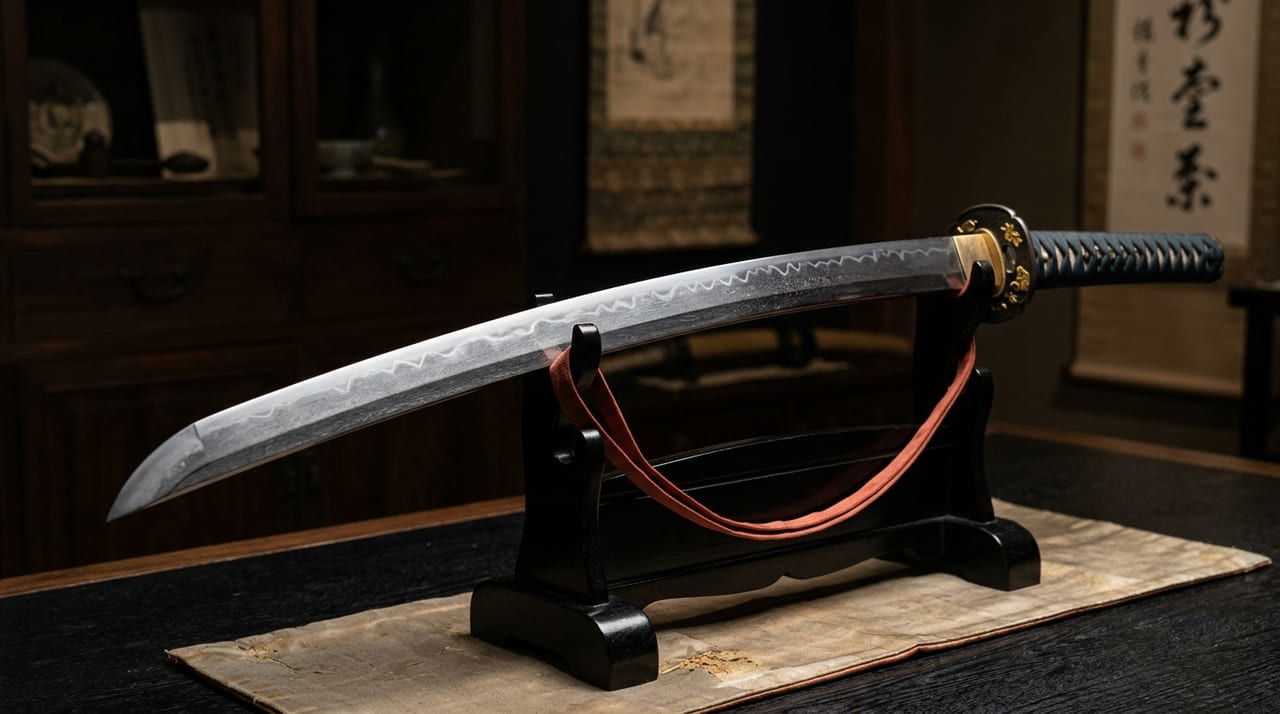 * Image is for illustrative purposes only.
Table of Contents
The Era of Buying Japanese Swords Online
In the past, Japanese sword transactions centered on specialist dealer storefronts and sword fairs or antique markets. However, as digitalization accelerated in the 2020s, online auctions have become a major channel for domestic and international sword trading as of 2026.
Domestically, auctions endorsed by the "Japan Sword and Art Society (NBTHK)" and major antique and fine art auction houses have expanded their online platforms. Overseas, Christie's, eBay, and Hermann Historica regularly list Japanese swords. This guide explains the major platforms as of 2026 and concrete strategies for safe purchases.
Major Online Auction Platform Comparison (2026 Edition)
Domestic Platforms
Touken World Auction (Simulated Bidding Format) Operated by Touken World, which holds the largest content as a sword specialist site, this trading platform features many NBTHK-certified pieces and is relatively safe for beginners.
Ginza Seiyūdō and Yahoo Auctions Listings Established sword merchants increasingly list on Yahoo Auctions. Listings from vendors with physical storefronts are traceable and may offer after-sales support. Yahoo Auctions is Japan's largest platform, but with many private sellers, expertise is required.
Rakuten Auctions and Mercari (Caution Advised) While consumer-facing platforms see increasing listings, risks of counterfeits and unregistered swords are high. Confirmation of registration certificates (education committee firearm and sword registration certificates) is essential.
International Platforms
Hermann Historica (Germany) Europe's largest specialist auction house for weapons and military items. Numerous Meiji to Showa-era military swords are regularly listed. Verify export-import regulations before bidding.
Rock Island Auction (USA) North America's largest weapons specialist auction. Pacific War-era Japanese swords frequently appear.
eBay The world's largest online marketplace. High volume of listings, but authenticity verification is difficult. Searchable by "Japanese Sword" or "Katana Antique," but purchase without NBTHK certification requires caution.
Essential Checks Before Bidding—Pre-Bidding Checklist
Success in safe online sword purchases depends on pre-bidding information gathering.
1. Verification of Registration Certificate (Education Committee-Issued) Possessing a Japanese sword domestically requires a "Firearm and Sword Registration Certificate." Check if the listing images include the certificate. If not, always ask "Do you have a registration certificate?" No certificate means potential legal issues.
2. Presence of NBTHK Certification A "Preserved Sword" or higher certification serves as proof of authenticity. Verify certification images in high resolution and check that sword characteristics (signature, blade length, curve, etc.) match the certificate.
3. Actual Measurements of Blade Length, Curve, and Forging Ask the seller: "What is the exact blade length in centimeters?" "How deep is the curve?" "What type of forging is it?" Determine if photos align with actual measurements.
4. Condition of Scratches, Rust, and Polishing Online photos often beautify condition. Ask: "Are there visible scratches?" "Location and depth of rust?" "When was the last polish done?"
5. Seller Ratings and Transaction History On Yahoo Auctions and eBay, past ratings and feedback are helpful references. Confirm a track record of specialized sword trading.
Bidding Strategy—Reading Markets and Timing
Reading Market Prices (2026 Edition)
Japanese sword prices vary significantly by blade length, era, swordsmith, condition, and certification status. General price ranges:
| Category | Condition | Price Range |
|---|---|---|
| Katana (Unsigned, Preserved) | Fair–Good | ¥50,000–200,000 |
| Katana (Signed, Special Preservation) | Good–Excellent | ¥300,000–1.5M |
| Wakizashi (Famous Smith, Important) | Excellent | ¥1M–5M |
| Important Cultural Property Class | ― | ¥10M+ |
Useful price reference sources:
- Online price databases like "Touken Nandemo Kantei-dan"
- NBTHK past auction closing records
- Touken World price columns
Bidding Timing Strategy
An effective online auction strategy is "last-minute bidding (sniping)." On Yahoo Auctions, bidding within 60 seconds of closing can avoid competitive bidding. However, popular items attract multiple snipers, making your maximum bid critical.
Using auto-bid features, set your upper limit at around 90% of your budget, observe competitive patterns, then decide whether to add bids. This approach is safest.
Post-Purchase Procedures—Flow from Payment to Ownership
After Domestic Auction Purchase
- Payment Completion: Typically within 3–7 days of auction notification. Bank transfer or credit card are standard.
- Packing and Shipping: Swords cannot be sent by air (blade regulations). Ship via standard courier (Yamato, Sagawa) with "Blades Enclosed" clearly marked.
- Delivery and Condition Verification: Immediately inspect exterior and cross-check with registration certificate upon arrival.
- Owner Change Notification: When a winning bid changes the sword's owner, the new owner notifies the education committee of the prefecture where the sword was registered within 20 days (see below).
Registration Certificate Name Transfer
The registration certificate does not show the owner's name. Registration is attached to the sword itself, and a change of owner is communicated by filing a notification. Anyone who acquires a registered sword must notify the education committee of the prefecture where the sword was registered within 20 days (Article 17(1) of the Act for Controlling the Possession of Firearms or Swords and Other Such Weapons). This applies equally to auction wins and purchases; it is not an optional procedure. With the Tokyo Metropolitan Board of Education, for example, you send an owner change notification form together with a copy of the registration certificate by mail, or file the notification online (Tokyo Metropolitan Board of Education, "Procedures for Change of Owner or Address and for Loan or Custody Consignment"). Forms and methods vary by prefecture, so check with the education committee named on the registration certificate.
International Shipment and Imports
For auctions won overseas:
- Export Approval from Origin Country: Some countries require weapons export permits. Confirm with the seller.
- Customs Declaration: Declare as "cultural property and bladed articles" upon Japanese import.
- Obtaining Registration Certificate: Domestic possession requires a certificate. For imports, first notify the prefectural education committee, pass inspection, and obtain a certificate.
- Inspection Period: Typically 2–4 weeks. Registration costs several hundred to several thousand yen per blade.
Common Problems and Solutions
Large Discrepancy Between Photos and Actual Item: Contact seller immediately upon receipt. Request return under "description mismatch" (Yahoo Auctions provides dispute resolution support).
Registration Certificate Missing: Previous owner may hold it. Request retrieval if available. If unknown, contact the prefectural education committee regarding "handling of swords without certificates."
Suspected Fake Signature or Mis-certification: Request NBTHK certification (fee applies). Failure to meet Special Preservation standards suggests non-authenticity.
Conclusion—Three Principles for Safe Online Trading
Three core principles for safe online sword trading:
- Prioritize Certificate Verification: Purchasing without a certificate carries legal risk.
- Value NBTHK Certification as Added Assurance: Certification significantly increases authenticity probability.
- Select Vendors with Track Records: Transaction history, ratings, and physical storefronts indicate reliability.
The 2026 online auction market is maturing, yet inexperienced buyers still suffer significant losses. Use this guide to pursue careful and certain acquisition.