Complete Guide to Purchasing Nihontō for Foreign Visitors to Japan (English-Speaking Edition): Souvenir Swords vs. How to Tell the Real Thing
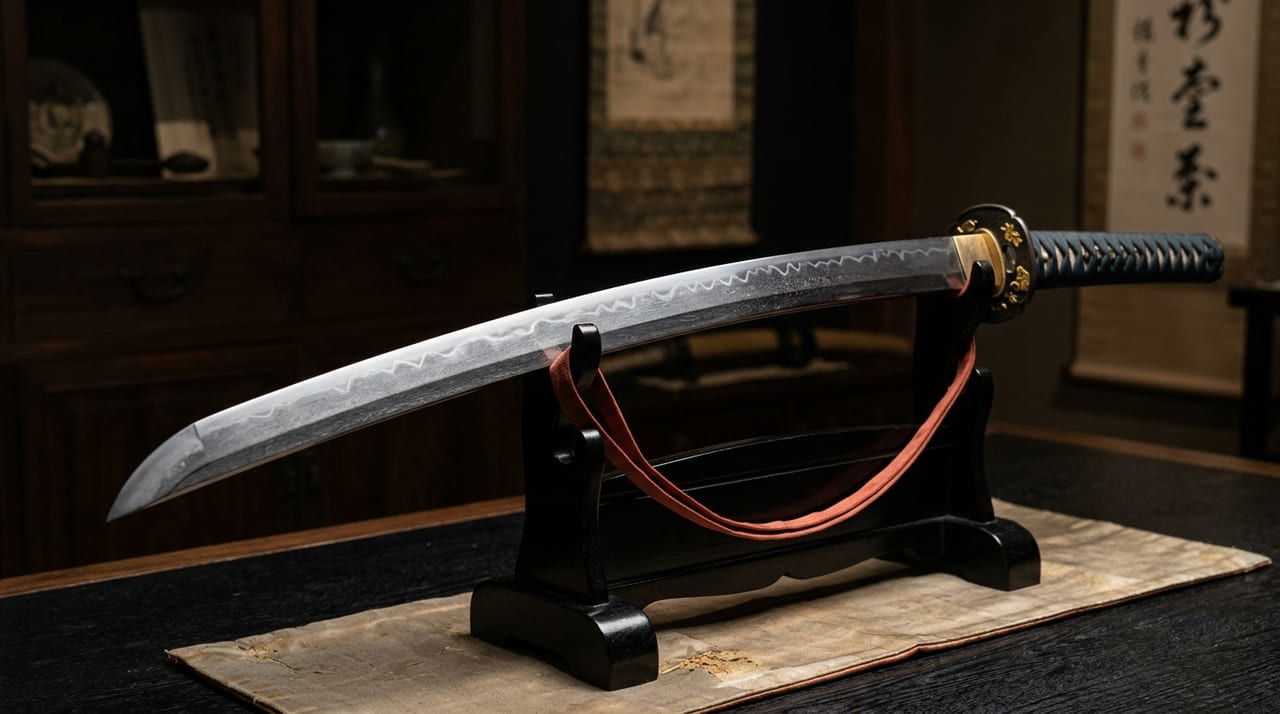 * Image is for illustrative purposes only.
Table of Contents
Complete Guide to Purchasing Nihontō for Foreign Visitors to Japan — How to Tell the Real Thing
When foreign visitors to Japan purchase nihontō as souvenirs, many find themselves confused by the distinction between "genuine swords" and "replicas." Judging quality and authenticity is a difficult task for the uninitiated. This guide is intended to clearly explain the key points for identifying genuine swords so that English-speaking tourists can purchase nihontō with confidence.
Souvenir Swords and Genuine Swords — A Fundamental Difference
Characteristics of Souvenir Swords
"Souvenir swords" sold at tourist destinations prioritize decorative appeal over functionality. They have the following characteristics:
- Material: The blade is made of aluminum alloy or stainless steel rather than genuine steel.
- Weight: They tend to be significantly lighter than genuine swords (which weigh 800–1,000 g for a nagasa of 60 cm).
- Mei: Machine-engraved in a factory, not hand-carved by an individual kaji.
- Price: Inexpensive (roughly 5,000–20,000 yen) and easy to buy.
- Decorativeness: Often fitted with elaborate saya and decorative fittings.
The purpose of souvenir swords is to offer tourists a memento of Japanese culture; no consideration is given to their performance as actual swords.
Characteristics of Genuine Swords
Genuine swords have the following characteristics:
- Material: Forged from traditional steel (tamahagane). They undergo a complex and precise process.
- Weight: They have an appropriate weight proportional to the nagasa. One feels their heft when holding them.
- Mei: They bear hand-carved mei by the tōkō. The script style and manner of carving show individual character.
- Price: Expensive (100,000 yen and above as a standard), and works by particularly renowned tōkō are higher still.
- Functionality: Designed with actual cutting use in mind.
Genuine swords are works of craft, the crystallization of centuries of tradition and skill.
Checkpoints Before Purchasing
1. Check the Material
Genuine swords are forged from a traditional steel called tamahagane. It is refined from iron ore using indigenous ironmaking techniques and possesses unique properties. Tamahagane contains trace impurities, which give rise to the character of the jigane.
- Genuine sword: When looking at the blade, the ground color (the color of the jigane) is a clear, vivid black with a luster.
- Fake: The blade has a silver or silver-plated appearance with an artificial shine.
2. Look at the Mei
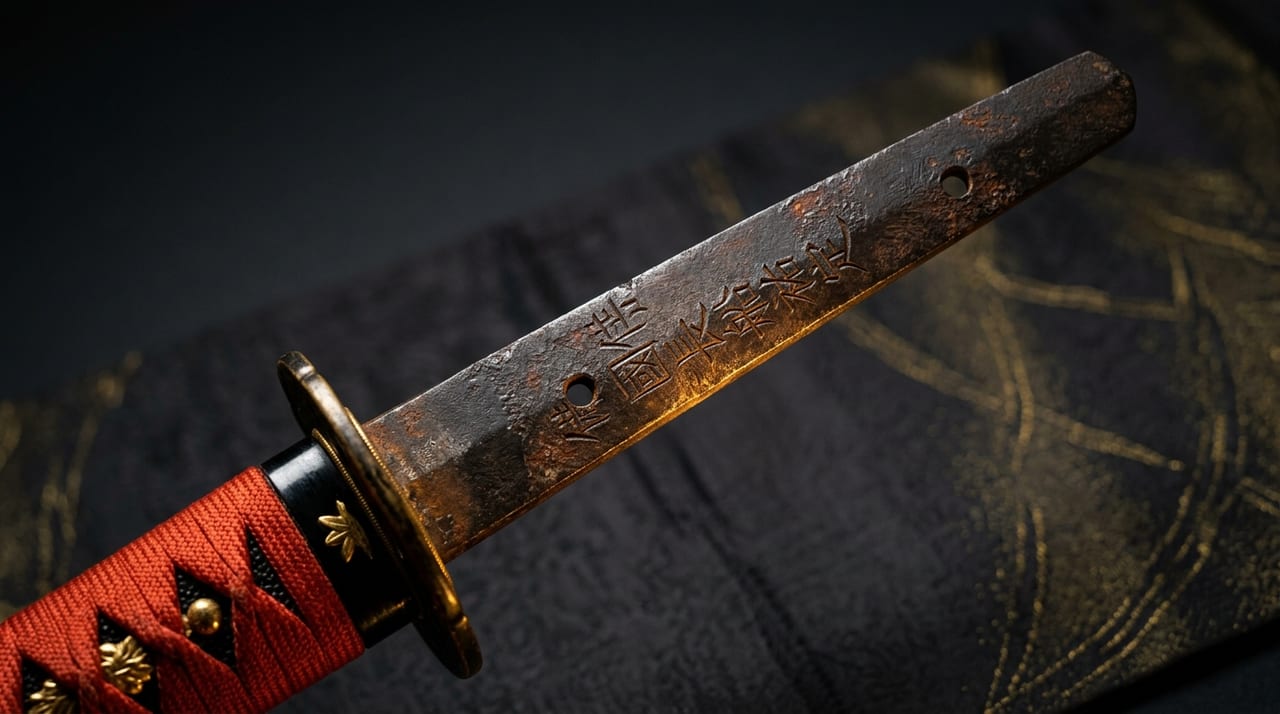
Examine the mei carved into the nakago of the sword. The mei is the tōkō's signature and is the most important indicator of authenticity.
- Genuine: Hand-carved by a craftsman, with non-uniform characters. The lines of the mei are deep and may show signs of corrosion.
- Fake: Machine-engraved, with characters that appear uniform and perfect. The depth of the lines is consistent, giving an impression of being too new.
3. Feel the Weight
When holding a sword, its balance and weight are important criteria for judgment. A genuine sword has appropriate weight and requires a certain amount of force to hold.
- Genuine (nagasa 60 cm): Approximately 800–1,000 g. It has a solid weight and naturally tends downward when held.
- Fake: Light, with a feeling of floating when held. Easy to handle but lacking in substance.
4. Look at the Sori
The sori of the sword — the arc-shaped curve of the entire blade — is the most important element demonstrating the tōkō's skill.
- Genuine: A beautiful, gradual sori. The sori is not uniform but varies subtly in each part, tracing a flowing curve.
- Fake: The sori is unnatural or has almost no curvature. The limitations of the manufacturing process are visible.
5. Check the Habaki
The habaki is the metal ring at the junction between the blade and the tsuka. This part is also an indicator of authenticity.
- Genuine: Made of copper or brass, with signs of age. Firmly fitted to the tsuka and does not move.
- Fake: Inexpensive metal with nickel plating. May be loose and rattling.
Purchasing Guide by Price Range
5,000–30,000 yen
These are primarily souvenir swords. They have high decorative value but no practical use. They are suitable for purchase as "Japanese mementos." It is important for buyers to understand their value as keepsakes.
30,000–150,000 yen
Machine-forged swords or simple swords made by tantan (single forging). Some are intended for actual cutting use. This is a price range with varying quality.
150,000 yen and above
Authentic swords made using traditional tanren methods. Crafted by hand by artisans, aiming to combine artistic value with functionality. Such swords hold long-term investment value.
Important Notes When Purchasing
1. Choose a Trustworthy Shop
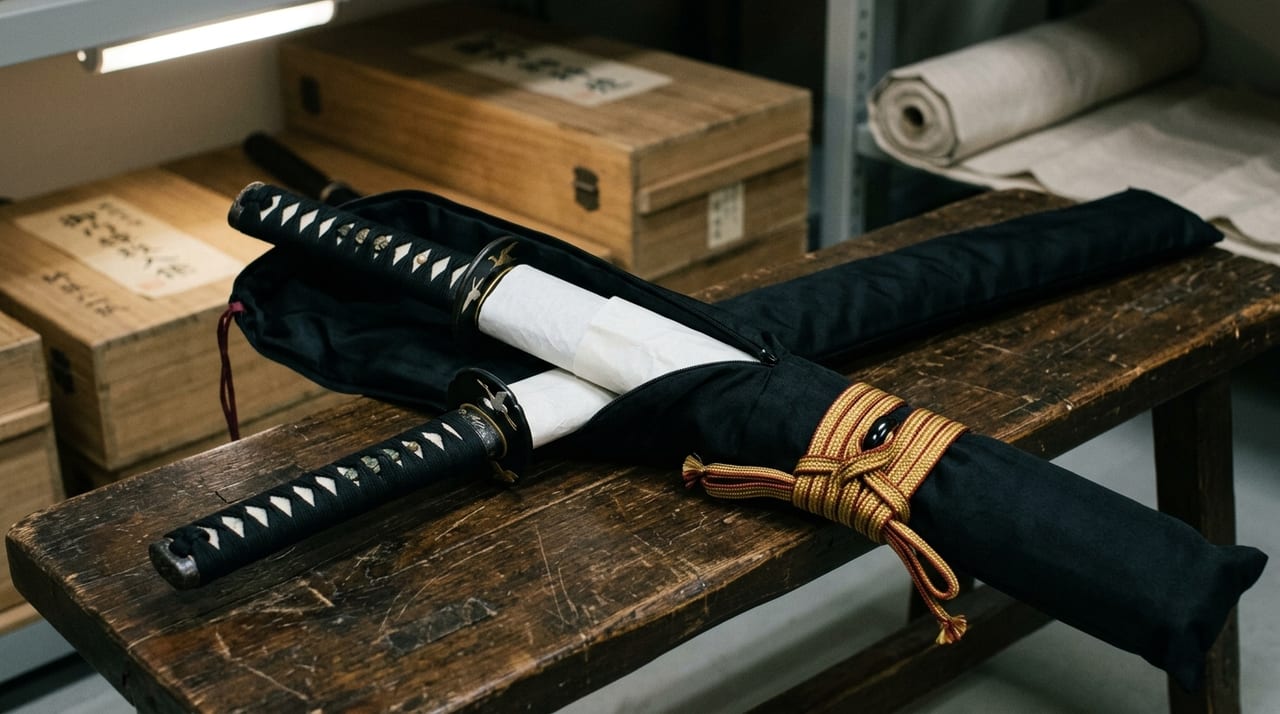
Purchasing from a specialized nihontō dealer or a large department store is recommended. There is a risk that quality and authenticity cannot be guaranteed at small souvenir shops in tourist areas. One should choose a shop where expert advice can be obtained.
2. Check for a Certificate
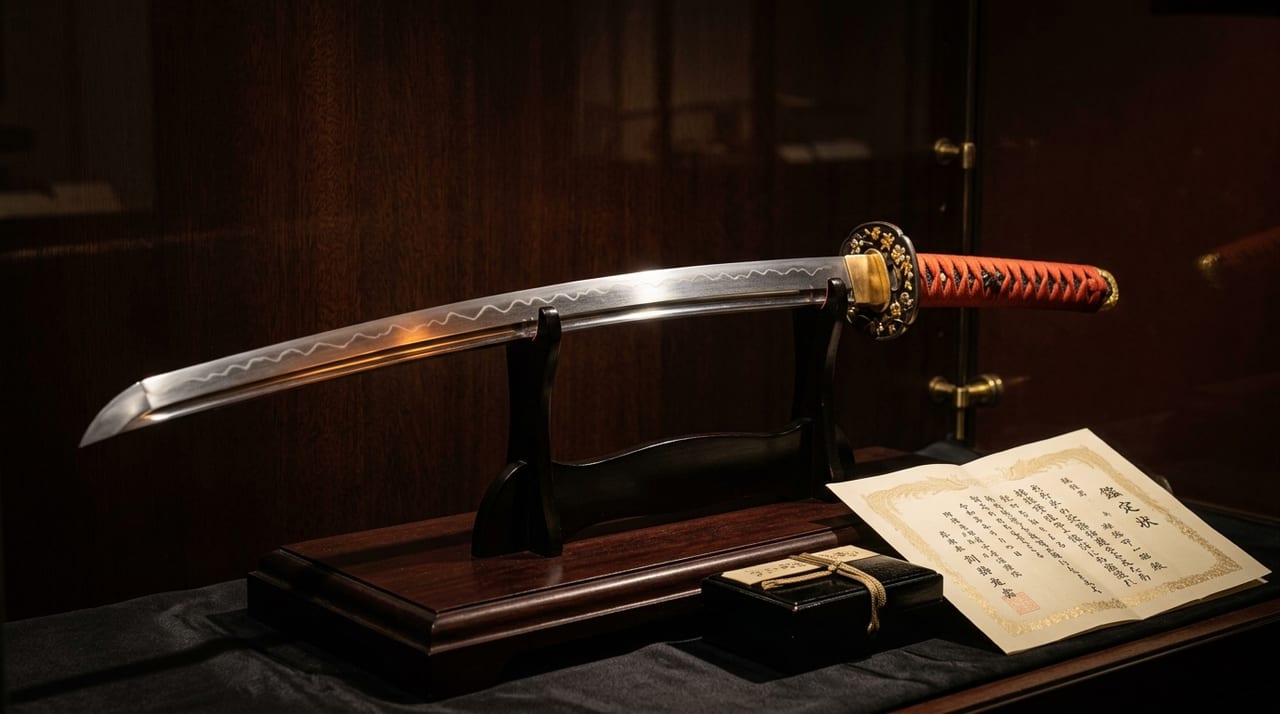
Serious swords often come with a kanteisho. It contains information about the characteristics of the blade, the period of production, the maker, and so on. The kanteisho is an important document certifying the value and provenance of the sword.
3. Understand the Export Procedures
To take a sword out of Japan, one must obtain the Agency for Cultural Affairs' "Export Inspection Certificate for Antique Art Objects" and return the registration certificate to the Board of Education of the prefecture where it was registered (Tokyo Metropolitan Board of Education, "When Exporting Firearms and Swords"). There are also restrictions in the destination country. Check the laws of the destination country and complete all necessary procedures. Many countries prohibit the importation of live blades, and carrying one without completing the necessary procedures may constitute a criminal offense. Prior confirmation is absolutely essential.
Conclusion
Genuine nihontō are works of craft and fine art with a tradition of more than 1,000 years. When purchasing, it is important to make a comprehensive judgment based on price, material, and maker, and to choose a sword suited to one's own purpose. Nihontō are not mere souvenirs but objects of great value representing Japanese culture.