A Step-by-Step Guide to Exporting Japanese Swords Overseas
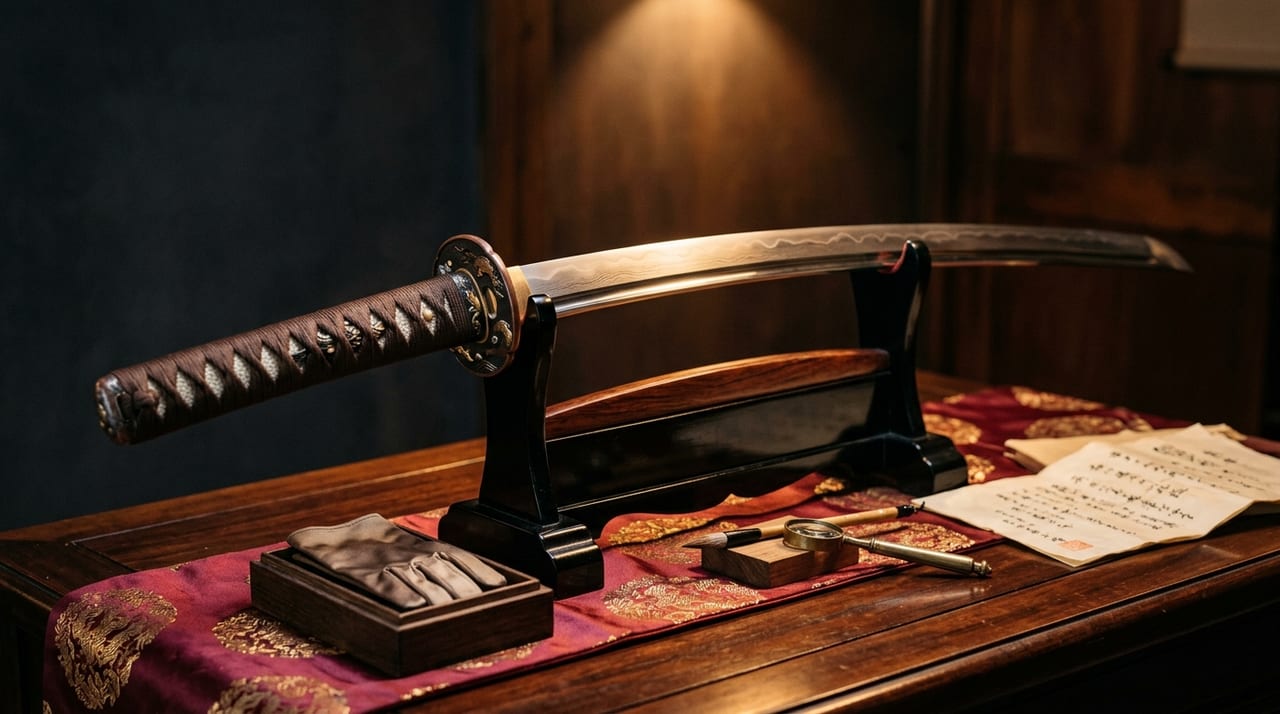 * Image is for illustrative purposes only.
Table of Contents
Japanese Sword Overseas Export—The Reality of Increasing International Trade
Against the backdrop of expanding inbound tourism and growing global interest in Japanese culture, the demand for Japanese sword overseas exports and personal transfers continues to increase. The circumstances are diverse: sales to collectors, Japanese residents abroad bringing home collected blades, and foreign purchasers taking them back to their home countries.
Japanese sword exports require complex procedures that intertwine regulations as "cutlery" and as "cultural property." This guide explains all procedures step by step.
Step 1: Confirming Whether Export Is Possible
Before export, you must first confirm whether "this sword can be exported."
Swords Prohibited from Export
The following swords are prohibited from export under the Cultural Property Protection Law:
- Swords designated as National Treasures or Important Cultural Properties: Absolutely prohibited from export
- Important Art Objects (formerly designated by the Ministry of Education): Prohibited from export in principle
- Swords without registration certificates (unregistered swords): Their domestic possession itself is illegal and export is not possible
Swords Requiring Export Permission
Swords manufactured more than 50 years ago (virtually all traditional Japanese swords) require submission of an "Export Certification Application for Antique Art Objects."
Cases Where Permission Is Not Required
- Swords manufactured less than 50 years ago (new Japanese swords by contemporary swordsmiths)
- Foreign products (foreign swords and replicas)—however, cutlery regulations must be confirmed separately
Step 2: Applying for Export Certification for Antique Art Objects
When exporting Japanese swords manufactured more than 50 years ago, you must apply to the Agency for Cultural Affairs for an "Export Certificate for Antique Art Objects."
Application Destination
Agency for Cultural Affairs, Culture Bureau, Fine Arts Division (Antique Art Object Export Certification Section) *The Agency for Cultural Affairs has relocated to Kamigyo Ward, Kyoto City. Confirm the latest address and contact information on the Agency for Cultural Affairs official website.
Documents Required for Application
- Export Certification Application for Antique Art Objects (in the format prescribed by the Agency for Cultural Affairs)
- Copy of the sword's registration certificate
- Photographs of the sword: Full blade (front and back), nakago, close-up of the signature, hamon
- Document stating the reason for export: In the case of sale, a sales contract or purchase order
- Destination information: Country name, recipient's name and address
From Application to Approval
Normally 2 to 4 weeks. Delays may occur during busy periods such as year-end and New Year holidays. It is advisable to plan the application timing with sufficient margin.
Cost
The application itself is free, but costs incurred for preparation such as photography and translation are borne by the applicant.
Step 3: Customs Export Declaration
Once you obtain the Export Certificate for Antique Art Objects, you must file a customs declaration at the time of export.
Documents Required for Declaration
- Export Declaration
- Export Certificate for Antique Art Objects (issued by the Agency for Cultural Affairs)
- Commercial invoice: In the case of sale
- Packing List
Precautions for Customs Export Declaration
Customs records the "blade length" and "length of the blade body." Confirm in advance that the declared contents match the actual object.
Step 4: Confirming Import Regulations of the Destination Country
Even if procedures on the Japanese side are complete, there is no point if the sword cannot be imported in the destination country. It is essential to research each country's regulations in advance.
Overview of Import Regulations in Major Countries
United States (USA)
- The import of swords itself is not prohibited at the federal level, but some state laws such as California have regulations
- Blade length restrictions vary by state
- The tariff classification differs depending on whether imported as a replica/decorative item or as a functional blade
Germany and EU Countries
- Import regulations based on the EU Arms Directive exist
- Germany has no blade length restrictions as a craft item, but local possession regulations must be confirmed separately
- France has somewhat stricter regulations on possession and carrying
United Kingdom
- Carrying swords with a blade length of 3 inches or more in public places is prohibited
- Possession for collection and exhibition purposes is generally permitted
- Whether import permission is required depends on the item
Australia
- Regulations differ by state. Import as antiques or art objects is generally permitted, but functional purposes are strictly regulated
Mainland China
- Individual imports of swords are in principle strictly regulated. In the case of commercial export, procedures through local importers are required
For more detailed information on required documents and customs procedures for each country/region, Japanese Sword Overseas Export Country-by-Country Guide is also helpful.
How to Confirm the Latest Local Laws
Since regulations in each country change from time to time, confirm the following before shipment:
- Inquire with embassies or consulates in Japan
- Confirm with local importers or lawyers
- Refer to country reports from the Japan External Trade Organization (JETRO)
Step 5: Packing and Selection of Shipping Providers
Shipping Japanese swords often cannot be handled by standard courier services, and specialized packing and transportation are required.
Basic Principles of Packing
- Do not touch the blade with bare hands: Use cloth gloves to prevent oils from fingerprints causing rust
- Pack in shirasaya: Packing a bare blade is dangerous
- Use sufficient shock-absorbing material: Combine wooden cases with cushioning materials such as urethane foam
- Restrict blade movement: Securely fix the blade so it does not move within the package
Air Cargo Shipment
Swords may be subject to airlines' dangerous goods regulations as "cutting implements."
- Not allowed as carry-on luggage: Carry-on luggage is prohibited regardless of blade length
- Checked baggage: Some airlines allow transportation as checked baggage, but advance confirmation is essential
- Air Cargo: Using a specialized air cargo company is most reliable
Recommended Shipping Methods
- International Mail (EMS): Swords are generally not accepted
- International Courier (FedEx, DHL, UPS): Individual handling as "precision equipment/art objects" is required. Advance inquiry is essential
- Specialized Art Shipping Companies: Most secure but more expensive. Choose a company with experience in international sword transportation
Step 6: Arranging Insurance
When transporting expensive Japanese swords internationally, appropriate insurance coverage is essential.
Types of Insurance
- Export cargo insurance: Covers theft, damage, and loss during transport
- Fine Art Insurance: Special insurance for high-value art objects. Choose one that covers international art transportation
Setting Insurance Coverage Amount
If you have an appraisal from NBTHK (Japanese Art Sword Preservation Society), refer to the stated valuation. If the valuation is unclear, it is advisable to set it after obtaining an expert appraisal.
Common Troubles and Solutions
If Detained by Customs
If detained by customs in the destination country, respond in the following order:
- Obtain and present the Export Certificate for Antique Art Objects and registration certificate from the export source (Japan)
- Contact a local importer or lawyer
- Request assistance from the Japanese embassy or consulate in the destination country if necessary
If Export Certification for Antique Art Objects Is Not Granted
If the Agency for Cultural Affairs determines that the sword is equivalent to an Important Cultural Property, certification may not be granted. In that case:
- Consider selling or storing domestically
- Long-term loan to overseas museums is also a worthwhile option
Summary—Proper Procedures Support the Global Promotion of Japanese Swords
While Japanese sword overseas export requires multiple legal procedures, proper compliance makes it an important means of delivering Japanese sword culture to enthusiasts worldwide. Please confirm each step of this guide and work carefully with the Agency for Cultural Affairs, customs, and specialized vendors to achieve safe and legal export. Toukenza promotes the appeal of Japanese swords both domestically and internationally, and accepts purchases and inquiries online.