Legal Procedures for Exporting Japanese Swords Overseas: Customs, Cultural Property Law, and Export Permits
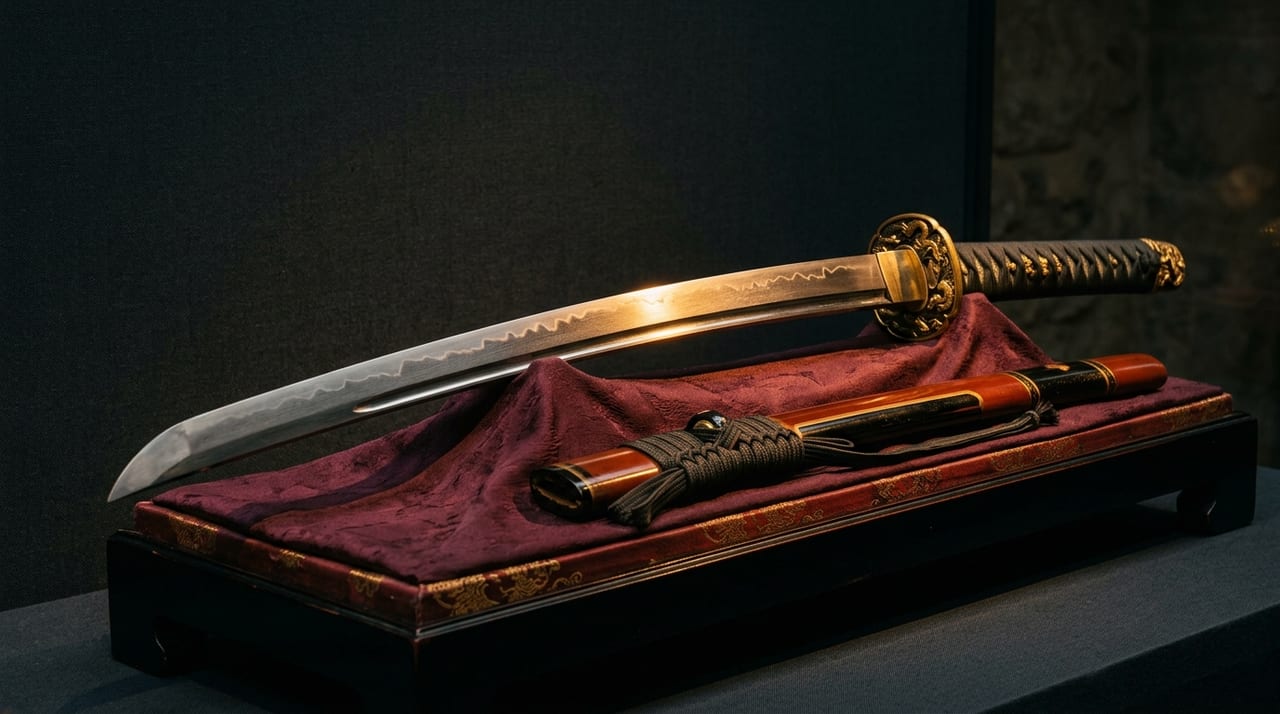 * Image is for illustrative purposes only.
Table of Contents
The Legal Landscape of Japanese Sword Exports——Understanding Dual Regulations as the Starting Point
When sending Japanese swords overseas, it is essential to understand "dual regulations"—both domestic law and the laws of the destination country. Domestically, the Cultural Properties Protection Law (Agency for Cultural Affairs), the Explosives Control Law, and the Swords and Firearms Control Law (Ministry of Economy, Trade and Industry and National Police Agency) are intertwined. Abroad, the destination country's weapons regulations, tariffs, and cultural property import restrictions apply. Proceeding with procedures without grasping the full picture can result in the worst-case scenario of customs seizure or confiscation.
Application Categories Under the Cultural Properties Protection Law
If a Japanese sword is designated as a "cultural property" (National Treasure or Important Cultural Property), export is prohibited in principle (Agency for Cultural Affairs permission is required, but is effectively denied in practice). Conversely, swords with no designation or those registered as registered art objects face no export restrictions under the Cultural Properties Protection Law. However, items registered with the Agency for Cultural Affairs as "registered art objects" require export applications, and review can take several months.
Relationship with the Swords and Firearms Control Law
A registered art sword with a registration certificate is legal to possess. The act of exporting and carrying it abroad can be processed lawfully by attaching the registration certificate. However, swords (blade length over 15 cm) may be classified as "weapons" under the Tariff Rate Law, making the selection of an export tariff item number (HS code) critical.
Export Permits and Ministry of Economy, Trade and Industry Procedures
Exports of weapons and weapons-related goods from Japan are regulated under the Foreign Exchange and Foreign Trade Law. In the case of general art Japanese swords, the question becomes whether they fall under "weapons" under the Foreign Exchange Law. In practice, registered art swords are often treated as "art objects or antiques," so the need for export permit applications (Minister of Economy, Trade and Industry approval) is limited.
However, there are exceptions. When swords with blade lengths exceeding 30 cm are exported in large quantities (on a commercial scale), or when supply to military or law enforcement agencies is suspected, advance consultation with the Ministry of Economy, Trade and Industry's Trade and Economic Cooperation Bureau is recommended. For cases where private collectors carry out one or two swords for personal collection purposes, permit applications are often unnecessary, but it is advisable to confirm with customs.
Export Customs Procedures in Practice——On-the-Ground Operations at Narita, Haneda, and Kansai
Customs declaration begins when the exporter submits an "Export Declaration" electronically (NACCS) or by paper. For Japanese swords, prepare the following documents in advance:
- Copy of the original registration certificate: The Swords and Firearms Registration Certificate issued by the Prefectural Board of Education.
- Photographs of the sword: Photographs showing both sides, the ridge, and the hamon that allow confirmation (a total of 5–8 photos).
- Expert appraisal certificate (optional but recommended): An appraisal certificate issued by the Japan Society for Preservation of Japanese Art Swords (NBTHK) is effective in proving the sword's value as an art object.
- Proof of purchase and ownership: Sales contracts, receipts, and similar documents.
HS Code selection: Art Japanese swords are often classified as "9705.00 (Collectors' pieces)" or "9706.00 (Antiques)." If declared under "9307.00 (Weapons)," regulations become stricter. It is important to document the artistic character of the sword and select the appropriate code.
Destination Country Regulations——Main Country Checklist
United States: The importation of Japanese swords for decorative and art purposes is permitted under federal law, but possession regulations vary by state. California has notification regulations for the possession of swords exceeding a certain blade length. Submit an NBTHK appraisal certificate and a copy of the registration certificate to customs.
EU (Germany, France, etc.): The EU has no unified Japanese sword import prohibition, but Germany's Waffengesetz (Weapons Law) requires notification or permits for the possession and importation of swords that can function as "weapons." France has category-specific regulations; for art objects, importation through specialty shops or importers is recommended.
Australia: All imports of blades with blade lengths exceeding 10 cm require a "Weapons Import Permit." Art swords are not exempt, and the procedures, costs, and time requirements are substantial.
China and Taiwan: Mainland China makes personal sword importation virtually impossible (managed as weapons). Taiwan allows imports for museum or gallery donation and exhibition purposes once permission is obtained.
Utilizing Professional Services and Options for Individual Exporters
Individuals relocating or traveling abroad with Japanese swords are strongly advised to use specialized shipping and customs brokerage services. Art transportation specialists (Chronopost, Helios, Yamamoto Art Transport, and others) are well-versed in weapons-related regulations in each country and handle everything from document preparation to customs clearance and arrangements at the destination.
Export broker fees for one or two swords typically range from ¥50,000 to ¥150,000 (depending on shipping distance and insurance amount). For sales through auction houses (Christie's, Bonhams, etc.), the auction company handles export procedures, minimizing individual burden.
The overseas export of Japanese swords is complex in terms of procedures, but it can be accomplished lawfully by gathering the proper documents and consulting with experts. The two critical points are "thoroughly proving the sword's status as an art object" and "confirming the laws of the destination country in advance." Maintaining transparency and compliance with procedures in transmitting cultural heritage to the next generation ultimately contributes to the long-term international dissemination of Japanese sword culture.