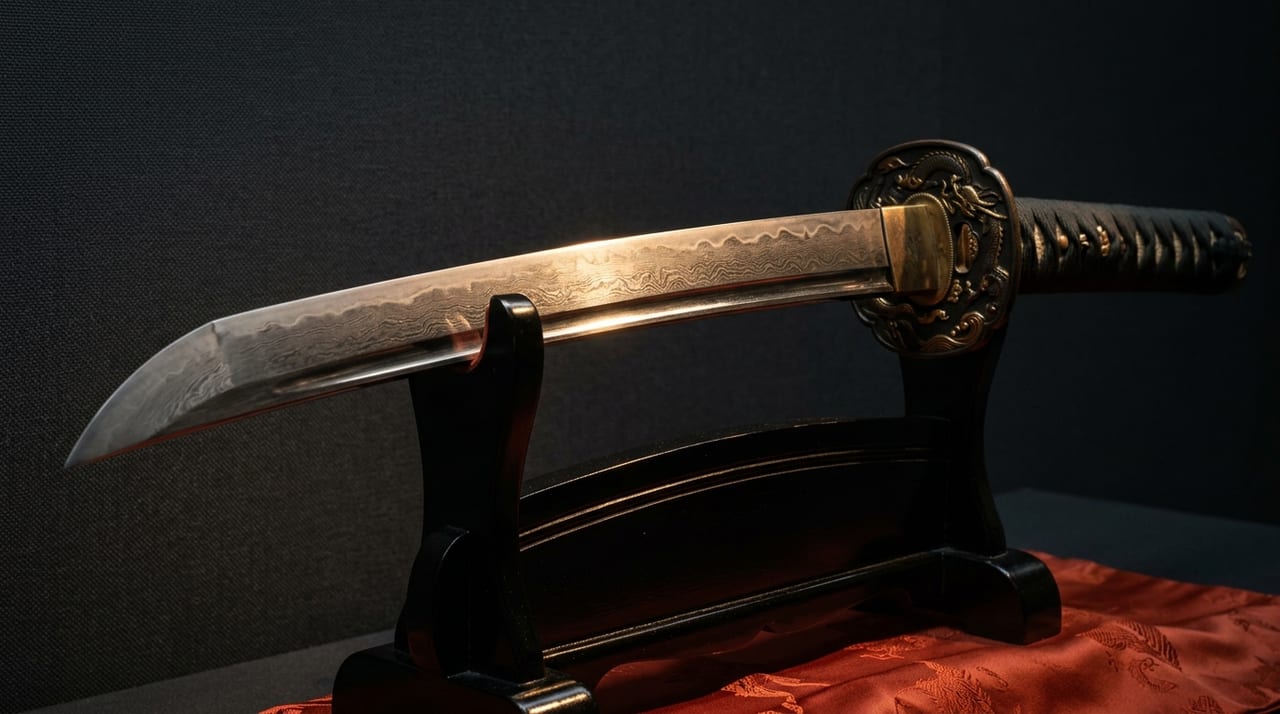
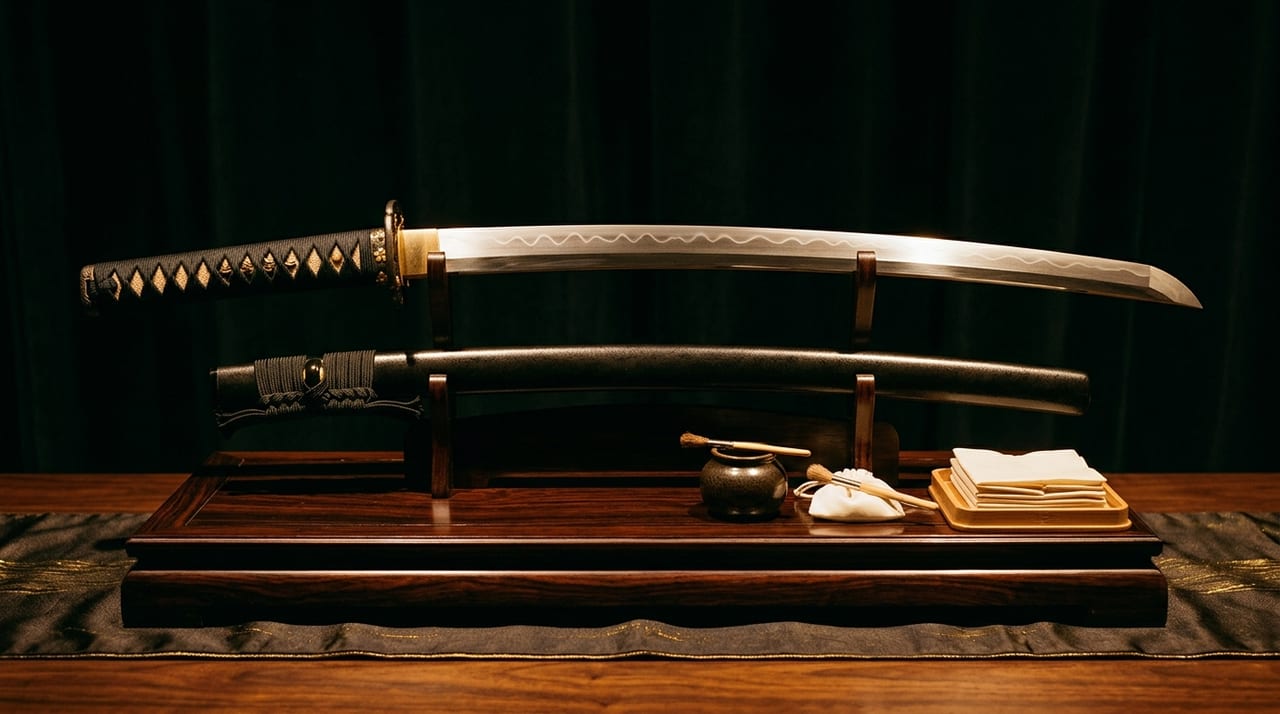
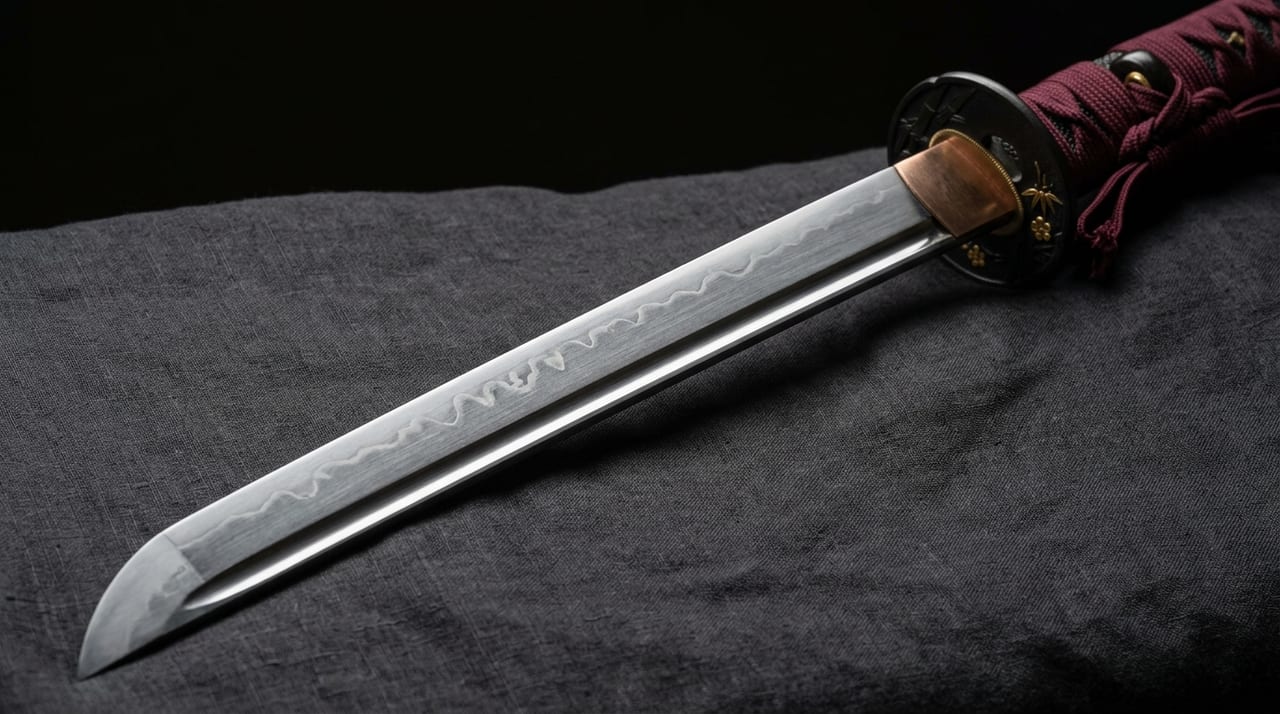
Restoration Techniques for Broken Japanese Swords——The Rehabilitation Process Performed by Polishers and Sword-smiths
 * Image is for illustrative purposes only.
Table of Contents
What Happens to Broken Swords——The Possibilities and Limits of Restoration
While broken Japanese swords are rare in the modern era, they still occur. The causes vary: failures in test cutting, damage from falls, deterioration from improper storage, and damage to historical blades with records of battlefield wear. The question arises: are broken swords discarded or restored——and the answer is that in most cases, restoration is both possible and undertaken.
However, restoration demands strict technical judgment. The appropriate course of action varies greatly depending on the location and severity of the break, the condition of the steel, and the historical value of the sword. This article systematically explains the restoration processes that contemporary polishers and sword-smiths actually perform on broken blades.
Types of Breaks and Initial Assessment
Before restoring a broken sword, one must first thoroughly investigate how the break occurred.
Transverse Break (Ousetsu): The blade breaks nearly perpendicular to its width. This results from strong impact or sudden bending forces. The shape of the fracture surface reveals whether the steel is high-quality with good ductility or susceptible to brittle fracture.
Longitudinal Crack: A crack running along the spine or blade direction. This occurs when forging problems exist or when steel composition is uneven. Longitudinal cracks are difficult to repair and are often discarded.
Chip (Kekake): A section of the tip or blade edge is missing. While distinct from a break, the repair process shares many common steps.
During initial assessment, the color of the fracture surface, particle fineness, and rust condition are examined visually and under magnification. A bright, white fracture with fine particles indicates high-quality steel. A gray fracture with coarse particles suggests advanced steel deterioration.
Shaping the Break by the Polisher——Restoration Through Shortening
The most common restoration method for broken swords is shaping the break and refinishing by the polisher (togishi), similar to a shortening process (suriage).
For example, if a tachi experiences a transverse break 20cm from the tip, polishing and shaping the break can regenerate it as a shorter blade. Historical records document numerous cases of tachi (over 70cm) being reborn as wakizashi (30-60cm) or tanto (under 30cm). This embodies the same fundamental philosophy as shortening, applying traditional techniques that adjust overly long swords to practical sizes.
The shaping process:
1. Fracture Surface Assessment: Confirming the steel quality, forging characteristics, and extent of the hardened edge.
2. Tip Shaping: The fracture surface is formed into a "kisaki" (tip). The tip shape—small, medium, or large—is selected based on steel quality and period style.
3. Polishing: Light is restored through dozens of steps, from initial to final polishing.
4. Habaki Remake: Since blade length changes, a new habaki (handguard collar) is created.
5. Fittings Adjustment: The scabbard and handle are refitted to match the new dimensions.
Forge Welding by the Bladesmith——The Technique of Joining Broken Swords
The most technically demanding restoration method is forge welding by the bladesmith (tsugitataé). This is the technique of joining the broken blade and reviving it as a single sword once more.
However, forge welding is rarely performed in modern times. The reasons are:
- It is difficult for the joint to exceed the strength of the original blade
- The differing steel composition and carbon content at the joint make the hardening behavior unpredictable
- For culturally significant swords, the heating involved in forge welding risks damaging their value
Forge welding is performed primarily when a blade has high historical value but insufficient length for restoration through polishing alone, or when the owner strongly desires restoration to its original form.
The process involves heating the fracture surface to high temperature, joining it through forge welding, reshaping by hammering, and then hardening. A fine seam remains at the joint, and traces may be visible as disturbances in the blade pattern even after polishing.
Recovery of Chipped Tips——Tip Reformation
When a tip is chipped, restoration is not as extensive as for breaks, but the specialized technique of "tip reformation" is required.
The polisher refines the chipped portion through polishing while forming the new tip outline. In doing so, the original period style, school, and blade pattern flow are considered, selecting a tip shape that appears natural. For example, a tachi from the Heian-Kamakura period would stylistically call for a small tip, while a large tachi from the Nanbokucho period would call for a large tip.
Assessment and Valuation After Restoration
Swords that have undergone restoration are recommended to be reassessed by authentication organizations such as NBTHK or the Japan Sword Conservation Society. Restoration details, current blade length, and whether shortening was performed are recorded in the authentication certificate and become important records for future sales or inheritance.
Restored swords are generally valued lower than unrestored examples, but those with high-quality restoration, significant historical provenance, or made by renowned smiths often maintain high valuations. Cases exist where important cultural property designations have been maintained even after restoration.
A broken sword is never a "dead sword." Through the skill of craftsmen and modern restoration techniques, most can be passed on to future generations in a new form.