Modern Swordsmiths and Power Tools — Do Electric Furnaces and Grinders Belong in Traditional Sword-Making?
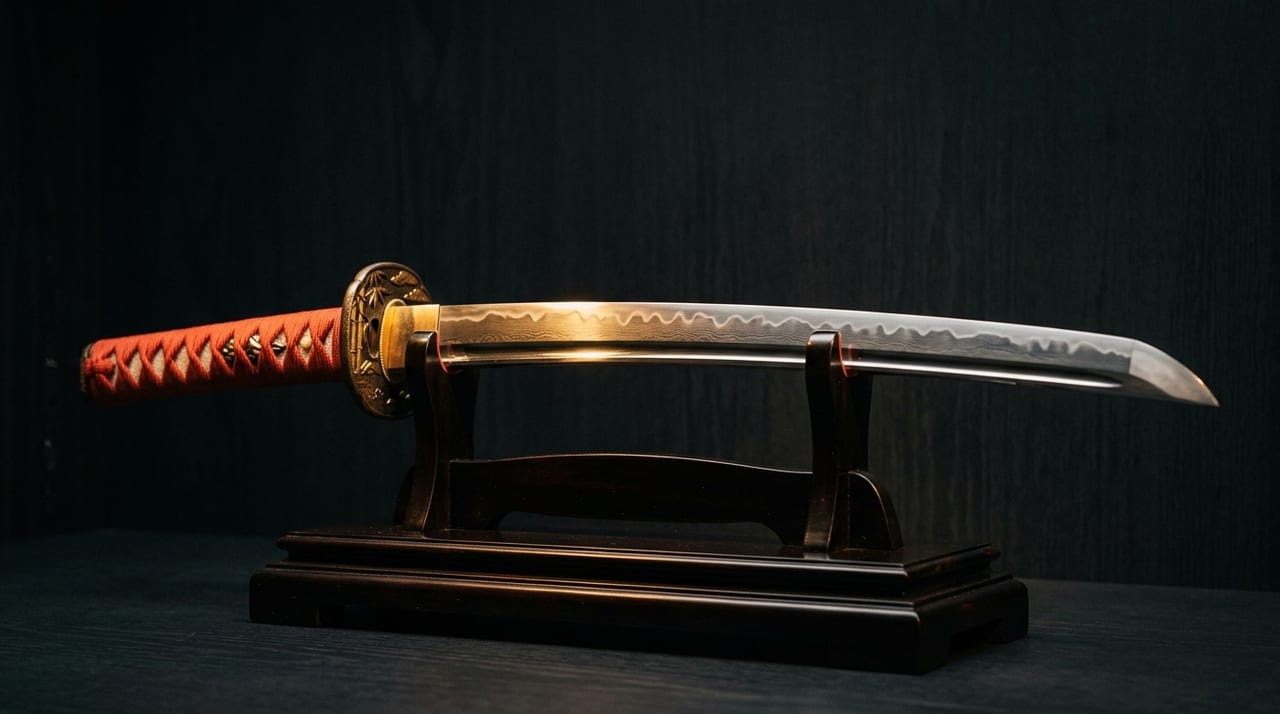 * Image is for illustrative purposes only.
Table of Contents
Japanese sword forging is highly valued as a traditional craft that preserves ancient techniques. However, the equipment that modern swordmakers actually use is not identical to that from before the Edo period. Some swordsmiths have introduced electric drills, electric grinders, and even electric furnaces. "Is the use of modern equipment a denial of tradition, or is it rational evolution?"—this question has been repeatedly debated in sword circles. This time, we will organize the current state of equipment used by modern swordmakers and their perspectives on tradition and innovation.
Modern Equipment in Today's Forges
When visiting a swordmaker's workshop, you will sometimes find modern equipment placed alongside traditional forges that resemble hearths. Let us examine some representative examples.
- Electric grinder (whetstone machine): Some swordmakers use electric rotating whetstones when rough-finishing the blade after forging. The rough shaping process, which would take an extremely long time using only handwork "sen-gake" (scraping), is shortened with an electric grinder. However, in many cases, the finishing stage returns to handwork, with the electric tool used only for rough shaping.
- Electric drill / Drill press: Some swordmakers use electric tools for machining mekugi holes. Since hand drilling requires time and physical effort, there are cases where it is judged more efficient to substitute a high-precision electric drill.
- Electric furnace (muffle furnace / atmospheric furnace): This is the equipment that generates the most debate. Traditional forges use charcoal (white charcoal) as fuel and regulate temperature by sending air through with a bellows (fuigo). Electric furnaces offer precise temperature control with high reproducibility, and by controlling the atmosphere, they make it easier to prevent decarburization and oxidation. It is known that some swordmakers use electric furnaces for trial firing (tameshiyaki) and research purposes related to hamon.
- Chain hoist / Hydraulic press: Some swordmakers use mechanical power to assist forging with large hammers. In modern times, as the traditional uchiko system has declined, this represents an approach to mechanically compensate for the physical demands of repeatedly striking heavy hammers.
The Position of the Cultural Affairs Agency and the Sword Preservation Association's Certification System
In Japan, the profession of swordmaker is managed under a licensing system by the Cultural Affairs Agency, and qualifications are required to manufacture registered swords (bijutsu-katana) based on the Firearms and Sword Control Law. Currently, there are said to be approximately 250 "certified swordmakers" (nintei tosho) registered with the Cultural Affairs Agency as Japanese sword manufacturers (varying by period).
Swords manufactured by certified swordmakers are granted registration certificates as "new swords" (shinsaku-to) and can circulate as artworks. This certification is said to have certain regulations regarding manufacturing methods, but there is no explicit regulation that uniformly prohibits the use of electric tools. What is important is that the sword be "a Japanese sword made using tamahagane and traditional methods," and there is room for interpretation of this standard.
The Public Interest Incorporated Foundation Japan Art Sword Preservation Association (NBTHK) is a major organization conducting sword authentication and preservation activities, and also conducts judging and awards for new swords. The association's judging criteria emphasize the resulting quality of the sword (the beauty of the jihada, hamon, and sugata), with the artistic value of the finished product as the evaluation standard rather than whether modern tools were used in part of the manufacturing process.
Debate Over What "Tradition" Means
On this issue, swordmakers' views vary widely.
The "result over process" faction argues that the beauty, sharpness, and durability of the sword are what matter most, and there is no need to deny using better tools to achieve these qualities. After all, the charcoal used in "traditional forges" is not made in exactly the same way as before the Edo period, and the form of the bellows has also changed over time. This is the point that the answer changes depending on where one places the standard for "tradition."
The "process-focused" faction argues that the "efficiency" gained through using electric tools simultaneously takes away opportunities to acquire skilled technique. In each individual handmade strike lies "embodied knowledge" that senses the state of the steel. Once rough shaping is completed with an electric grinder, the opportunity to read the changes in steel at that stage by hand and eye is lost. From the perspective of technology transmission, this is viewed as a long-term loss.
The "material is the core" faction positions tamahagane (steel derived from tatara iron-making), charcoal, and water hardening as the three essential elements at the heart of Japanese sword tradition, regarding other tools as relatively secondary. In other words, this position holds that even if an electric grinder is used, a sword properly forged from tamahagane with charcoal and hardened with water can be considered a "traditional Japanese sword."
The Possibilities and Limitations of Electric Furnaces
The case of electric furnaces is particularly divisive. Electric furnaces, which allow precise temperature control, hold great value for research and educational purposes. Some researchers believe that when young swordmakers systematically study the relationship between temperature and hamon in hardening, conducting controlled variable experiments with an electric furnace is beneficial.
However, some appraisers point out that swords hardened using an electric furnace in actual production differ in the appearance of the jihada and hamon from those made with the traditional "charcoal furnace + water hardening." While electric furnaces achieve high heating "uniformity," which is advantageous, the complex hamon scenery created as a craftsman engages with the furnace's non-uniformity is said to be difficult to reproduce.
Ultimately, the choice of tools by modern swordmakers depends greatly on each swordmaker's individual philosophy and technical judgment. For viewers and collectors, understanding how a sword was made and evaluating the work with knowledge of the maker's philosophy will lead to a deeper engagement with Japanese swords.