Kozuka and Kōgai — Small Tōsōgu Accessories That Speak to the Warrior's Aesthetic Sensibility and Practicality
 * Image is for illustrative purposes only.
Table of Contents
Kozuka and Kōgai — The Samurai's "All-Purpose Tools"
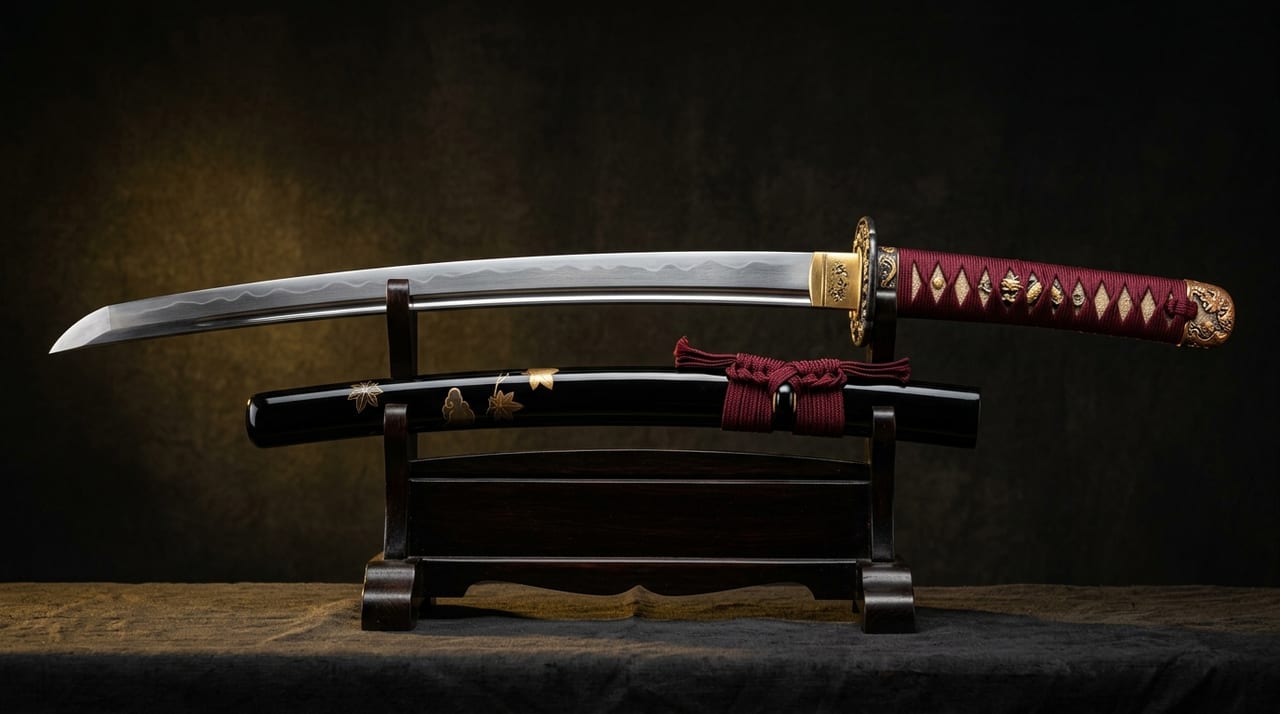
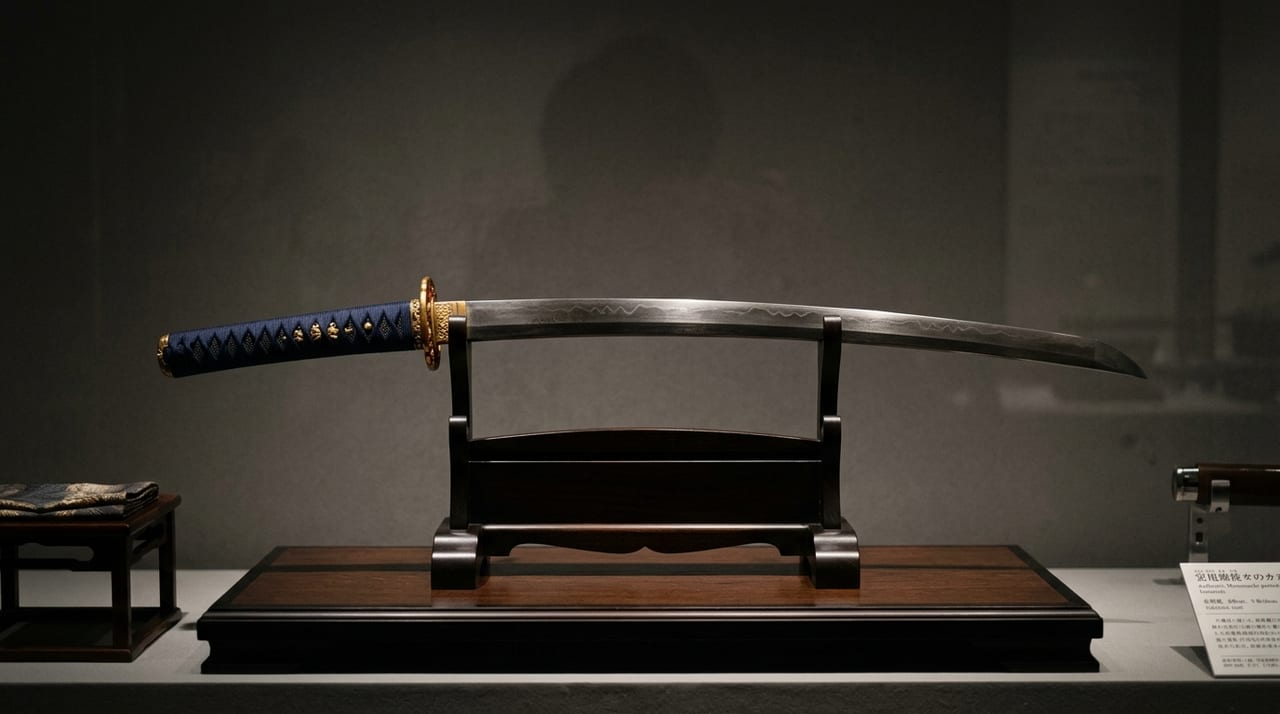
The koshirae (mounting) of a Japanese sword may carry, along the sides of the saya, slender implements called kozuka and kōgai. These have no direct bearing on the sword's combat function, yet they were practical tools used frequently in the samurai's daily life, and at the same time art objects that concentrate the skill and aesthetic sensibility of metalwork craftsmen.
Kozuka consists of a grip (tsuka) and a small knife (kogatana) joined as one piece, and is stored in the kozuka-mizo set into the outer face of the saya. The blade of the kogatana is sharply forged and was used for a variety of everyday tasks by the samurai, including cutting, whittling, and serving as a writing implement. The grip is the principal canvas for metalwork, decorated with refined techniques such as zōgan, kebori, and takabori.
Kōgai is a slender implement stored in the kōgai-mizo on the reverse face of the saya. It was originally used to arrange and dress the hair, serving a function close to that of a modern hairpin. In battle, however, it is said to have served a different purpose: it was inserted into the ear of a severed head, and a wooden tag bearing the warrior's name was tied to it. Like the kozuka, the kōgai received all the skill of the metalsmith and was adorned with lavish decoration.
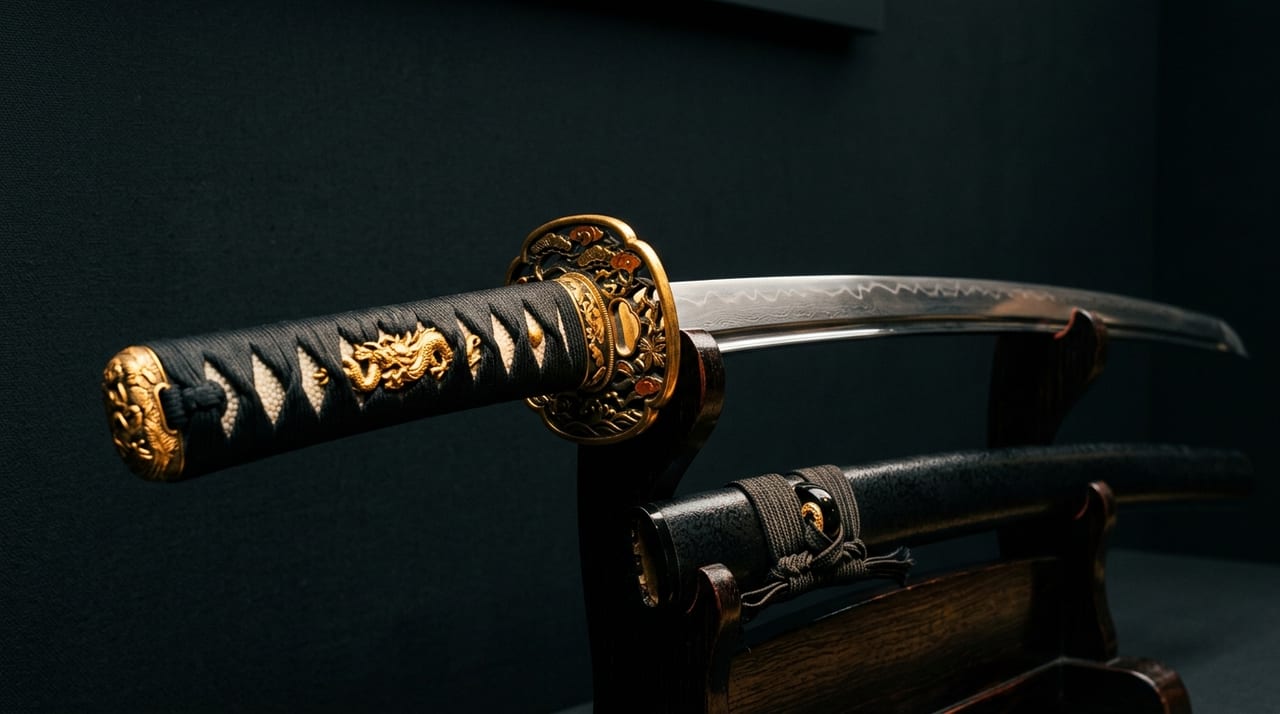
The two are often appreciated as a matched pair, and a set with unified design is called a soroimono. It is also common to combine them with fuchi-kashira and menuki to form a coordinated set known as a mitokoro-mono ("three-place set") or itsutokoro-mono ("five-place set").
History — From Origins to the Golden Age of the Edo Period
The origins of the kozuka and kōgai trace back to the Heian and Kamakura periods. The koshirae of the tachi has long been fitted with kozuka-mizo and kōgai-mizo, and these implements were cherished by the samurai as practical portable tools. Surviving examples from this period tend to be plainly made, with function taking precedence over decoration.
With the onset of the Muromachi period, the artistic refinement of tōsōgu as a whole advanced rapidly. Metalwork craftsmen emerged as independent specialists distinct from swordsmiths, and kozuka and kōgai came to be made as sophisticated art objects. In the Sengoku period following the Ōnin War, warriors vied to commission works from master craftsmen, and the designs of tōsōgu diversified at an extraordinary pace.
From the Azuchi-Momoyama period through the Edo period, groups of metalwork craftsmen — including the Gotō family, the Umetada school, the Higo metalworkers, and the Nara metalworkers — successively established their own distinct traditions. In the peaceful Edo period, as the need for actual combat receded, the aesthetic sensibility invested in tōsōgu grew ever more refined, and kozuka and kōgai came to be prized as emblematic furnishings that demonstrated a warrior's cultivation and wealth.
Master Craftsmen and Schools — A Lineage of Skill and Beauty
The Gotō family was a dynasty of metalwork craftsmen that produced the finest tōsōgu across seventeen generations from the late Muromachi period through the Bakumatsu era. From the time the founding master, Gotō Yūjō, served the shogunal house, works by the Gotō family occupied a singular position in warrior society. Many pieces express auspicious motifs — cranes, tortoises, plum blossoms, pine trees, dragons, and tigers — with dignified elegance in gold takabori zōgan on shakudō grounds, and their refinement served as a model for other schools. Kozuka by the Gotō family are treated as a special category known as "Gotō-mono," and among the surviving masterpieces there are examples still designated as jūyō bunkazai (Important Cultural Property).
The three master craftsmen of Nara metalwork — Sugiura Jōi, Nara Toshinaga, and Tsuchiya Yasuchika — were active in Edo in the eighteenth century and brought innovation to the metalwork world through a naturalistic mode of expression that transcended the conventional formulas of auspicious motifs. The meticulous depictions of insects, grasses and flowers, and animals found in Yasuchika's work are described as nothing less than a painting reproduced in metal.
Higo metalwork developed under the patronage of the Kumamoto domain, with craftsmen such as Hayashi Matashichi and Hirata Hikozō pursuing a pure beauty of distinctive iron grounds and unadorned (somon) surfaces. The clean aesthetic stripped of ornament to the utmost degree commands enduring popularity as an embodiment of the samurai's plain and hardy spirit.
Materials and Techniques — The Essence of Metalwork Art
In appreciating kozuka and kōgai, an understanding of materials and techniques is indispensable.
Among materials, shakudō is considered the most refined. It is an alloy of copper with gold (3–6%) and a small amount of silver, which when treated with nishime processing using plum vinegar or chemical solutions develops a distinctive blackish-purple color. Next, shibuichi is an alloy of copper and silver, characterized by a subdued silver-grey surface. Gold, silver, and iron were also used as materials with their own distinct character.
Techniques fall broadly into two categories: carving and zōgan.
- Kebori is the fundamental technique of incising fine lines
- Katakiribori is a technique that cuts diagonally into only one side of the blade edge to create shadow and depth
- Marubori and takabori are techniques that express motifs with thick, three-dimensional relief
- Zōgan includes methods such as kiri-kane zōgan, in which fine grooves are cut into the metal plate and another metal is set into them, and nunome zōgan, in which a crosshatch-roughened ground is used to hammer in the inlay; combining these produces remarkably detailed expression
Designs range widely across auspicious motifs, seasonal birds and flowers, Chinese poetry, scenes from historical legends, and scenes from kabuki or nō. The chosen subject reflects the period of production, the school, and the tastes and cultivation of the commissioner, making a single kozuka a primary source that speaks to the cultural context of its time.
As an Introduction to Collecting and Appreciation
Compared with swords themselves, another attraction of kozuka and kōgai is that quality pieces circulate from accessible price points. Examples by general workshops of the Edo period start from tens of thousands of yen, while outstanding works by the Gotō family or the Nara metalwork school can reach hundreds of thousands to several million yen. They also command stable demand at overseas auctions as Japanese tōsōgu, and are highly regarded by collectors in Europe and the Americas.
When appreciating a piece, first examine the color and surface texture of the material, then observe the depth of the carving, the delicacy of the lines, and the three-dimensionality of the takabori areas. The luster of the finish and the character of the natural patina that develops over time are also subjects of evaluation. Pieces with a mei (signature) are helpful for identifying the workshop and period, but since the Gotō family used the "Gotō" mei across all generations, a comprehensive connoisseurship is required to authenticate work to a specific generation.
Conclusion — The Warrior's Aesthetic Sensibility Dwelling in Small Metalwork
Though small enough to fit in the palm of the hand, kozuka and kōgai are objects that concentrate the practical wisdom of the samurai and the essence of metalwork art. They fulfill a variety of small everyday tasks, yet the moment they are slipped into the saya, they silently declare the owner's standing and aesthetic sensibility — that duality is the essential appeal of kozuka and kōgai.
Once you have grown accustomed to appreciating the sword itself, do turn your gaze to the side of the saya. The small metalwork piece resting quietly there carries the dialogue between craftsman and warrior across more than several centuries to the present day.