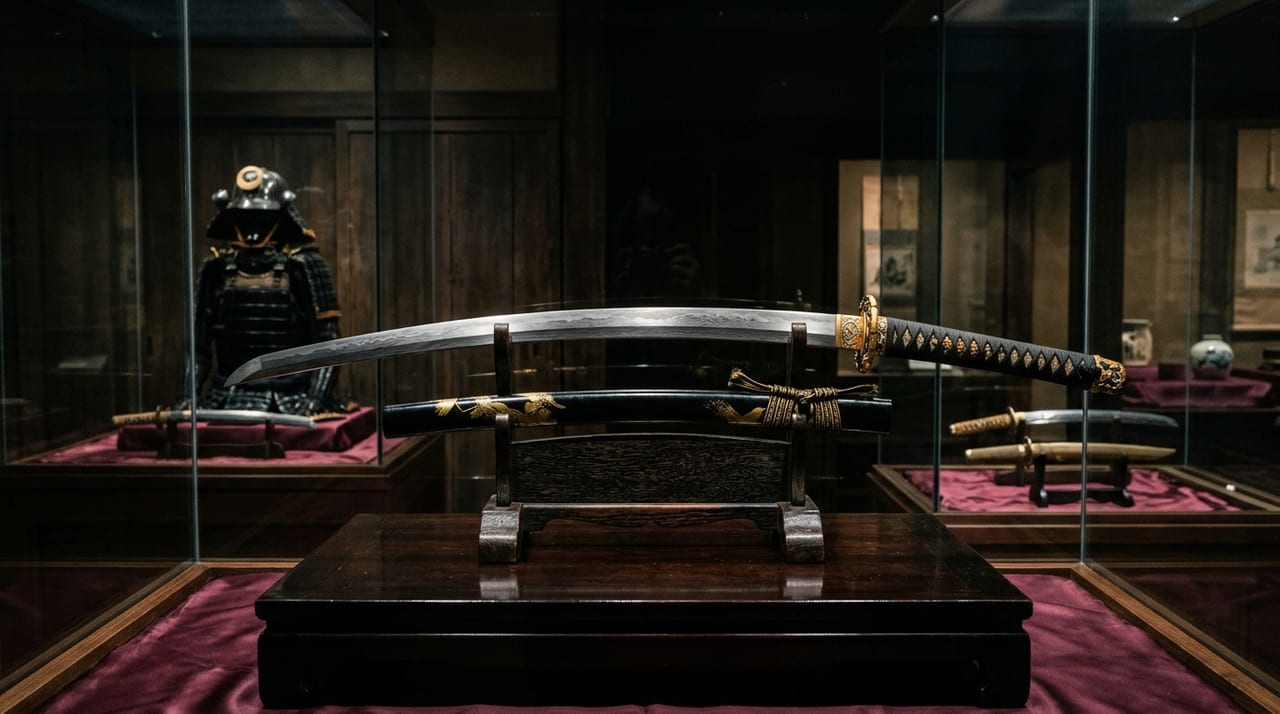
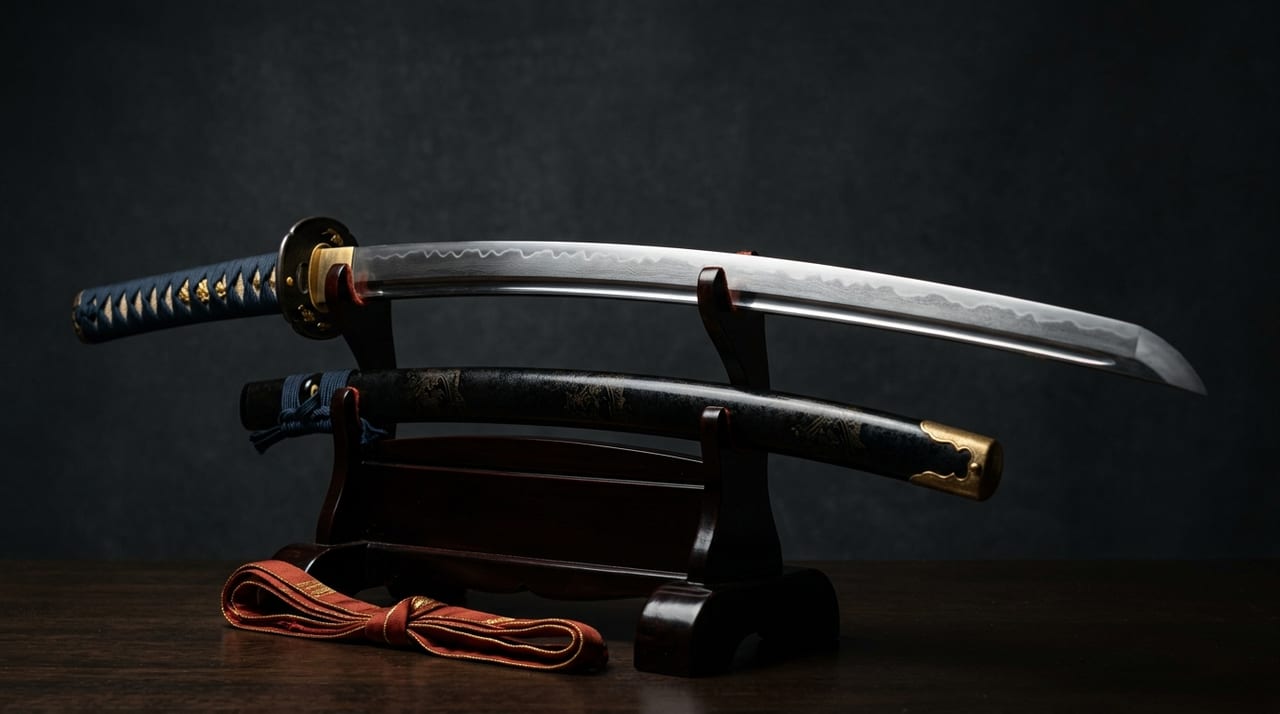
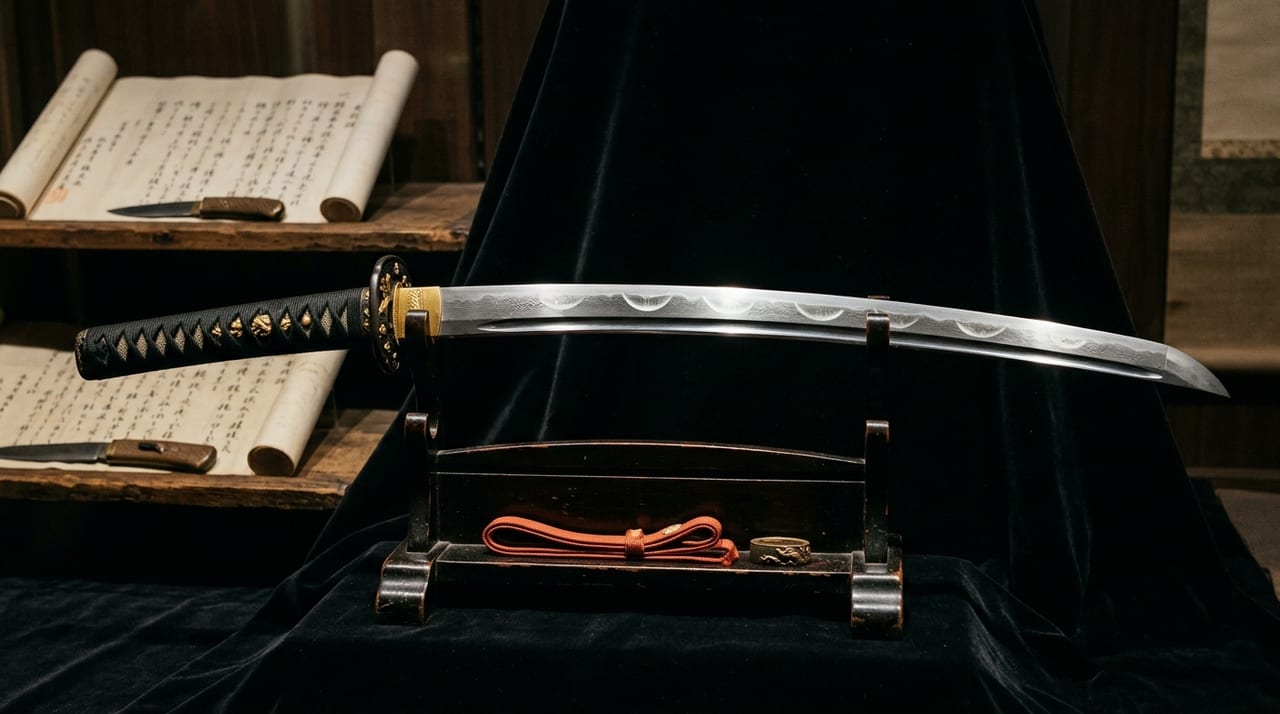
The Kannō Disturbance (1350–1352) and Japanese Swords: How the Early Nanbokucho Civil War Shaped Blade Culture
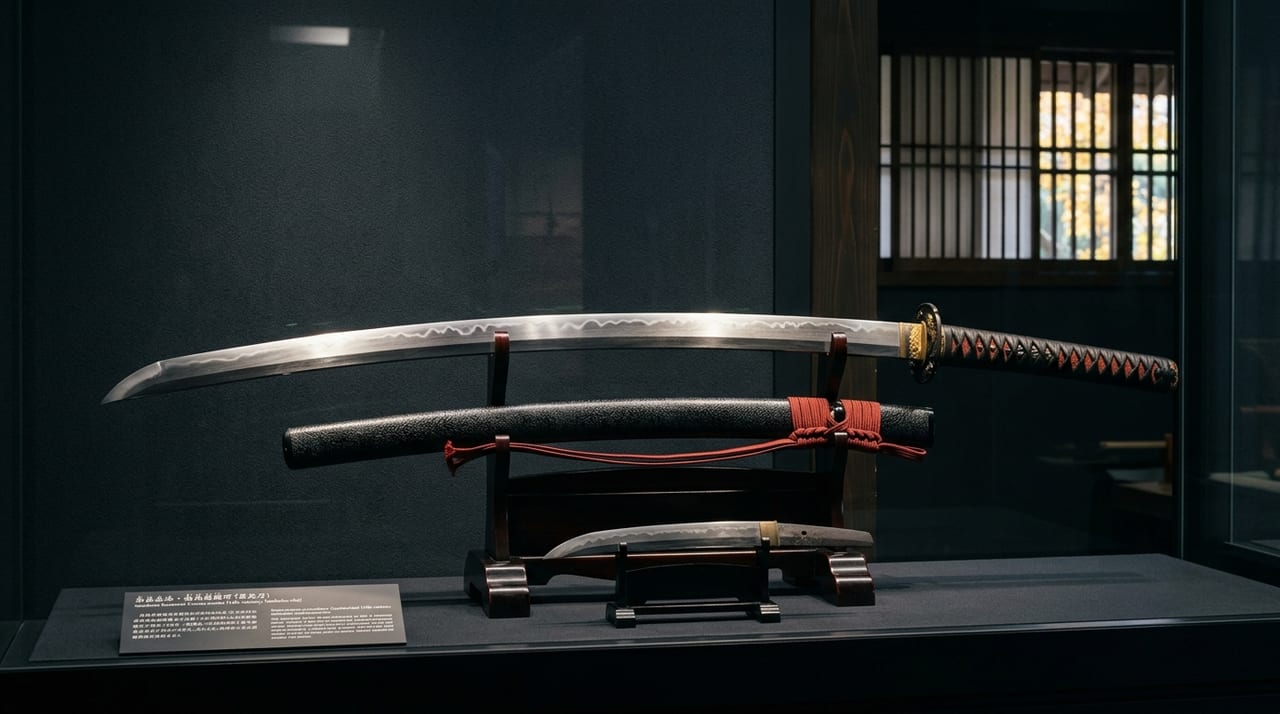 * Image is for illustrative purposes only.
Table of Contents
What is the Kannō Disturbance—An Overview of Complex Power Struggles
Within the Nanboku period (1336–1392), the Kannō Disturbance (1350–1352) was particularly complex political upheaval. Within the Ashikaga shogunate, tensions escalated between Shogun Ashikaga Takauji and his brother Ashikaga Tadayoshi, and with the involvement of close retainers such as Kō no Moronao, internal conflict within the shogunate overlapped with the North-South court struggle, creating multi-layered internal warfare.
After three years of turmoil, the disturbance reached a temporary conclusion with Tadayoshi's death (February 1352), but the struggle between the Northern and Southern courts continued thereafter, and nationwide warfare persisted for more than half a century.
As the name "disturbance" suggests, this political upheaval was not limited to internal conflict within the shogunal house. Tadayoshi, facing a disadvantageous position, temporarily submitted to the Southern court and fought against Takauji and Moronao, making the structure of confrontation too complex to grasp in simple North-South court terms. Regarding the circumstances of Tadayoshi's death, there are theories pointing to the possibility of poisoning, which speaks to how intense the political struggle was at that time.
Warfare in the Northern and Southern Courts and the Explosion of Sword Demand
The mid-14th century, when the Kannō Disturbance occurred, was a unique phase in Japanese sword history called the "era of large tachi and nō-tachi."
During the Nanboku period, combat tactics changed dramatically from the Kamakura period. Warfare shifted from small elite cavalry engagements to infantry-centered mass formations and prolonged siege warfare. Accordingly, the requirements for swords also changed.
- Demand for Large Blades: Impressive large tachi (blade length 90cm–120cm or more) were produced in large quantities as weapons for mounted warriors to wield from horseback and as offerings dedicated to temples and shrines. The fact that many surviving large tachi from the Nanboku period bear date-inscriptions from around the time of the Kannō Disturbance proves the high demand of this period.
- Demand for Thick, Heavy Blades: Rigid, sturdy blades suited to "armor-piercing" swords that prioritized durability in actual combat were demanded. Many straightforward, practical swords were made, in contrast to the thin and elegant tachi of the Kamakura period.
This shift in demand affected not only the shape of the blade but also the koshirae (the complete furnishings that house the blade). It was an era that demanded koshirae prioritizing practicality, such as innovations in the tsuka (hilt) and sageo (hanging cords) to make handling long blades easier in actual combat.
Sword Craftsmen and Production Centers Active During the Kannō Disturbance
The Rise of the Bizen and Osafune Schools
The most important sword production center throughout the Nanboku period was Bizen (present-day Okayama Prefecture), particularly the group of swordmakers of Osafune. During the Kannō Disturbance, the major Osafune school craftsmen remained actively engaged, and the following smiths are particularly well-known.
- Nagayoshi: A representative Osafune school swordmaker of the Nanboku period. He left many impressive large tachi, and several of his extant works are of Important Cultural Property and National Treasure class.
- Kanemitsu: A swordmaker who was the grandson of Nagamitsu and son of Kagemitsu, representing a different lineage from Nagayoshi. Active primarily during the Enbu period (circa 1356–1361), he is highly regarded as one of the perfectors of Nanboku-period style.
- Motoshige: A swordmaker with extant dated works from the Kannō period. He left typical Nanboku-period style works featuring impressive large kissaki near the tang.
The Expanding Influence of the Soshu School
Swordmakers of the Soshu tradition from Sagami (Kanagawa) also played an important role during the Kannō Disturbance. Disciples of Masamune dispersed to various regions to transmit their techniques, and warlords in both Takauji and Tadayoshi's spheres of influence sought Soshu school blades.
Hiromitsu and Akihiro are famous as swordmakers who were active during the Kannō and Shōhei periods and perfected the characteristic vigorous nie and disorderly hamon of the Soshu tradition.
Ashikaga Takauji and Tadayoshi—Sword Collecting and the Disturbance
Ashikaga Takauji was known as an enthusiast of swords and has records of patronizing prominent swordmakers. Tadayoshi, for his part, was also devoted to administrative and cultural enterprises, and possessed the character of a patron of sword culture since the Kamakura era.
The conflict between them was not merely a power struggle but also ideological in nature, concerning the shogunate's governing policies—Takauji taking a military approach and Tadayoshi favoring civil administration. While it is difficult to say this conflict directly influenced sword culture, because prominent warlords and daimyo split between the two camps, swordmakers at various production centers came to respond to weapons demand from one side or the other.
The Impact on Sword Culture Following the Disturbance
There were several impacts the Kannō Disturbance had directly on sword culture.
- Movement of Swordmakers and Technology Transfer: Many swordmakers relocated their bases due to internal warfare. An increasing number of smiths migrated from major production centers such as Bizen, Yamashiro, and Soshu to the hands of influential daimyo across the regions. This led to the establishment and development of swordmaking techniques in local production areas.
- Increase in Dated Blades: In the turmoil of the Northern and Southern courts, which court's reign name a swordmaker used became a political statement of allegiance. Extant dated blades bearing both Kannō (Northern court reign name) and Shōhei (Southern court reign name) exist and speak to the political complexity of the time.
- Establishment of Nanboku-period Style in Sword Art: The Kannō Disturbance period was also when Nanboku-period style swords—with their impressive proportions, large kissaki, and disorderly hamon—reached their most perfected form. This style has continued to be highly valued in later periods as "Nanboku-period pieces."
What to Know When Appreciating and Collecting Kannō-period Swords
Large tachi made during the Nanboku period were often altered in appearance in later periods. From the Edo period onward, many works underwent suriage (polishing and shortening the tang to make them more practical length), and as a result, some lost their original signatures. Even when the signature was lost, there are known examples where measures were taken to transmit the original maker's name to posterity through folded signatures or gold inlay signatures, and such traces themselves serve as clues to reading the provenance.
Given these circumstances, when appreciating and collecting Nanboku-period swords, one can discern historical background not only from the shape and hamon but also from the condition of the nakago (tang) and how the signature is preserved. The appraisal certificate from NBTHK (Society for Preservation of Japanese Art Swords) represents the results of expert judgment on authenticity, period, and maker, and becomes important reference information, along with provenance, when handling Nanboku-period pieces whose suriage and signature conditions tend to be complex.
Dated Kannō-period blades are limited in number, and most are housed in museums and temples or shrines. The opportunity to encounter them on the market is rare, but when obtaining one, information about the provenance—who has owned it and how—along with an NBTHK appraisal certificate, serves as useful reference for assessing value.
Conclusion
The Kannō Disturbance was an unavoidable complex political upheaval when discussing the Nanboku period, but in sword history it coincides with an important era—the "golden age of Nanboku-period style swords." The large-scale production system of Bizen swordmakers centered on the Osafune school, the expanding influence of the Soshu tradition, and the dissemination of techniques to various regions that progressed during this period formed the foundation for sword culture in the later Muromachi and Sengoku periods.