Sōshū Hira-zukuri Tantō vs. Bizen Hira-zukuri Tantō: A Comparative Appreciation Guide to Jigane and Hamon
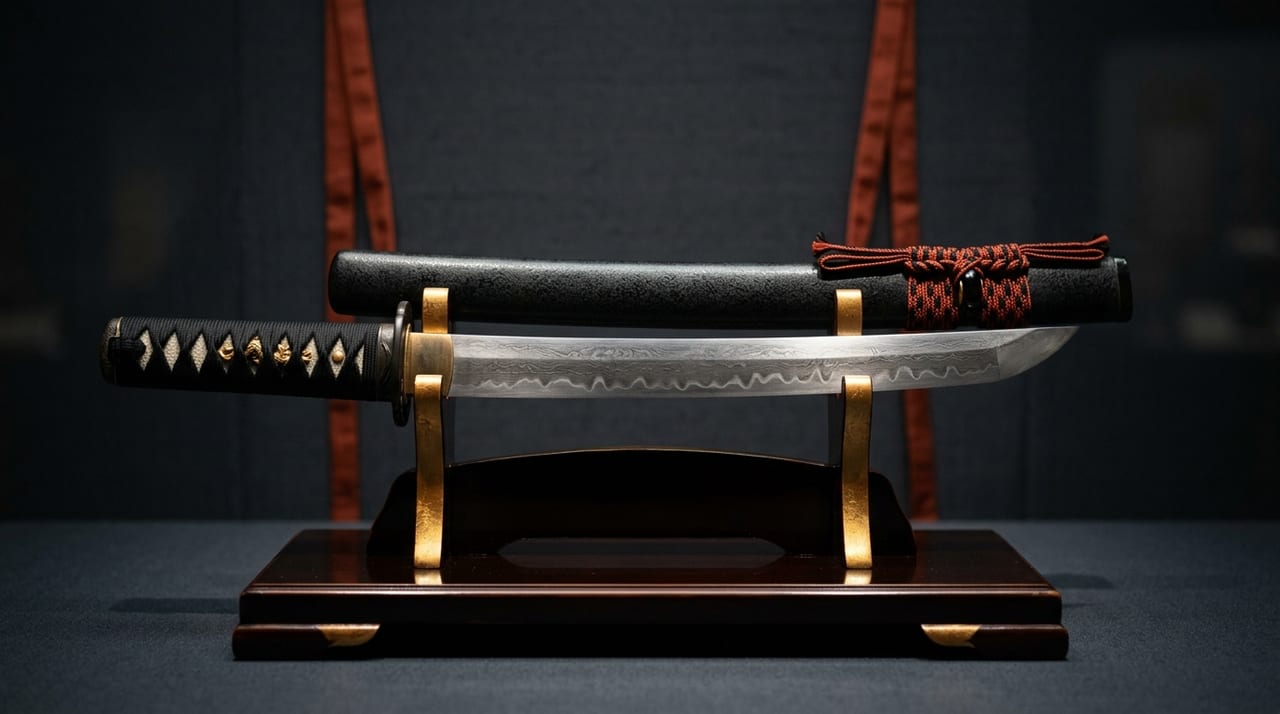 * Image is for illustrative purposes only.
Table of Contents
Hira-zukuri Tantō — The Blade Form Where Regional Differences Show Most Clearly
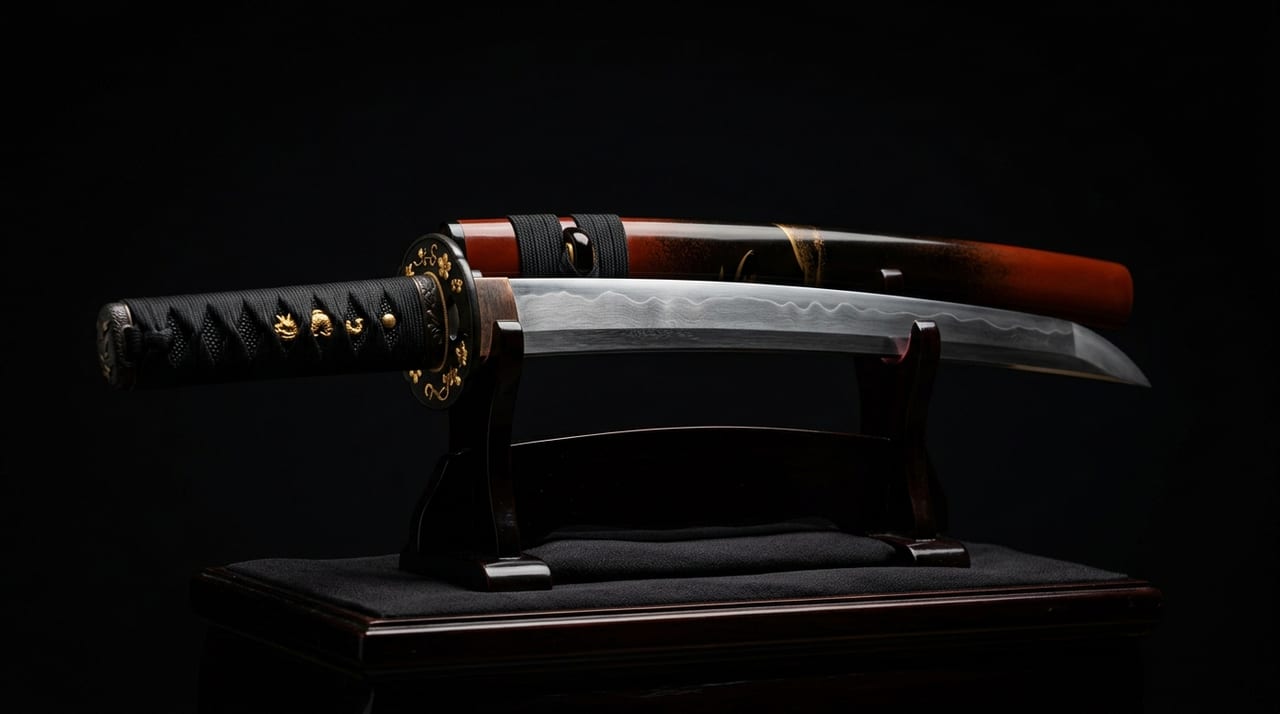
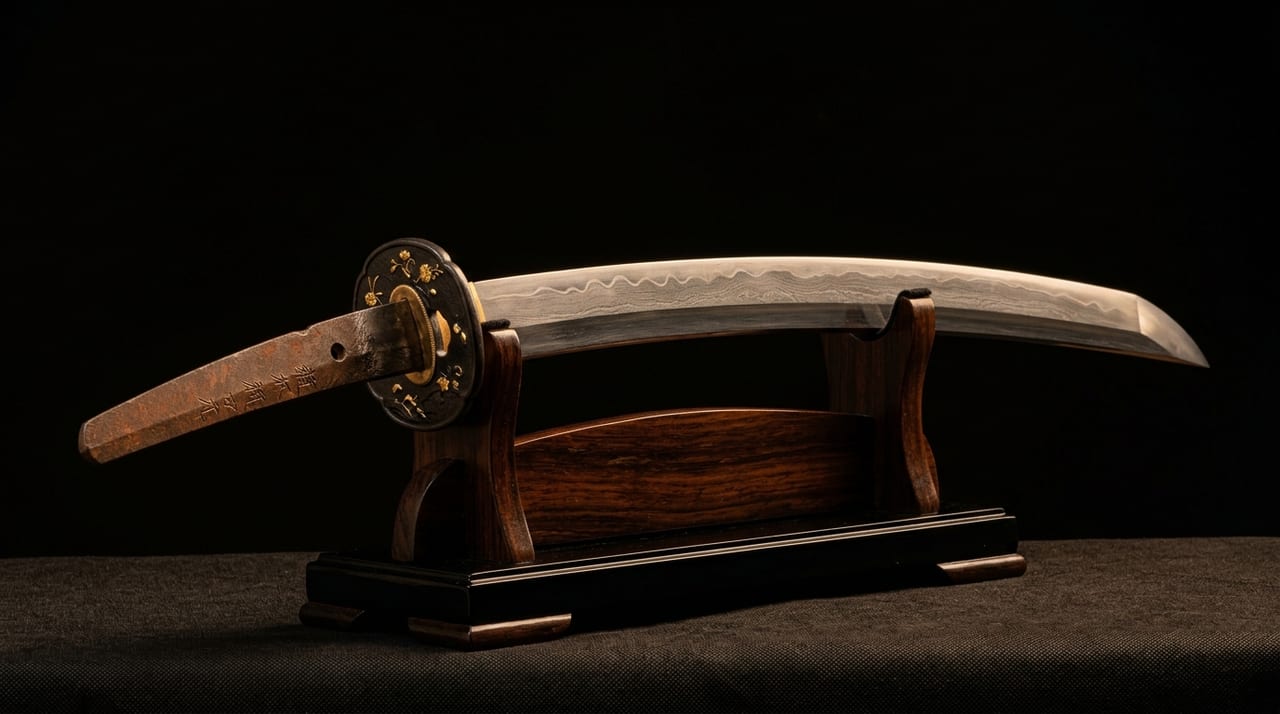
Among the forms of the nihontō, the hira-zukuri tantō is one of the forms in which technical differences by place of production appear most distinctly. Because hira-zukuri has a flat cross-section without a shinogi (ridge line), its structure allows the jigane and hamon to be seen directly, making it the ideal form for visually comparing the differences between Sōshū-den and Bizen-den.
This article systematically compares Sōshū-den and Bizen-den hira-zukuri tantō from three perspectives: jigane, hamon, and shape.
Confirming the Basic Form — What Is Hira-zukuri?
Hira-zukuri is a construction in which the cross-section of the blade has a "flat" form with no shinogi.
- Cross-section: a shape close to a trapezoid or parallelogram, thinner toward the edge and thicker toward the mune (back of the blade)
- Shinogi-suji (shinogi line): absent
- Use: common in tantō and wakizashi; rarely used in uchigatana
Because hira-zukuri has no shinogi, the thinness of the edge is accentuated, and the beauty of the hamon and jigane comes to the fore.
Characteristics of the Sōshū Hira-zukuri Tantō
Representative Smiths and Period
Representative makers of Sōshū-den hira-zukuri tantō:
- Okazaki Masamune (early Nanbokuchō): Hira-zukuri tantō by Masamune are the pinnacle of the form. Surviving examples are extremely few.
- Sōshū Yukimitsu (late Kamakura): Tantō by Yukimitsu, considered the father of Masamune, are also typical of Sōshū-den.
- Sadamune (late Kamakura to Nanbokuchō): Hira-zukuri by Sadamune, considered a disciple of Masamune, are also highly regarded.
Characteristics of the Jigane (steel of the blade surface)
The defining characteristic of Sōshū-den jigane is its "high activity":
Itame with mokume mixed in: A complex grain combining itame (wood-grain pattern) as the base with mokume (burl-grain pattern) mixed in. Coarse and powerful in impression.
Activity of the jikei: Dark lightning-shaped lines (jikei) run through the interior of the jigane. This is one of the greatest defining characteristics of Sōshū-den; uneven carbon distribution produced during the kaji process is made visible as jikei.
Kinsuji: Thin gleaming lines (kinsuji) run through the interior of the jigane. Evidence that the activity of nie (visible martensite crystals) extends even into the interior of the jigane.
Brightness and tone: The jigane of Sōshū-den is described both as "dark" and as having a "deep luminosity." It contrasts with the brighter jigane of Bizen-den.
Characteristics of the Hamon (temper line)
The essence of Sōshū-den hamon is "the beauty of nie":
Strong nie-deki: The interior of the hamon is filled with coarsely gleaming granular nie. Nie so strong it can be felt as a genuine roughness when touched with a fingertip.
Tendency toward ō-midare and hitatsura: The hamon undulates violently, sometimes becoming hitatsura, which covers the entire blade surface. Hitatsura is common in works by Masamune and Yukimitsu.
Activity within the hamon: Subsidiary elements within the hamon — kinsuji, sunagashi, and yō — are abundant. This is the core of the "pleasure of looking" in Sōshū-den.
Characteristics of the Shape (sugata)
Typical sugata of a Sōshū hira-zukuri tantō:
- Nagasa (blade length): most commonly 5 to 8 sun (15 to 24 cm)
- Kasane (blade thickness): thick, with a sense of "flesh"
- Motohaba and sakihaba: many examples are wide
- Mune form: kaku-mune (square back) is common
Characteristics of the Bizen Hira-zukuri Tantō
Representative Smiths and Period
Representative makers of Bizen-den hira-zukuri tantō:
- Nagamitsu and Kagemitsu (mid to late Kamakura): The foremost tōkō of the Osafune school.
- Ichimonji school: Famous for the vibrant chōji-midare of the early Kamakura period.
- Kanemitsu (late Kamakura to Nanbokuchō): A master smith who adorned the final golden age of Bizen-den.
Characteristics of the Jigane (steel of the blade surface)
The jigane of Bizen-den has characteristics that are the polar opposite of Sōshū-den:
Fine itame (ko-itame): Fine, uniform itame arranged in orderly rows — ko-itame (fine wood-grain pattern) — is typical. It contrasts with the coarse Sōshū-den.
Bright jigane: The jigane of Bizen-den, described as "well-clarified" and "brightly gleaming," gives a visually "clear and pure" impression compared to Sōshū-den.
Jinishiki: A characteristic called jinishiki — fine metallic-lustre speckles scattered through the interior of the jigane — is often seen in Bizen-den.
Little activity in the ji: Compared to Sōshū-den, "activity" such as jikei and kinsuji is scant, and the overall jihada (grain pattern of the steel) is quiet and homogeneous.
Characteristics of the Hamon (temper line)
The characteristic of Bizen-den hamon is "the beauty of nioi-deki":
Nioi-deki predominant: The interior of the hamon is dominated by nioi (fine martensite mist), which spreads in a soft, haze-like manner. In contrast to the coarse nie of Sōshū-den, it has a fine, delicate quality.
Chōji-midare: Chōji-midare — a continuous undulation of clove-shaped forms — is the emblematic hamon of Bizen-den. The chōji of the Ichimonji school and Nagamitsu in particular are rated as the supreme examples.
Clarity of the hamon edge: The hamon of nioi-deki has a relatively well-defined ha-niku (hamon outline), and the overall beauty is "orderly."
Characteristics of the Shape (sugata)
Typical sugata of a Bizen hira-zukuri tantō:
- Nagasa: most commonly in the range of 5 to 9 sun (15 to 27 cm)
- Kasane: tends to be thinner than Sōshū-den
- Motohaba and sakihaba: many examples are uniformly wide (with little fumbari)
- Mune form: iori-mune (ridged back) is common
Comparison Table — The Differences Between the Two Traditions at a Glance
| Perspective | Sōshū-den | Bizen-den |
|---|---|---|
| Impression of jigane | Wild and active, dark | Clear and homogeneous, bright |
| Jihada texture | Large itame, mokume mixed in | Fine itame, orderly |
| Jikei | Abundant, active | Scant |
| Types of hamon | Ō-midare, hitatsura | Chōji-midare, gunome |
| Nie / nioi | Strong nie (rough) | Fine nioi (soft) |
| Mune form | Kaku-mune predominant | Iori-mune predominant |
| Overall impression | Dynamic, powerful | Quiet, graceful |
Practical Appreciation — What to Look at for Instant Identification
Practical checkpoints for distinguishing Sōshū and Bizen hira-zukuri tantō in person:
- Check the jigane first: Bright and homogeneous → likely Bizen. Active jikei and kinsuji → likely Sōshū.
- Look at the "feel" of the hamon: Hazy interior of the hamon → nioi-deki (Bizen). Gleaming in a granular way → nie-deki (Sōshū).
- Check the form of the mune: Iori-mune → Bizen tendency. Kaku-mune → Sōshū tendency.
- Sense the overall "atmosphere": Calm and well-proportioned → Bizen. Intense and animated → Sōshū.
Conclusion
The Sōshū-den and Bizen-den hira-zukuri tantō embody the two great aesthetic directions of the nihontō — "the beauty of motion (Sōshū)" and "the beauty of stillness (Bizen)" — in their most concentrated form. The question is not which is superior; recognizing that the beauty of each was born from centuries of accumulated technique is what enriches appreciation.