Fujishima Tomoshige and the Kashū Fujishima School—An Echizen-Born Swordsmith Shaped by the Turmoil of the Nanboku-chō Period and the History of Swords in the Hokuriku Region
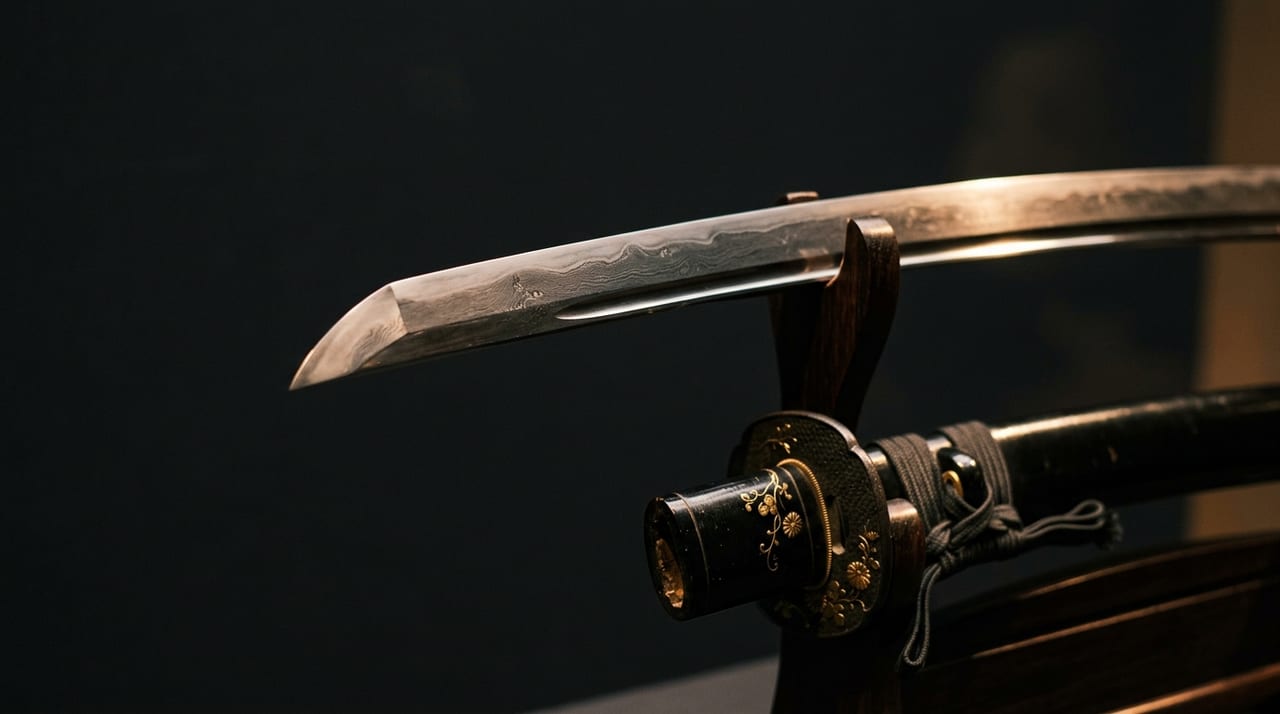 * Image is for illustrative purposes only.
Table of Contents
Founder of the Kashu Fujishima School: Fujishima Tomoshige
Fujishima Tomoshige was born in the 14th century—during the turbulent Nanboku-cho period—in Fujishima, Yoshida District, Echizen Province (present-day Fukui Prefecture), but relocated to Kaga Province (present-day Ishikawa Prefecture) to forge swords and became known as the founder of the Kashu Fujishima school (Kaga Fujishima school), carving his name into Japanese sword history. He served as a pioneer of organized sword-making in the Hokuriku region and established the foundations of regional sword culture.
Echizen was a strategic location in the Hokuriku region facing the Japan Sea and had been known since ancient times for rich agriculture and maritime trade. During the turbulent Nanboku-cho period, it became the stage for conflicts between the Ashikaga and Nitta forces, and the conditions were favorable for sword-making to meet the demands of the warrior class. Although Tomoshige was born in this region, he relocated to Kaga Province and, as a student of Rai Kunitoshi, mastered and developed the techniques of the Yamashiro tradition (Rai school).
Characteristics of His Swords—Influence of the Rai School (Yamashiro Tradition) and Kaga Identity
The most distinctive characteristic of Tomoshige's swords is the marked influence of the Rai school (Yamashiro tradition). This was not mere imitation but rather the result of uniquely sublimating the orthodox techniques of the Rai school through the materials and environment of Kaga in response to the increased demand for swords during the turbulent Nanboku-cho period.
- jihada (base steel):Tomoshige's jihada was fundamentally based on the refined ko-itamehada (small-plate pattern) characteristic of Rai tradition, with fine and evenly-distributed jinie (base hardening). The jihada reflects the material properties of Kaga's iron sand and charcoal, where both the elegance of Rai technique and the taut, dignified quality of Hokuriku tradition coexist.
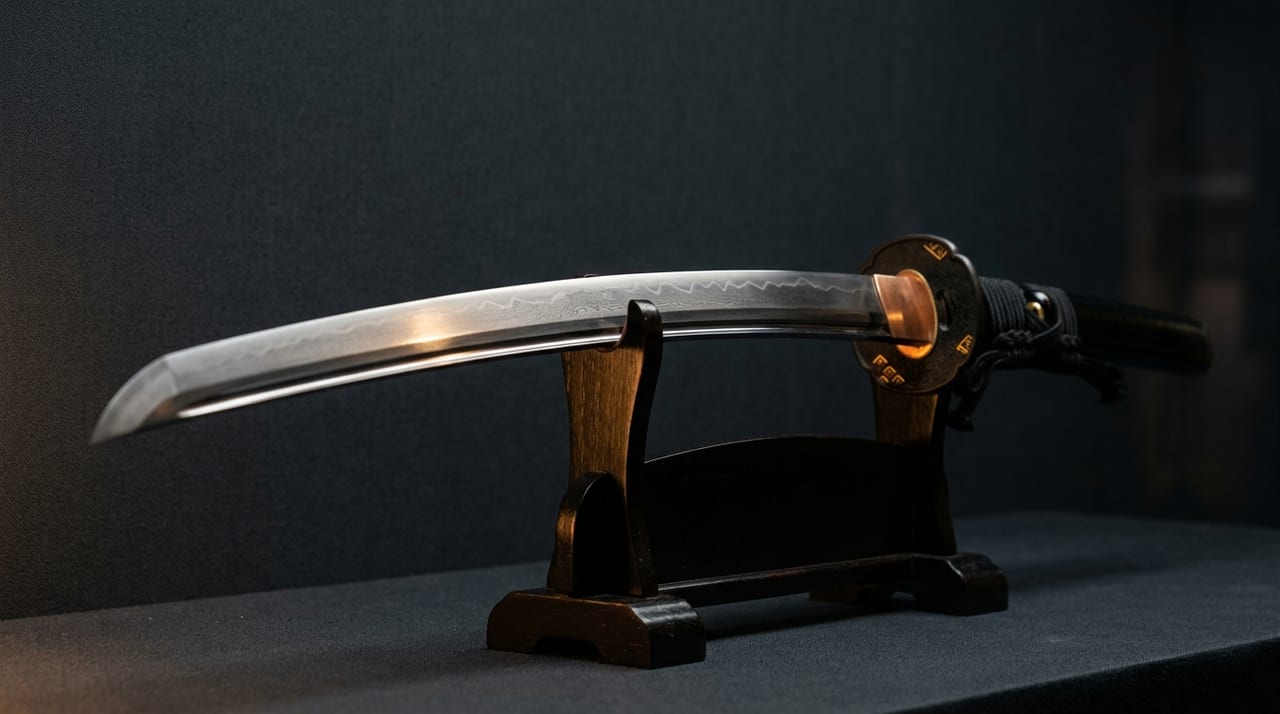
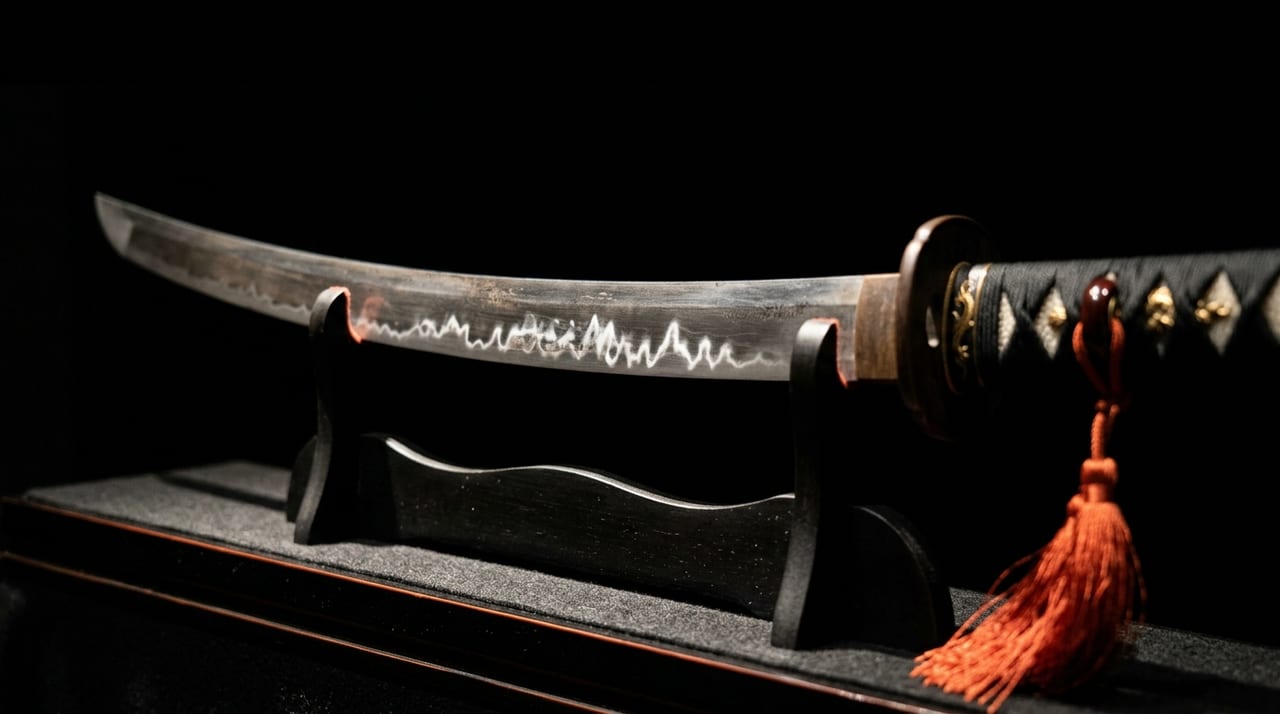
- hamon (edge pattern):The characteristic hamon is a gentle pattern centered on small nie, featuring a dignified composition with a refined nioiguchi. The nie is distributed finely and uniformly, with the hamon outline possessing a clear, crystalline beauty.
- Sugata (overall form):Most of his works are large tachi and uchigatana reflecting the stylistic characteristics of the Nanboku-cho period. The basic form follows the Nanboku-cho style with a wide blade width, thin kasane, and noticeable widening from base to point, and swords of considerable length also exist.
Contemporary Evaluation and Positioning
Tomoshige's swords are believed to have been highly valued as practical weapons by warriors who fought through the turbulent Nanboku-cho period. Echizen was a strategic point along the Hokuriku route and served as the site of historical battles such as the Battle of Kanazaki in 1337, where Nitta Yoshisada was besieged in Kanazaki Castle in Echizen. This historical environment supported the demand for Tomoshige's swords as "functional blades."
Tomoshige's disciples and successors established the lineage of the Kashu Fujishima school in Kaga and continued sword-making in Kaga through the Muromachi period and beyond. It should be noted that Sengo Muramasa, who later became active in Kuwana, Ise Province (present-day Mie Prefecture), was a sword smith of the Sengo school influenced by the Mino tradition and represents a separate lineage from the sword culture of Echizen and Kaga.
The Significance of Tomoshige in Echizen and Kaga Sword History
Kaga prospered under daimyo culture under the Kaga domain (Maeda family) during the Edo period, with increased demand for swords. The accomplishments of Tomoshige occupy the historical starting point of this Kaga sword culture.
The foundation of the Kashu Fujishima school that Tomoshige established—the stance of inheriting Rai techniques while creating unique swords with Hokuriku materials—became the identity of regional sword culture commonly inherited by later Kaga sword smiths.
Surviving works bearing Fujishima Tomoshige's signature are rare and scarce. Authentication of genuine works requires analysis of the hamon and jihada as well as examination of the calligraphy of the signature. Some works have been designated as Important Cultural Properties or Important Art Objects. For collectors, his works are valuable from both the rarity of Nanboku-cho period Hokuriku swords and the influence of the Rai school, and he is a sword smith who provides important material for research on "regional swords" in Japanese sword history.
The Significance of Fujishima Tomoshige for Japanese Sword Research
In Japanese sword history, the Five Traditions (Yamato, Yamashiro, Bizen, Soshu, and Mino) tend to dominate the discussion, but the existence of regional sword smiths like Tomoshige demonstrates empirically the important theme of "the spread and transformation of the Five Traditions." As the techniques of the Rai school spread from Yamashiro to Hokuriku, sword smiths in various regions added their own interpretations based on their materials, demands, and cultural backgrounds—the Kashu Fujishima school exemplifies this trend, with Fujishima Tomoshige being its prime example.
Understanding Tomoshige is not merely learning the biography of one sword smith but understanding the process by which Japanese swords became a national culture as regional makers creatively transformed the "central standards."
Succession of the Kashu Fujishima School—Development from the Muromachi Period Onward
The sword smiths of the Kashu Fujishima school who succeeded Tomoshige continued to be central figures in sword-making in Kaga throughout the Muromachi period. Records document the activity of sword smiths in the lineage known as Kaga Fujishima, and Tomoshige's technical legacy was inherited in Kaga.
It is also noteworthy that Echizen was the birthplace of the later "Echizen uchi-hamono" (Echizen struck edged-tools) industry. The techniques of sword forging were repurposed and applied to the manufacture of practical edged tools such as agricultural implements, kitchen knives, and sickles, and Fukui Prefecture remains known today as one of Japan's premier edged-tool producing regions. Behind this continuity of industrial history lies the accumulation of iron-smelting and forging techniques developed by Tomoshige and other Hokuriku sword smiths.
Distinguishing Fujishima Tomoshige's Works—Fundamental Knowledge of Authentication and Preservation
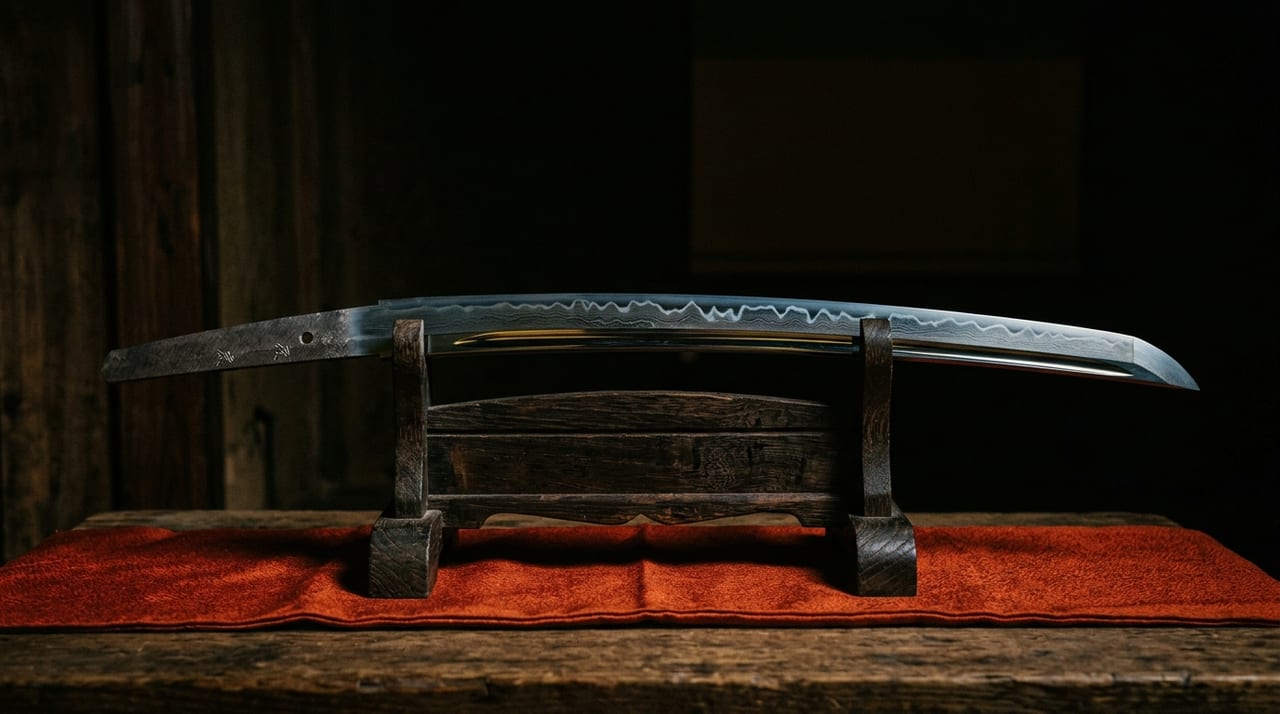
- Authentication of signature and tang:The authentication of Japanese swords is not determined by the calligraphy of the signature alone. In addition to the construction of the tang (nakago)—the direction of the file marks (yasurime), the position and shape of the peg holes (mekugi), and the shape of the tang tip—the judgment is generally made by comprehensively examining the grain of the jihada and the quality of the nie and nioi in the hamon. For sword smiths like Fujishima Tomoshige with few surviving works, comparative examination with authenticated signed works is an important clue in authentication.
- Authentication and evaluation by NBTHK:The Japan Sword and Art Preservation Association (NBTHK) is widely known as an authentication body for Japanese swords. The authentication certificates issued by this association are treated as evaluations of period, maker, and technical value from a third-party perspective and serve to substantiate the provenance of art objects. For authenticated works bearing Fujishima Tomoshige's signature, the determination of authenticity, period, and maker is made through examination by such specialized institutions.
- Suriage and ubu nakago:Large tachi forged during the Nanboku-cho period often underwent shortening of the tang (suriage) to accommodate changes in warriors' physiques and combat methods in later periods. Works that retain the tang in its original state—known as ubu nakago (original tang)—are particularly valued both for the complete preservation of the signature and as a primary source record of the period's characteristics.
- Preservation and handling:To maintain the value of these swords as art objects, professional care is essential, including humidity management and regular application of maintenance oil. After acquisition, it is advisable to consult with a trusted sword polisher (togishi) or sword dealer rather than attempting maintenance on one's own judgment, in order to properly preserve the condition of the piece.