Bellows and Fuel — How Air-Blowing Technology and Charcoal Selection Determine Blade Quality in Nihontō Smithing
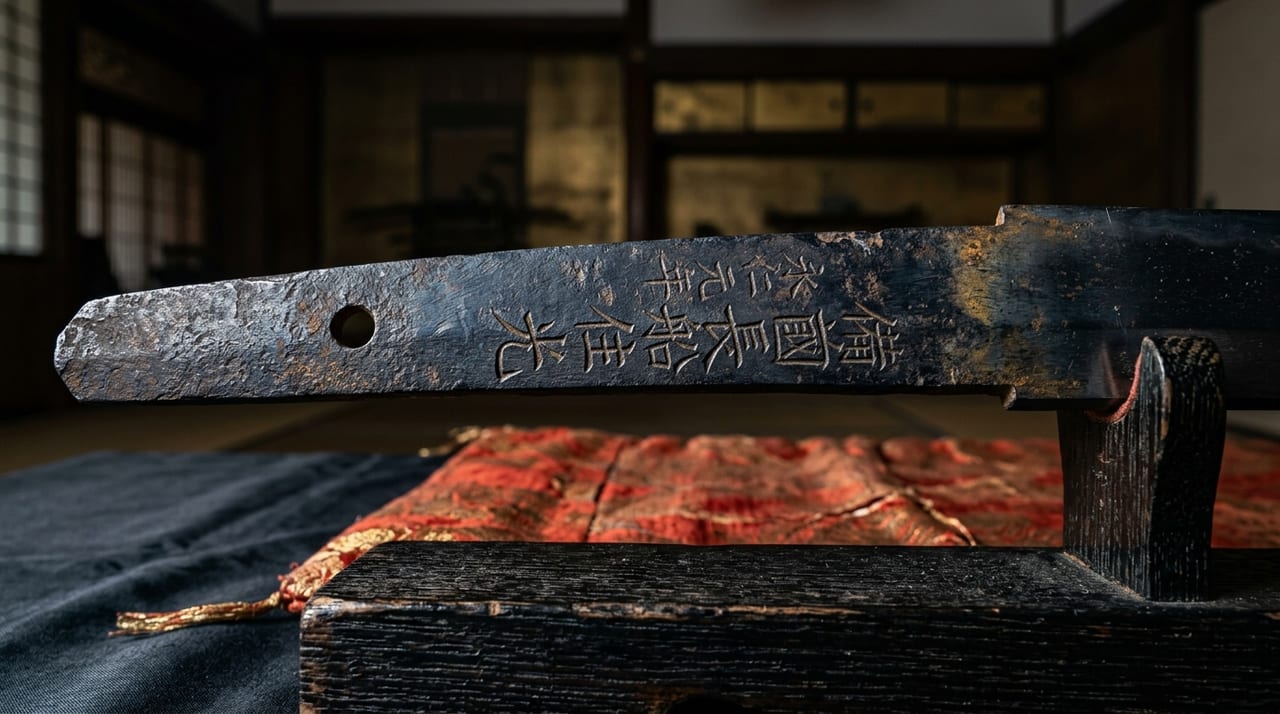 * Image is for illustrative purposes only.
Table of Contents
Fire in Nihontō Smithing — Temperature Control Determines Quality
The essence of blade forging is "the art of fire." Tamahagane is heated to the appropriate temperature, hammered into shape, and then rapidly cooled through yaki-ire (quenching). In all of these processes, how the temperature of the fire and the oxidizing or reducing atmosphere are controlled fundamentally determines the quality of the blade. It is the bellows (fuigo) and charcoal (sumi) that bear responsibility for this control of the fire.
The forge used by nihontō smiths is called a kajiro, and there are two types: the jiro, which is dug into the ground, and the dairo, which is set on a raised platform. Today the dairo is the mainstream type, while tatara (traditional smelting) used a large-scale jiro.
The temperature required is not identical for every part of the blade. During the orikaeshi tanren (folding) stage the entire steel must be heated uniformly, but during the sunobe and hizukuri stages, localized heating that takes into account the temperature difference between the cutting edge and the jigane (steel of the blade surface) is required. How to position the charcoal and where to insert the steel in the kajiro — the management of the "kasō" (fire condition within the forge) — is one of the skills passed down orally from master to apprentice.
The Structure and Historical Evolution of the Bellows (Fuigo)
The fuigo is an air-blowing device that sends air into the forge and plays a central role in fire management in nihontō smithing. Historically, it has undergone the following evolution.
- Hakofuigo: A wooden box-type blower widely used up through the Edo period. Air is sent by pulling and pushing a leather-lined piston inside. It was often operated by a pair of workers, requiring the coordinated action of "pull right, push left." The volume of air was adjusted by the speed and depth of the pulling and pushing, and the skill of the experienced assistant (tanteki) was directly linked to the forge temperature.
- Toyofuigo: A trough-type blower made from halved bamboo or wood, a form transmitted from China. Simpler in structure and more portable than the hakofuigo, but inferior in the stability of airflow.
- Tenbinfuigo: An improved type that became widespread in the late Edo period, achieving continuous blowing by alternately moving pistons on both sides using the principle of a balance scale. Single-person operation became possible, reducing dependence on assistants.
- Modern blower (electric air blower): From the Shōwa period onward, many tōkō (swordsmiths) adopted electric blowers. While airflow became stable and maintaining a consistent temperature became easier, some tōkō who value tradition still insist on manual bellows. The culture of "reading the fire by feel of the hands" continues to survive in some quarters.
The technique of handling the fuigo was once considered one of the fundamental skills to be acquired in the early stages of live-in apprenticeship. Keeping the fire stable requires maintaining a steady rhythm of blowing, and it is said that through this seemingly monotonous work, the observational eye for reading temperature changes in the forge was cultivated. Even today, there are tōkō who, while primarily using electric blowers, switch to a manual fuigo only at stages requiring delicate temperature adjustment — such as finishing work or just before yaki-ire (quenching) — and workshops that make use of both are not uncommon.
Types and Selection Criteria for Charcoal — Differences in Wood Charcoal Affect the Properties of Steel
Wood charcoal (mokutan) is the fuel traditionally used in the kajiro. Coal and coke became widespread in Western-style sword smithing from the Meiji period onward, but wood charcoal is the basis of the traditional nihontō manufacturing method. The type of wood charcoal directly affects forge temperature, combustion duration, and the properties of the ash.
- Binchōtan: The highest-quality wood charcoal, made by firing ubamegashi at high temperature. It has strong fire power and sustains long combustion. High in carbon content and producing little ash. Well suited to the finishing stages of smithing and to precision heating of the cutting edge, but because of its high price it is often used only for critical processes.
- Shirozumi: Charcoal made by firing hardwoods other than ubamegashi at high temperature, of quality second only to binchōtan. It yields hard, uniform combustion.
- Kurozumi: A soft charcoal fired at relatively low temperature, which ignites easily and is inexpensive. Used for initial heating and bulk heating, but unsuitable for extended tanren (forging) because it burns quickly and produces much ash.
- Matsuzumi: Charcoal made from pine, with a high oil content and good ignitability. Used in traditional kajiro in some regions; there is also a theory that it has a "carburizing effect" of supplementing carbon on the steel surface.
Charcoal is not put into the forge as is; it is split to an appropriate size for each process and used accordingly. Left in large lumps, the flames become uneven; broken too fine, combustion becomes too rapid and the temperature will not stabilize. Because charcoal loses its ignitability and combustion uniformity when it absorbs moisture, storing it in a dry state is also considered part of fire management. It can be said that not only the quality of the charcoal but also the way it is handled itself is an element that reflects the tōkō's skill.
Carbon Management in Steel through Charcoal Fire — Oxidation, Reduction, and Carburization
Burning wood charcoal produces a mixed gas of carbon monoxide (CO) and carbon dioxide (CO₂). Blowing strongly with the fuigo increases the amount of oxygen, creating an oxidizing atmosphere in which the carbon on the steel surface burns off — a process called decarburization. Conversely, weakening the blowing to create a state of incomplete combustion increases carbon monoxide, producing a reducing atmosphere in which carburization — the supply of carbon to the steel — may occur.
Whether the tōkō of the Edo period understood this principle scientifically is uncertain, but the oral traditions of various schools suggest that they read the atmosphere within the forge empirically from the "color of the fire," the "color of the steel," and "how the charcoal was diminishing," and controlled it through the pumping speed of the fuigo. The saying "when yellow-white sparks fly, carbon is flying off" was the wisdom of empirically detecting decarburization.
Carbon management through charcoal is also closely linked to the yaki-ire (quenching) process. By performing tsuchioki (applying the clay coating) — applying thin clay to the cutting edge and thick clay to the jigane portions — before quenching, the cutting edge is rapidly cooled and hardened while the jigane portion cools slowly and retains toughness. This difference between hard and soft is the foundation that gives rise to the hamon (temper line), but as a prerequisite, the carbon content of the entire steel must be properly managed during the heating stages by the fuigo and charcoal. Fire management and tsuchioki are regarded as a series of techniques for achieving both sharpness and toughness simultaneously.
Modern Kajiro Management — The Fusion of Tradition and Science
Many of today's tōkō manage forge temperature by combining electric blowers with infrared temperature sensors. At the same time, NBTHK (Society for the Preservation of Japanese Art Swords) certification requires "traditional manufacturing methods," and the traditionality of materials and processes is a prerequisite for recognition, so there are limits to full mechanization.
As of 2026, production in the main binchōtan-producing areas (Wakayama, Mie, and Kochi) is on a declining trend, and stable procurement of high-quality charcoal has become a challenge for tōkō. Some tōkō have begun learning charcoal-making themselves and producing their own dedicated charcoal in-house.
Because changes in temperature and humidity also affect the combustion condition of charcoal, the sense of finely adjusting airflow volume and the amount of charcoal in response to the season and weather is considered something that measuring instruments alone cannot fully replace. This experiential knowledge, which is difficult to quantify, is still largely passed down through oral transmission between master and apprentice and through hands-on practice. The ancient challenge of choosing the fuigo and charcoal remains at the core of sword-forging technique even today. We have entered an age when fine swords can be carefully examined and purchased online — please feel free to experience each tōkō's skill and dedication to materials through their works.