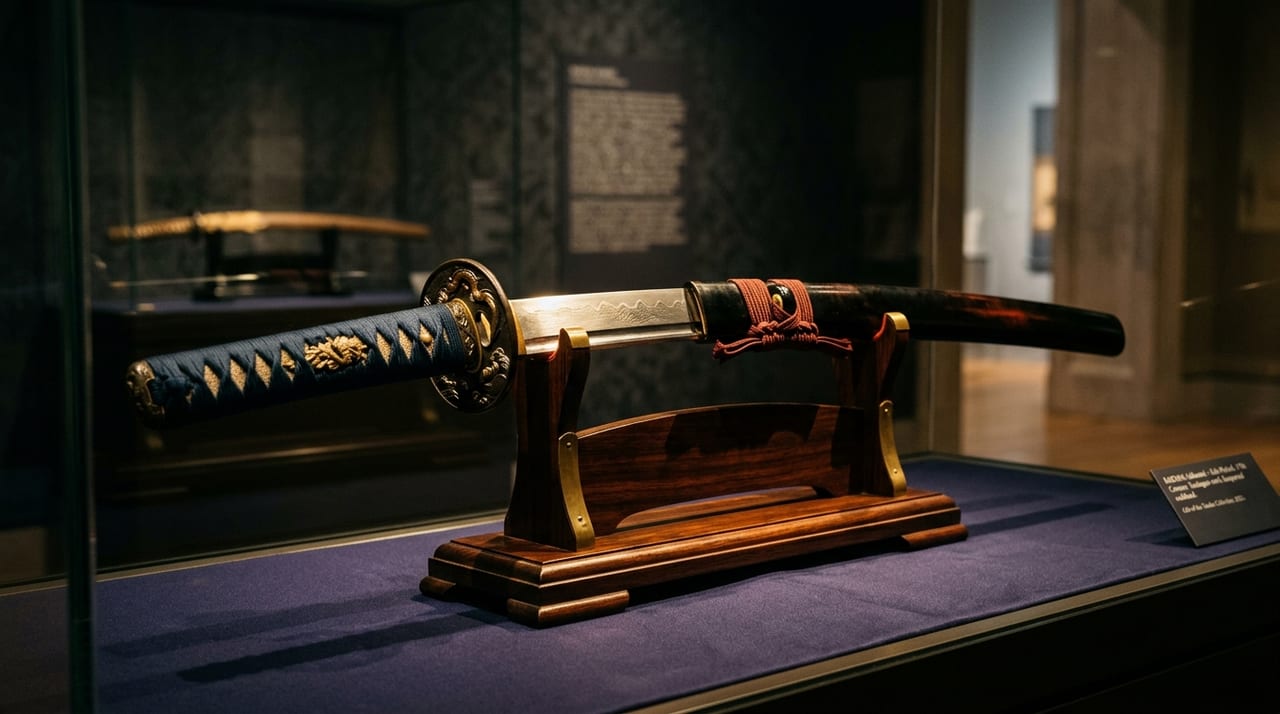
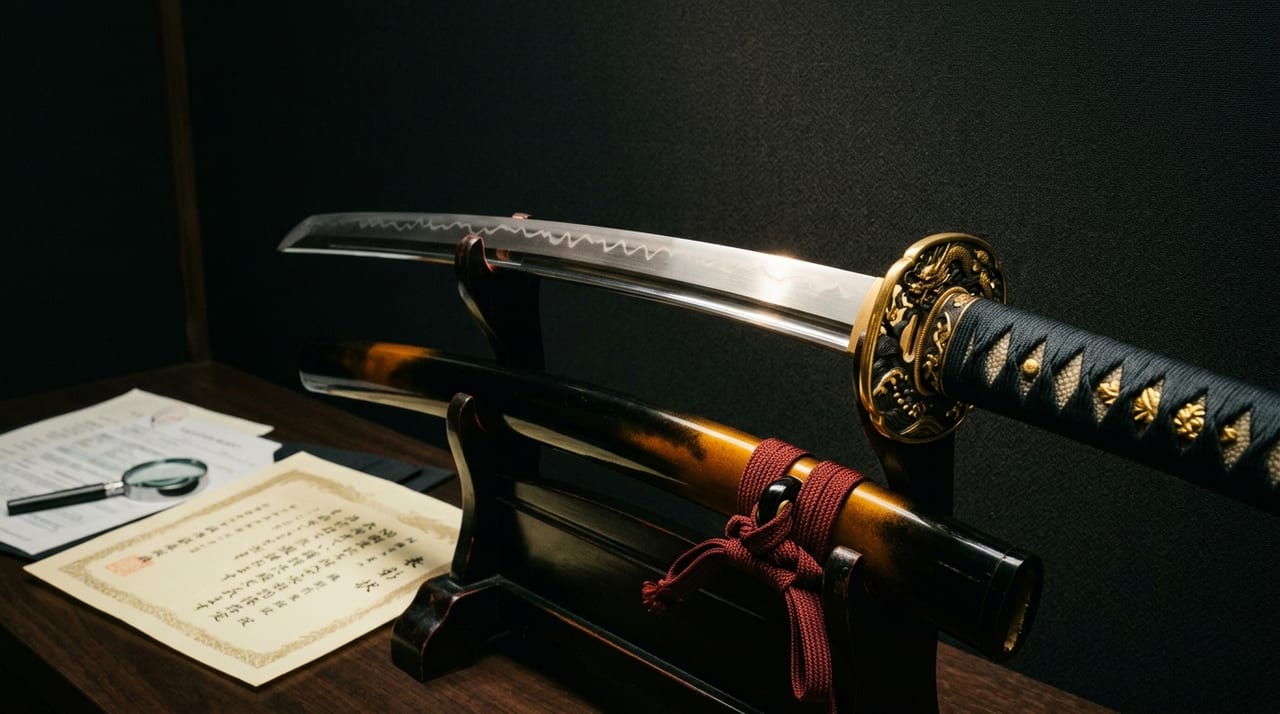
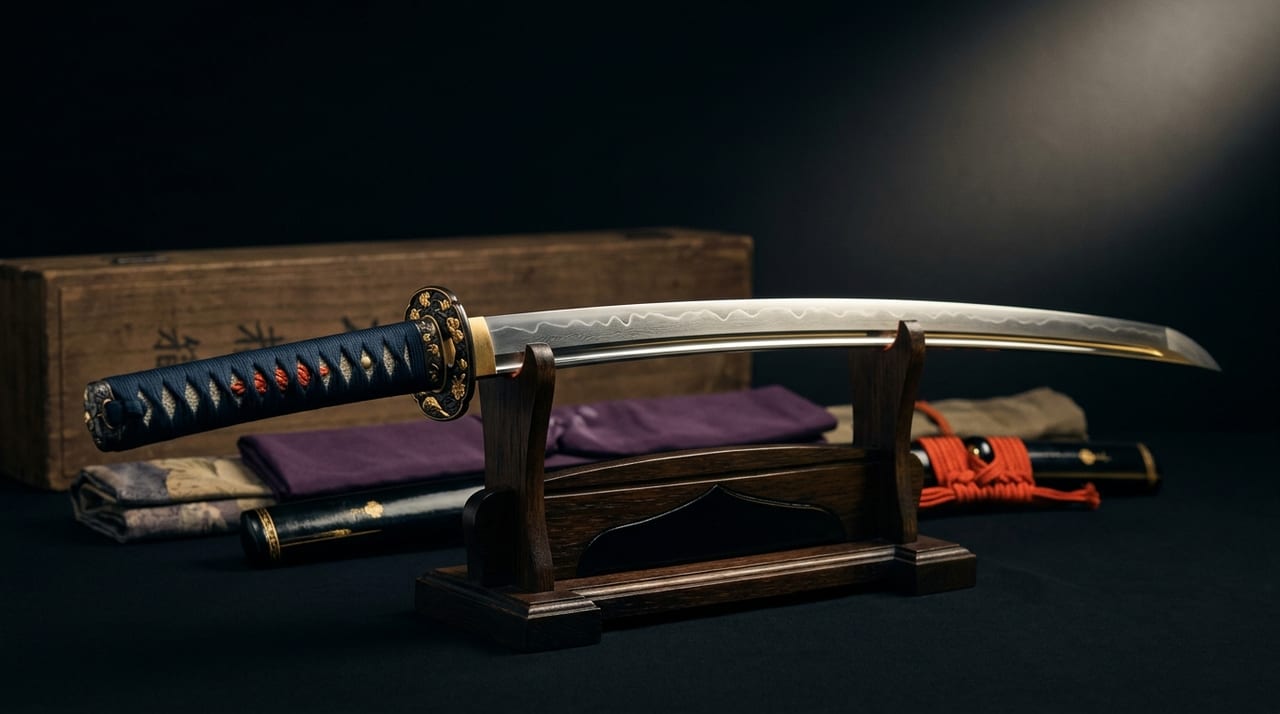
How to Care for a Nihontō — Protecting a Fine Blade Through Proper Maintenance
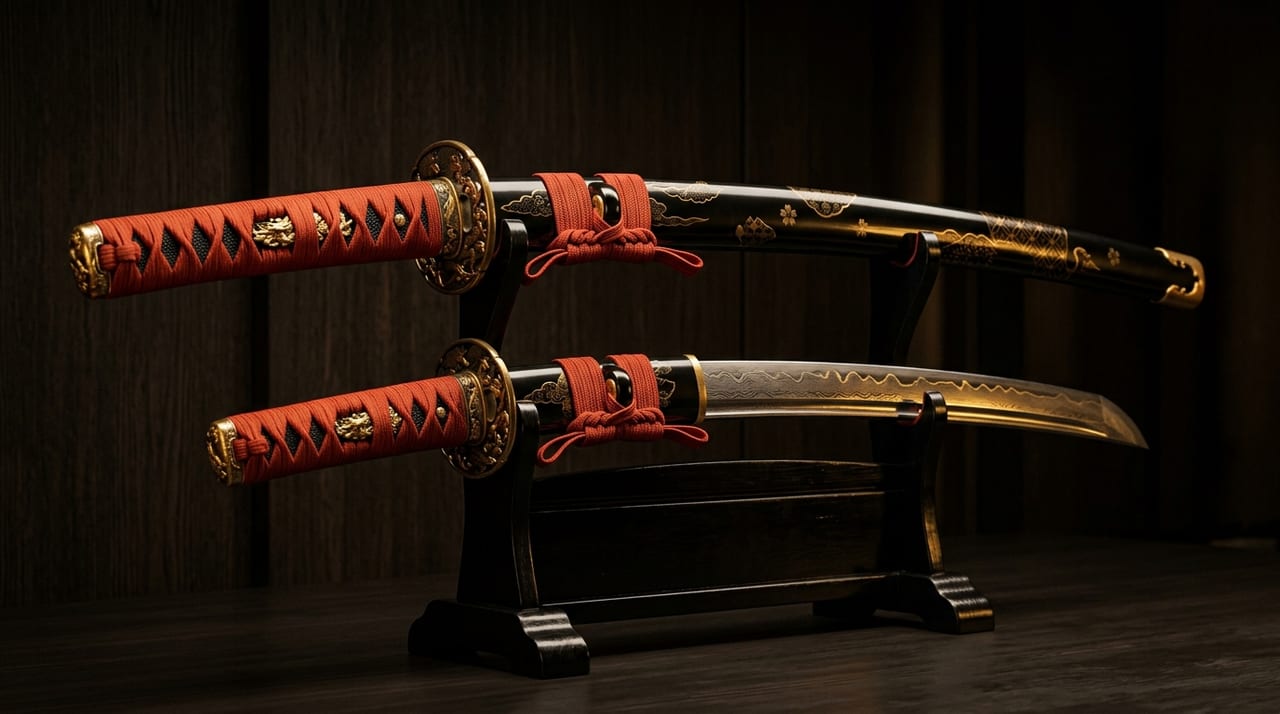 * Image is for illustrative purposes only.
Table of Contents
Why Caring for a Nihontō Is Essential
A nihontō is a precision iron implement forged from carbon steel. Neglect proper care and the moisture and oxygen in the air will react with the metal, causing oxidative corrosion (rust) to advance; within just a few months the beauty of the hamon and jigane can be lost entirely. Even swords designated kokuhō (National Treasure) or jūyō bunkazai (Important Cultural Property) have preserved their brilliance to the present day only through the diligent care that successive custodians have continued across generations. Regular and precise maintenance is absolutely indispensable for enjoying a fine sword over many years and passing it on to the next generation.
Tools Required for Maintenance and Where to Buy Them
Proper maintenance requires dedicated tools. Understanding the role of each one prevents damage caused by incorrect care.
| Tool | Role |
|---|---|
| Uchiko (polishing powder) | An abrasive powder that absorbs and removes old oil and microscopic dirt from the surface of the blade. Fine powder of uchigumori whetstone wrapped in silk or similar cloth |
| Chōji oil | A rust-prevention oil formulated exclusively for nihontō, with clove (chōji) essential oil as its main component. Applied in a thin layer as a protective film on the blade |
| Wiping paper | Fine-fibered Japanese paper such as hōsho paper. Removes oil and uchiko without scratching the blade |
| Mekugi punch | A dedicated tool for driving out the mekugi that secures the tsuka (hilt) to the nakago (tang) |
| White cotton gloves | Prevents direct contact with the blade by bare hands. The sebum from fingertips is a direct cause of rust |
Tool sets are available at the Japanese Sword Museum shop (Sumida Ward, Tokyo), at specialist sword dealers around the country, and through mail-order retailers authorized by NBTHK (Society for the Preservation of Japanese Art Swords). Searching for "nihontō teire setto" on online shopping sites will also bring up starter sets. Because quality varies, choosing products sold by specialist sword dealers is recommended wherever possible.
Correct Maintenance Procedure (Step by Step)
Before beginning, secure a stable, spacious surface and place a sword stand or a folded towel as a rest to prevent the sword from rolling off. Always wear white cotton gloves.
Step 1: Remove the mekugi and detach the tsuka Use the mekugi punch to tap the mekugi gently from the outside of the tsuka. Hold the tsuka lightly in the right hand and draw the entire tsuka quietly away to expose the blade.
Step 2: Wipe away the old oil Using dry wiping paper, carefully wipe off the oil applied during the previous maintenance session. Always wipe in the direction from the mune (back of the blade) toward the edge. Wiping in the reverse direction risks cutting the hand on the edge and can also introduce scratches.
Step 3: Apply the uchiko Tap the uchiko lightly against the blade surface in a gentle patting motion to absorb the oil. Rubbing with force is strictly prohibited. Because uchiko contains an abrasive, applying too much pressure will introduce fine scratches into the jigane surface and diminish its appearance.
Step 4: Wipe away the uchiko Use fresh wiping paper to remove the uchiko completely. Work in the same mune-to-edge direction as before.
Step 5: Apply a thin coat of chōji oil Place a few drops of chōji oil on the edge of a piece of wiping paper and spread it extremely thinly and evenly across the entire blade. Too much oil will attract dust and ironically invite rust, so after application use another piece of wiping paper to buff lightly and confirm a thin-film state.
Step 6: Replace the tsuka and reinsert the mekugi Seat the blade back into the tsuka, insert the mekugi, and fix it in place. Give it a light tug to confirm the mekugi is firmly seated.
Seasonal Maintenance Calendar
Because temperature and humidity fluctuate greatly with the seasons in Japan, the frequency and key points of maintenance change accordingly.
Spring (March–May) — Responding to Pollen and Rising Warmth
- Frequency: Once a month as a baseline
- Spring is the season when humidity begins to climb. Pollen and fine airborne particles tend to adhere to the blade, so take extra care when cleaning with wiping paper.
- It is also the right time to check whether the oil has deteriorated during the winter.
Rainy Season to Summer (June–August) — The Season Requiring the Most Attention
- Frequency: Twice a month or more recommended
- Relative humidity during Japan's rainy season and summer can exceed 80%, making this the season when rust advances most readily. Check the humidity of the storage location at all times and, if necessary, use a desiccant such as a dry-pack moisture absorber (positioned so it does not come into direct contact with the sword).
- Condensation can form from the temperature difference between an air-conditioned room and the storage location. When taking a sword out of an air-conditioned room, allow it to acclimatize to the ambient temperature fully before handling.
Autumn (September–November) — The Season for Inspection and Adjustment
- Frequency: Once a month
- The first maintenance session after passing through the high-humidity summer should be thorough. Check carefully for any early signs of rust (darkening, the initial symptoms of white rust).
- Inspect the condition of the shirasaya (plain storage scabbard) and sword bag as well, and confirm there are no traces of mold or moisture.
Winter (December–February) — Combating Dryness
- Frequency: Once a month, with checks every two weeks
- In winter's low-humidity environment, chōji oil tends to dry out and evaporate. Apply slightly more oil than usual and make a habit of checking every two weeks to confirm the oil film is maintained.
- Areas near heating appliances should be avoided as storage locations for swords, as they cause severe drying.
Storage Environment and Housing Precautions
Once maintenance is complete, quietly sheathe the blade in the shirasaya (plain storage scabbard). The shirasaya is a storage saya made from unfinished wood; the timber absorbs and releases moisture at a moderate rate, producing a stabilizing effect on the environment around the blade.
Ideal storage conditions are a temperature of 15–25°C and humidity of 40–60%, with complete avoidance of direct sunlight. The middle shelf of a closet, a dedicated sword box (tōbako), or a paulownia box are all appropriate. When storing horizontally, placing the sword with the edge facing upward minimizes movement of the blade inside the saya. Mothballs and similar volatile substances (naphthalene, etc.) have an adverse effect on metal and lacquer, so their use inside a sword box should be avoided.
Make a habit of taking the sword out at least once every three months to check its condition and confirm that no new rust has appeared and that there is no moisture inside the saya.
Engaging a Togishi and Restoration
Years of accumulated abrasion from uchiko will gradually thin the blade. When rust advances or scratches appear, there is also a limit to what can be addressed by the owner alone. In such cases, engaging a professional togishi (polisher) is the best course of action.
A togishi is not only someone who sharpens an edge with whetstones; they are also an artist who draws out the original hamon and jigane of the blade. It is not uncommon for togi (polishing) work to revive a hamon that had grown dull and restore the luster to the texture of the jigane. Choose a togishi with care, and it is recommended to prioritize referrals from a trusted sword dealer or sword preservation society. The cost of polishing varies with the length and condition of the blade, but it should be regarded as a necessary investment in maintaining the value of the sword.
Common Mistakes and Points of Caution
- Rubbing the uchiko on too forcefully → Introduces fine scratches into the jigane. A gentle patting motion is sufficient
- Applying too much chōji oil → Attracts dust and ironically invites rust. An extremely thin, even coat is the principle
- Touching the blade with bare hands → Sebum from the fingers is a strong inducer of rust. Always wear white cotton gloves
- Metal tools contacting the blade → Touching the surface with tweezers or similar objects introduces fine scratches
- Wiping in the wrong direction → Wiping from the edge toward the mune risks cutting the hand and can also cause scratches
If you feel uncertain about maintenance, attending a practical demonstration workshop held by the Japanese Sword Museum or a sword preservation society is also worthwhile. By continuing correct care, the sword in your hands will go on shining for hundreds of years more, passing down to people of the future.