First-Time Japanese Sword Buying Guide — Key Points for Choosing Without Mistakes
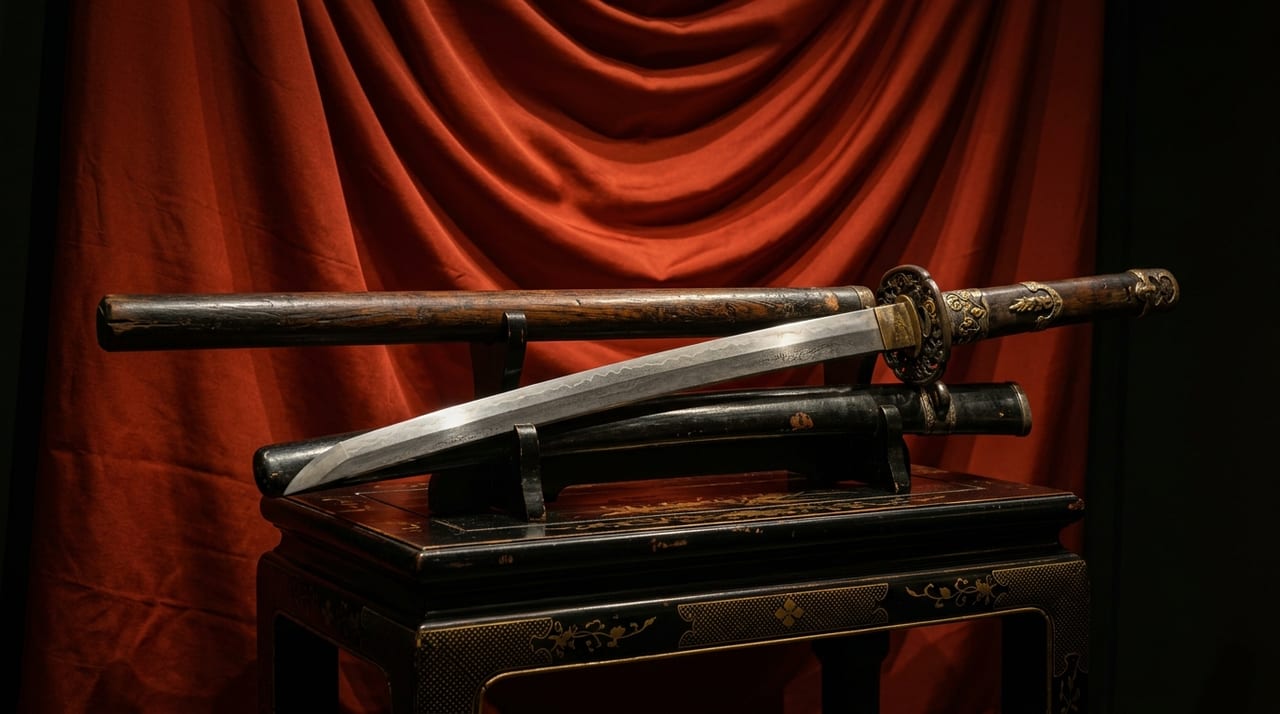 * Image is for illustrative purposes only.
Table of Contents
Essential Knowledge Before You Buy
The single most important thing when taking your first step into the world of nihontō is to avoid impulse purchases and allow adequate time for preparation and learning. A nihontō is not merely a decorative object; it is the crystallization of centuries of history and craftsmanship, possessing both the character of a cultural artifact and the character of an asset.
It is essential to clarify "what kind of sword you are looking for." Rather than simply wanting "a beautiful sword," having specific criteria — the type of hamon (suguha or midareba), the period (kotō, shintō, shinshintō, etc.), the school (Sōshū-den, Bizen-den, etc.), and the purpose (appreciation or scholarly research) — will lead to a purchase you do not regret.
In Japan, the Firearms and Swords Control Act (Jūtōhō) applies to the possession of art swords. There is a legal requirement to register the certificate of the purchased sword with the Board of Education of the relevant prefecture, so be sure to understand this thoroughly in advance.
How to Think About Budget — Reference Price Ranges by Appraisal Grade
The following table summarizes reference price ranges by grade in the 2026 sword market. These are approximate market benchmarks only; prices vary significantly depending on the maker, period, and condition.
| Appraisal Grade | Reference Price Range | Features |
|---|---|---|
| Hozon Tōken | 300,000–1,500,000 yen | Suitable for beginners. Authenticity guaranteed. Predominantly Edo-period swords |
| Tokubetsu Hozon Tōken | 1,000,000–5,000,000 yen | The minimum entry point for serious collecting. Only swords of good quality are certified |
| Jūyō Tōken | 1,000,000–5,000,000 yen | Prestigious pieces of high historical and artistic value. Frequent among kotō |
| Tokubetsu Jūyō Tōken | 2,000 man-en (20,000,000 yen) and above | Kokuhō-class. Almost never in circulation on the market |
| No kanteisho | Tens of thousands to 300,000 yen | Authenticity unverified. Difficult to resell in the future |
The most recommended choice for a first sword is Tokubetsu Hozon Tōken class. With a realistic budget of 1,000,000–3,000,000 yen for an entry-level collector, searching in this range for a sword with a Tokubetsu Hozon Tōken certificate offers the best balance of quality and price.
Do not forget running costs. Set your budget with ongoing ownership costs in mind: monthly maintenance-supply expenses, costs for shirasaya and sword bags, togi fees every few years, and humidity-management tools.
Practical Methods for Developing an Eye for Swords
It is impossible for a beginner to perceive all the beauty of a sword from the outset. The criteria for evaluation are many: the sharpness of the hamon, the texture of the jigane, the balance of the sugata, and the state of preservation (flaws, rust, and togi reduction).
The best way to develop an eye is to see as many real swords as possible. Sword exhibitions held regularly at museums — including the Tokyo National Museum, Kyoto National Museum, and the Japanese Sword Museum (Sumida Ward, Tokyo) — are outstanding opportunities to encounter many famous blades. Actually observing the nie and nioi of the hamon under light at various angles allows you to experience a three-dimensional beauty that photographs can never capture. Viewing alongside commentary from experienced enthusiasts and specialists deepens your understanding of what to look for.
How to Identify a Trustworthy Seller
In a high-value sword purchase, the trustworthiness of the seller is of paramount importance. Reliable sellers share common characteristics:
- Being a sword dealer holding an antique dealer's license (kobutsu-shō kyokasho) (the most basic legal requirement)
- Every sword comes with an NBTHK or Hon'ami Kōshū kanteisho
- A clear return and refund policy (especially for buyers in distant locations or overseas)
- Detailed documentation of the provenance (denrai) of each sword
- Attentive after-purchase care and maintenance guidance
- Membership in organizations such as the All Japan Swordsmiths' Association or the sword dealers' guild
Choosing Type and Size
For beginners, starting with an uchigatana is strongly recommended. The uchigatana is the type worn daily by samurai during the Edo period; it has a pleasing sori and beautiful balance of form, and displays superbly on a sword stand. A nagasa of approximately 65–72 cm is the most common, and because many such swords circulate on the market, the selection is abundant.
Clarifying your purpose is also important.
- Pure appreciation: a sword with rich expression in the hamon and jigane
- Academic research: a sword that is a textbook example of the characteristics of a period or school
- Long-term asset formation: a sword with clear provenance and a high grade (Jūyō or above)
Points to Watch When Buying Online (2026 Edition)
As of 2026, the online nihontō market is expanding rapidly. Purchase channels have diversified: specialist e-commerce sites such as TOUKENZA, general marketplace sites like Yahoo! Auctions and Mercari, and English-language sites targeting overseas buyers. When considering an online purchase, pay particular attention to the following.
Always check:
- Presence and grade of the kanteisho: Is a photograph of the actual kanteisho (at a resolution where the examination number can be read) shown on the product page? Can you ask NBTHK to verify the number?
- Detailed photos and video: Are photographs taken from multiple angles under both natural and spotlight lighting, showing the hamon, jigane, and sugata? A 360-degree video is ideal.
- Disclosure of flaws and defects: Are negatives such as scratches, rust, and togi reduction disclosed honestly? Sellers who conceal such information cannot be trusted.
- Return policy: Is a guarantee of return and refund clearly stated for cases where the actual item differs from the photographs or description?
- Track record and reviews: Always check the past transaction history and reviews of the site or seller.
Note regarding general marketplace sites (Mercari, Yahoo! Auctions): Personal listings frequently include swords with no kanteisho and unknown provenance. Even at a low price, there is a possibility of forgeries, reproductions, or unregistered swords. For a first purchase, give priority to specialist sites.
Jūtōhō procedures (after an online purchase): After an online purchase within Japan, Article 17 of the Firearms and Swords Control Act (Jūtōhō) requires that you notify the Board of Education of the prefecture that handled the registration of that sword within 20 days of acquisition (Act for Controlling the Possession of Firearms or Swords and Other Such Weapons (e-Gov Law Search)). Confirm the registration certificate of the purchased sword and be sure to complete the notification procedure within the deadline.
How to Find Your First Sword
No matter how thorough your research, intuition and emotion play an important role in the final choice. As you look at many swords, there will inevitably come a moment when you instinctively feel "this is the one." When the hamon catches your eye under the light, when the texture of the jigane seems to speak to you — that is the sign of a true encounter.
With your preparations in place, trusting that instinct and taking the step will be what forges your bond with a sword you will cherish for a lifetime. TOUKENZA's catalog allows you to filter by kanteisho grade, period, school, and price range. Without rushing, continue your search until you find the sword your heart truly seeks.