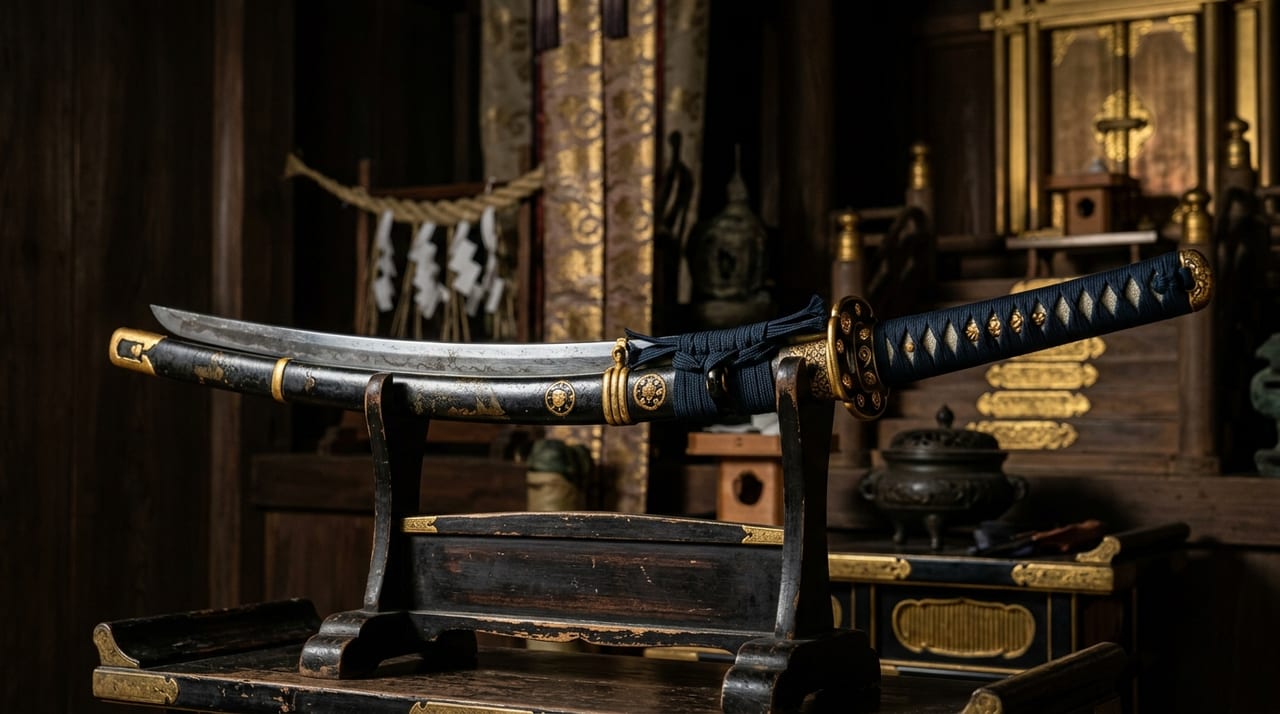
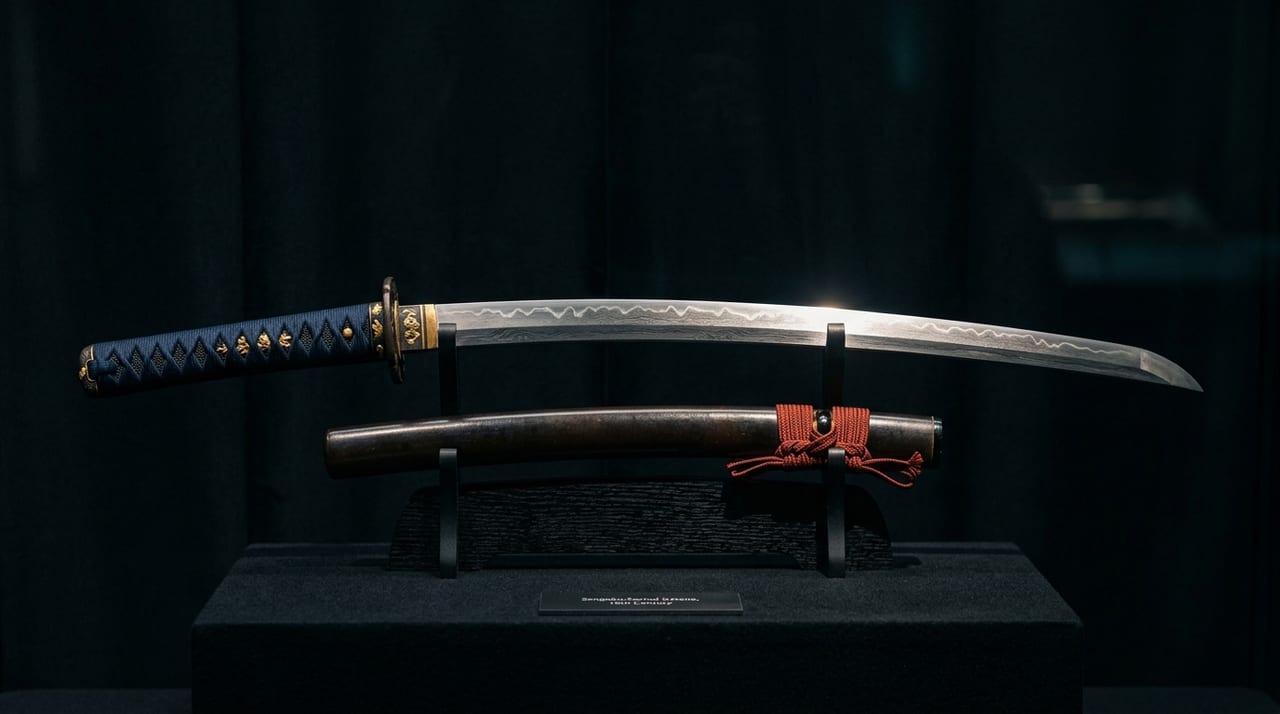
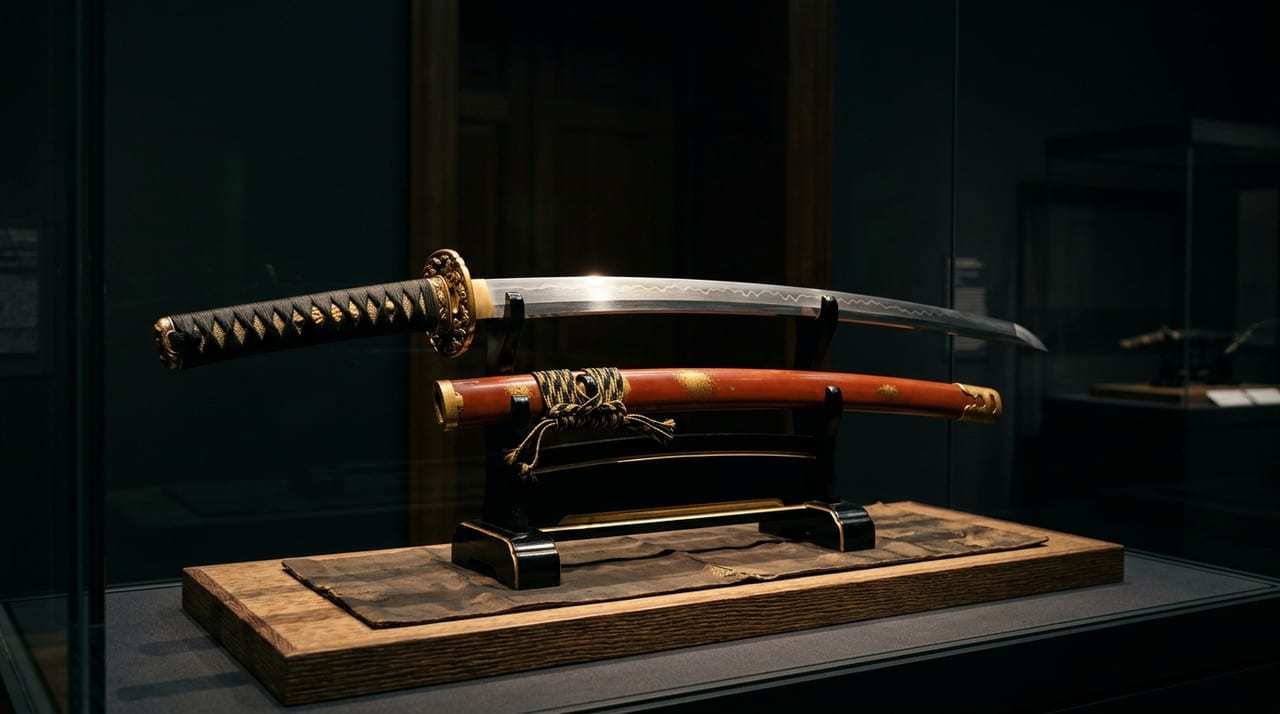
Sword Culture of the Azuchi-Momoyama Period: Famous Blades and Tea Swords Beloved by Nobunaga and Hideyoshi
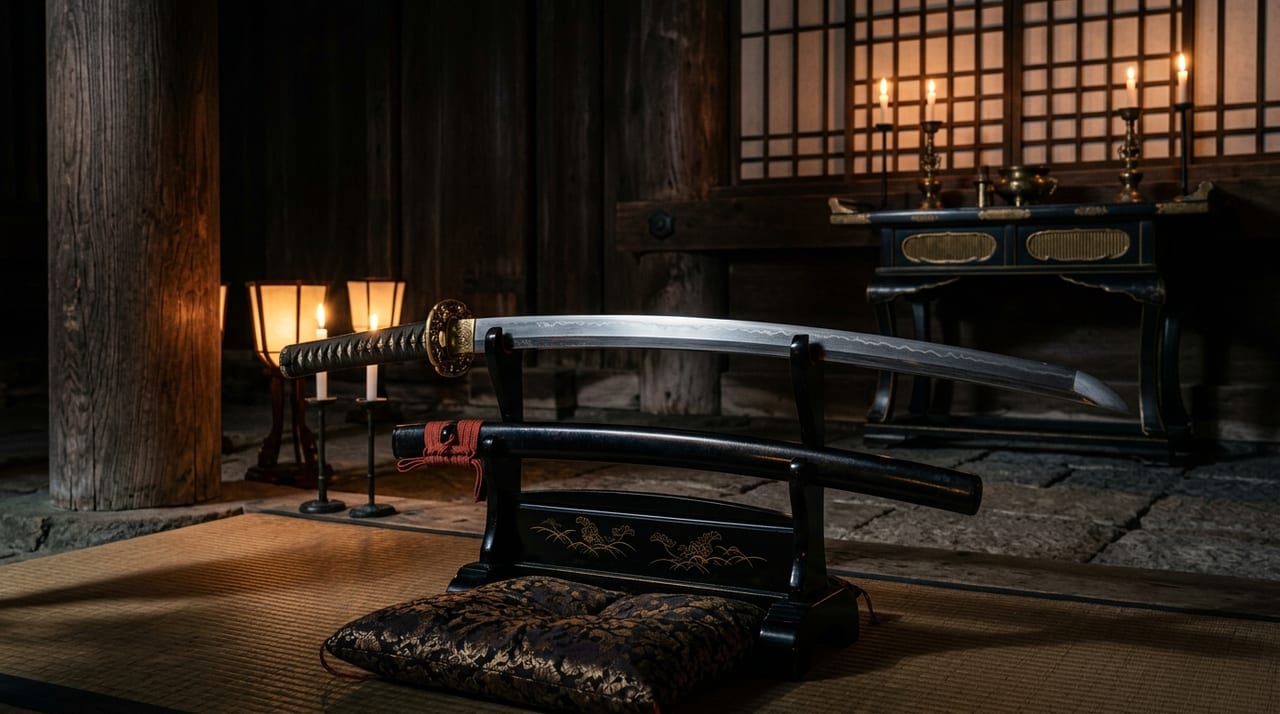 * Image is for illustrative purposes only.
Table of Contents
How National Unification Changed the Significance of Swords
The century-long warfare of the Sengoku period was an era when swords were exploited as pure weapons of war. However, when the Azuchi-Momoyama period (approximately 1568–1603) arrived with the rise of Oda Nobunaga and Toyotomi Hideyoshi's unification of Japan, the culture surrounding swords underwent dramatic change. From practical weapons of war to prestige assets, works of art, and political symbols—the center of gravity of swords shifted.
The concept of "meibatsu" (famous swords) played a particularly important role during this period. Meibatsu refers to swords made by renowned smiths from ancient times or possessed by famous masters in history, whose provenance is clearly documented, and which held political and cultural value in their own right. Owning a meibatsu sword meant not simply possessing a beautiful blade, but holding in one's grasp the historical authority that the sword embodied.
Oda Nobunaga's Passion for Swords—A Precursor to "Meibatsu Hunting"
Oda Nobunaga was known as an enthusiastic collector of swords. He valued swords with clear provenance, and through the confiscation of tea implements and swords from daimyo—a practice known as "godogu meshiagari"—and the active collection of valuable meibatsu, he made his sword collection a symbol of political dominance.
One sword that Nobunaga is said to have treasured particularly was the "Yoshimoto Samonji." This blade was obtained as war booty from Imagawa Yoshimoto, whom he defeated at the Battle of Okehazama (1560), and is attributed to Samonji, a master craftsman of the Northern and Southern Courts period from Chikuzen Province. Nobunaga named this sword "Yoshimoto Samonji," inscribing the name of Yoshimoto upon it, and is said to have cherished it throughout his life as a monument to his victory (it is currently preserved at Atsuta Shrine).
However, much of Nobunaga's collection was lost in the Honnō-ji Incident of 1582 (Tenshō 10). How many masterpiece blades turned to ash in the flames of the Honnō-ji Incident, where Nobunaga, betrayed by Akechi Mitsuhide's rebellion, took his own life—this tragedy, recorded in history as "the burning collapse of the Honnō-ji" (moeochi), continues to be spoken of today as one of the greatest losses in sword history.
Toyotomi Hideyoshi and the Systematization of "Meibatsu Hunting"
Toyotomi Hideyoshi promoted sword collecting on a scale surpassing even Nobunaga. After unifying the realm, he demanded the submission of meibatsu tea implements and famous swords from powerful daimyo, military commanders, and wealthy merchants—or forcibly confiscated them—to form his own collection. This activity, which posterity would call "meibatsu hunting," was a highly political act.
One sword that Hideyoshi is said to have particularly loved was the "Honekami Tōshirō." This short sword is attributed to Awataguichi Yoshimitsu, a master craftsman of the Kamakura period, and its name comes from its cutting edge so sharp it could "crush bone." After Hideyoshi's death, it passed to the Tokugawa family, and is now enshrined at Toyokuni Shrine in Kyoto (Designated Important Cultural Property).
For a supreme ruler to possess a specific meibatsu meant monopolizing the authority and history that the sword symbolized, and it became a means of strengthening cultural dominance over the daimyo. At the Kitano Grand Tea Gathering (1587), Hideyoshi also publicly displayed tea implements and swords, demonstrating his prestige to the realm.
Momoyama-Period Koshirae Culture—The Flourishing of Sumptuous Sword Fittings
Indispensable to any discussion of sword culture in the Azuchi-Momoyama period is the koshirae—the external fittings of swords including saya, tsuka, tsuba, and menuki. The metalworking, lacquering, and maki-e techniques cultivated through the warfare of the Sengoku period were poured into the world of sword fittings with the advent of peace, and the koshirae of the Momoyama period represented one of the most lavish periods in Japanese craft history.
The characteristics of Momoyama koshirae are their brilliance achieved through abundant use of gold and silver, and the richness of their pictorial designs.
- Saya: Frequently featured kinnashiji (gold pear-skin finish) or black lacquered surfaces decorated with gold maki-e
- Tsuba: Precision designs with gold and silver inlay on iron backgrounds became fashionable
- Gotō Family: Beginning with Gotō Yūjō, the Gotō family served as official metalworkers for the Ashikaga shogunate, Toyotomi, and Tokugawa families, maintaining high status across generations and producing high-quality sword fittings known as "Gotō-mono"
- Nanban-tsuba: Under the Toyotomi regime, these works of cultural fusion flowed in through trade with the Southern Barbarians (Portugal and Spain), featuring fine acanthus-leaf patterns engraved on iron backgrounds as their representative form. They are symbolic artifacts of Momoyama culture's active absorption of foreign influences.
Sen no Rikyū and Swords—How Chanoyu Changed Sword Aesthetics
The relationship with chanoyu (tea ceremony) is essential to understanding sword culture in the Azuchi-Momoyama period. The aesthetics of wabi-cha perfected by Sen no Rikyū (1522–1591) profoundly influenced the aesthetic sensibilities of warrior society as a whole, and brought transformation to the criteria for evaluating swords.
Rikyū's wabi-cha prioritized the essence of materials, depth within simplicity, and the beauty of imperfection over surface luxury. While this aesthetic would seem to contradict the appearance of meibatsu adorned with elaborate gold and silver koshirae, this value system also penetrated the evaluation of swords discussed in the tea room. A culture of appreciating the "kesiki" (blade character) of swords—the complex variations of hamon, the grain of the jigane, and the natural flow of kitae—took root among warriors and tea practitioners during this era.
The "way of seeing things" embodied by Rikyū was deeply internalized in warrior sword appreciation and became the foundation of sword aesthetics from the Edo period onward. The Azuchi-Momoyama period shines brilliantly in sword history as the era that completed the essential transformation of the Japanese sword from war to peace, from weapon to artwork, from quantity to quality. Within TOUKENZA's collection are swords that embody the spirit of this transformative period.