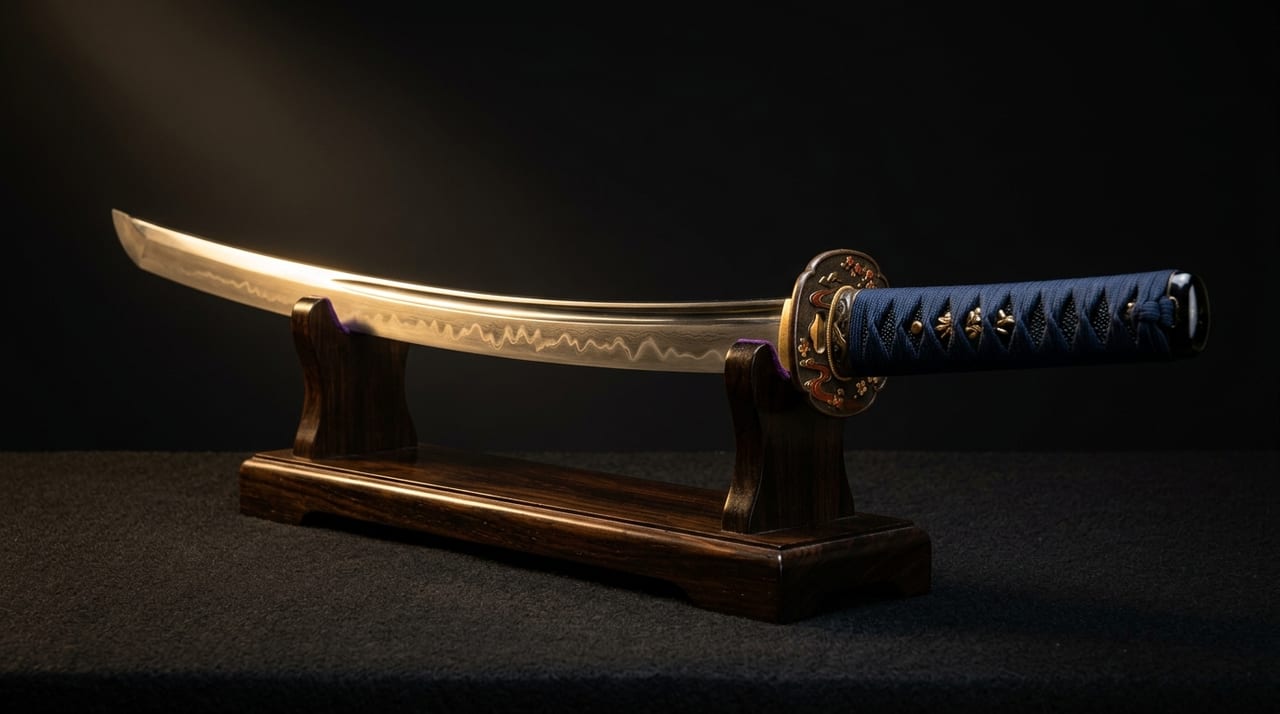
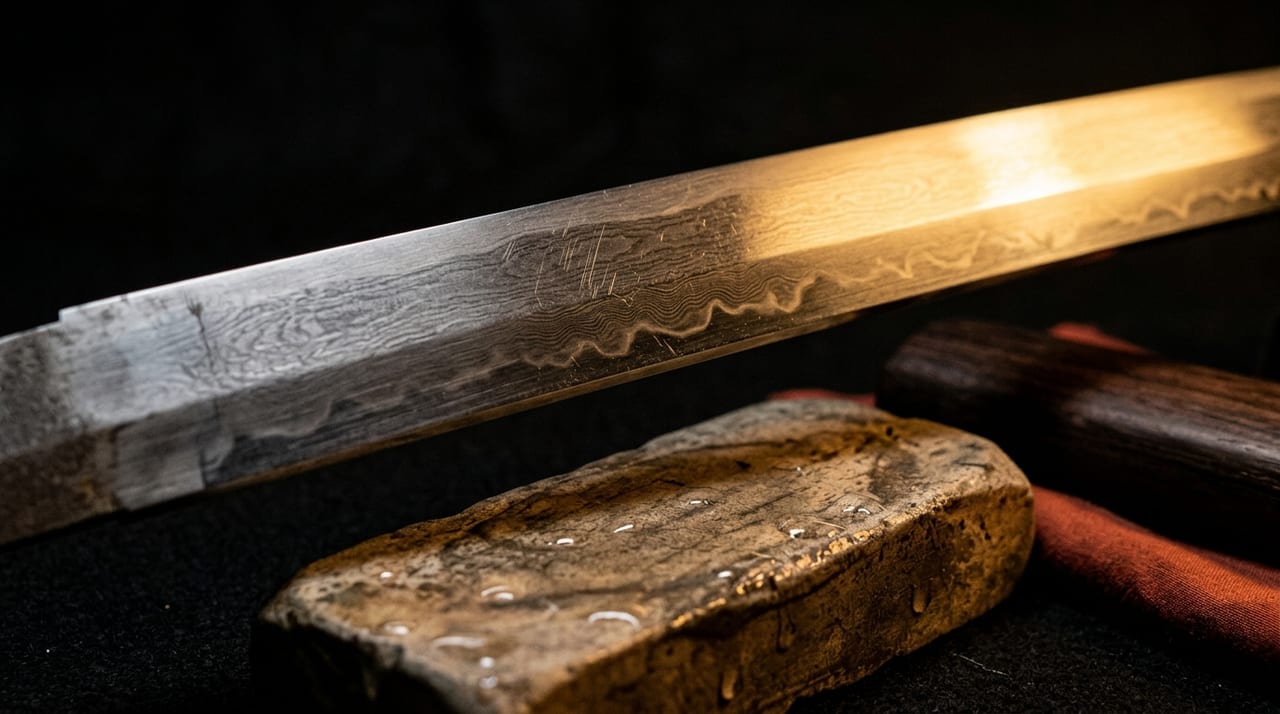
Les Cinq Traditions des Épées Japonaises—Guide Complet des Caractéristiques et de la Valeur Marchande de Yamato, Yamashiro, Bizen, Soshu et Mino
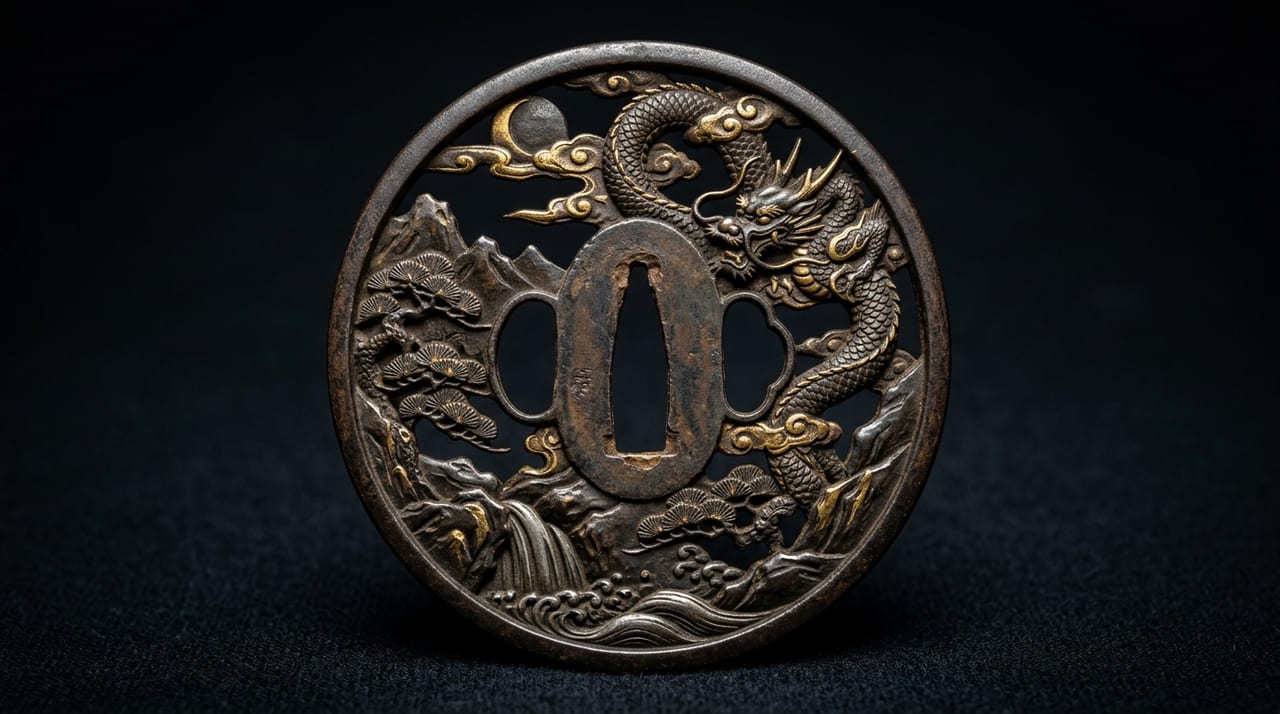 * Image illustrative uniquement.
Sommaire
Les Cinq Écoles de Maîtres Forgerons — Cinq Cultures d'Épées Nourries par la Région
Les techniques de forge d'épées japonaises sont généralement divisées en cinq écoles et traditions régionales collectivement connues sous le nom de « Gokaden » (Cinq Écoles de Maîtres Forgerons). Chacune des écoles Yamato, Yamashiro, Bizen, Soshu et Mino a évolué dans sa propre direction, façonnée par le climat, les ressources en fer, les demandes politiques et l'arrière-plan culturel de sa région. Comprendre le Gokaden est la première étape pour déchiffrer les souvenirs du temps et du lieu gravés dans une seule lame. Les techniques affinées par les forgerons au cours des siècles continuent de captiver les spectateurs et commandent des évaluations élevées sur le marché mondial de l'art.
Ci-dessous se trouvent les caractéristiques représentatives de hamon et jigane de chaque école.
| École | Caractéristiques représentatives de hamon et jigane |
|---|---|
| Yamato | suguha, masame hada |
| Yamashiro | konie deki, ko-itame hada |
| Bizen | choji midare, utsuri |
| Soshu | nie, kinsuji, sunagashi, inazuma |
| Mino | togari gunome, sanbon sugi |
École Yamato (yamatoden) — Force Austère, les Plus Anciennes Épées de Guerriers du Japon
Centrée à Nara, l'école Yamato est considérée comme la plus ancienne tradition de maîtres forgerons dans l'histoire de l'épée japonaise. Du 10e au 12e siècles, elle a été façonnée par la demande de moines guerriers servant de gardes pour les grands temples et sanctuaires tels que Todai-ji, Kofuku-ji et Kasuga Taisha. Parce que ces épées ont été présentées dans des contextes religieux, leurs formes devaient incarner la pureté spirituelle plutôt que la décoration ornée.
La plus grande caractéristique de l'école Yamato est la suguha. Comparée à midareha, elle peut sembler discrète, mais créer une suguha parfaitement uniforme nécessite un contrôle de température extrêmement précis et un talent exceptionnel. Parmi les connaisseurs d'épées, on dit que « la clarté de la suguha révèle la véritable maîtrise d'un forgeron ». Le jigane est souvent masame hada, avec son grain aligné sur les fibres créant un sentiment visuel de pureté.
Parmi les exemples célèbres se trouve le tachi attribué à Chiyozuru Kuniyasu datant de Hōji 1 (1247), conservé au Musée National de Tokyo, et plusieurs épées transmises par les temples et sanctuaires de Nara ont été désignées comme trésors nationaux et propriétés culturelles importantes. Parce que les épées existantes de l'école Yamato sont limitées en nombre et rares sur le marché, les exemples bien conservés avec des documents de certification commandent parfois des primes substantielles.
École Yamashiro (yamashiroden) — Le Sommet de l'Élégance Né de la Culture de la Noblesse de Cour
L'école Yamashiro, qui a prospéré à Kyoto pendant les périodes Heian à Muromachi, est la tradition poursuivant le plus intensément la « beauté » dans l'histoire de l'épée japonaise. L'raffinement culturel de la noblesse de cour s'est reflété dans les épées elles-mêmes, créant une valeur artistique qui transcendait la beauté fonctionnelle.
L'école Yamashiro est représentée par l'école Awataguchi et l'école Rai.
- École Awataguchi : Awataguchi Yoshimitsu est connu comme un maître artisan de tanto, laissant des chefs-d'œuvre de tanto à lames plates tels que « Harakiri » et « Yagen Tōshirō ». Le tachi « Ichigo Hitofuri », réputé être le seul tachi forgé par Yoshimitsu, est de manière similaire chéri comme une œuvre maîtresse représentative de l'école Yamashiro.
- École Rai : Le tachi de Rai Kunitoshi et Rai Kunimitsu sont connus pour leur hamon konie deki, dans lequel de fines particules nie s'élèvent comme un brouillard, caractérisées par un lustre mystérieux qui change d'expression selon l'angle de lumière.
Le jigane est prédominamment ko-itame hada, avec son grain dense et étroitement emballé impartissant du raffinement à l'ensemble de la lame. Les épées de l'école Yamashiro ont souvent des longueurs de lame gracieusement plus courtes, servant comme des ressources précieuses non seulement pour les collectionneurs d'art, mais aussi pour les chercheurs historiques. Beaucoup restent désignées comme des trésors nationaux ou des propriétés culturelles importantes et sont fréquemment exposées dans les musées publics, donc explorez pleinement les occasions de voir ces œuvres en personne.
École Bizen (bizenden) — Production Généreuse et Prolifique, le Plus Grand Centre de Fabrication d'Épées du Japon
Centrée dans ce qui est aujourd'hui le sud de la Préfecture d'Okayama (Province Bizen), l'école Bizen est la tradition vantant le plus grand volume de production dans l'histoire de l'épée japonaise et le style décoratif le plus somptueux. Connue avec le nom du lieu Osafune sous le nom « Épées Bizen Osafune », elles sont chéries par les amateurs d'épées du monde entier.
La signature de l'école Bizen est la choji midare. Les motifs de hamon en forme de pétales évoquant des boutons de clou ondulent en succession, et leur élégance est souvent appelée « un chef-d'œuvre sans égal ». Le choji midare de l'école Ichimonji en particulier est connu comme le sommet de la brillance somptueuse et a été chéri comme les fabricants d'épées de choix pour les shogounats Ashikaga et Tokugawa.
Une autre caractéristique clé est l'utsuri. Ce phénomène d'un reflet blanc et brumeux apparaissant dans le jigane est produit par le sable de fer distinctif de Bizen, le charbon de pin rouge et les techniques de trempe indigènes, et la reproduction scientifique reste difficile même aujourd'hui. Les grands tachi des maîtres forgerons de la période des Cours du Nord et du Sud tels que Osafune Kanemitsu et Osafune Kagemitsu sont des œuvres prisées qui continuent à commander les meilleurs prix aux enchères modernes.
En raison de son haut volume de production, les épées de l'école Bizen varient en qualité. Lors de la sélection de pièces de l'école Bizen pour une collection initiale, il est sage de faire de la note du certificat NBTHK (conservation spéciale ou supérieure est préférée) et de la clarté de l'utsuri vos critères clés.
École Soshu (sōshūden) — Kamakura, Berceau des Plus Grands Maîtres Forgerons
L'école Soshu, qui a prospéré à l'ombre du shogunat de Kamakura, est souvent considérée comme le sommet technique parmi le Gokaden. Le nom Masamune est le nom de forgeron le plus célèbre dans l'histoire de l'épée japonaise, et ses techniques continuent d'être parlées comme « l'aboutissement de l'école Soshu ».
La plus grande caractéristique de l'école Soshu est le trempe magnifique qui remplit l'ensemble du hamon avec des particules nie grossières visibles à l'œil nu. De plus, les détails fins dans le hamon créent la « keshiki » caractéristique (paysage) unique à l'école Soshu, et les valuations plus élevées s'accumulent aux lames affichant ces caractéristiques de manière prominente.
- kinsuji
- sunagashi
- inazuma
Les « Dix Piliers de Masamune » (Yoshihiro, Akihiro, Nagayoshi, Kaneuji et autres), qui étaient les disciples directs et petits-fils de Masamune, ont propagé ses techniques à l'échelle nationale, et à partir de la période Edo, de nombreux forgerons ont incorporé avec enthousiasme « l'influence de l'école Soshu » dans leurs styles. Les épées de Masamune inscrites dans la « Liste Kyoho des Épées Célèbres » ont été traitées comme des lames trésorées des daimyo et des maisons shogunales, et beaucoup restent logées comme des propriétés culturelles importantes et des trésors nationaux dans les Musées Nationaux de Tokyo et Kyoto.
Les épées de l'école Soshu, qui combinaient la durabilité pour répondre aux demandes de l'époque de la guerre réelle avec une beauté écrasante en tant qu'œuvres d'art, continuent à mettre à jour les prix records pour la catégorie « épée particulièrement importante » aux enchères internationales.
École Mino (minoden) — Praticité et Production de Masse pour l'Âge des États en Guerre
Centrée dans ce qui est aujourd'hui la région de Seki de la Préfecture de Gifu (Province Mino), l'école Mino est une tradition pragmatique qui a répondu rapidement à la demande pendant l'ère de guerre suivant la Rébellion Onin (1467–). Les daimyo Sengoku, qui avaient besoin de grandes quantités d'épées, ont apprécié la communauté des forgerons de Mino pour avoir atteint à la fois la qualité et l'efficacité de production.
Le hamon signature de l'école Mino est la togari gunome. Le motif d'arcs semi-circulaires pointus et acérés disposés en succession régulière réalise à la fois le rythme visuel et la force structurelle, gagnant la reconnaissance en tant qu'épée de champ de bataille pratique. Les exemples de haut niveau affichent également les influences nie et kinsuji de l'école Soshu à divers endroits, et de nombreuses œuvres d'une valeur esthétique considérable existent.
Les maîtres forgerons représentatifs incluent Kanesada et Kanemoto.
- Kanesada : Izumi-no-kami Kanesada, connu sous le nom « Nosada », a été favori d'Ashikaga Yoshiteru et de Hosokawa Fujitaka (Yusai), et est toujours considéré comme le plus fin forgeron de Mino.
- Kanemoto : Mago-roku Kanemoto, qui a forgé le motif de hamon distinctif sanbon sugi de trois dents de scie connectées, continue de captiver de nombreux collectionneurs avec sa vision artistique individuelle.
Le Gokaden et les Préférences des Collectionneurs — Tendances du Marché en 2026
La connaissance du Gokaden s'étend au-delà de la simple étude historique, influençant directement les décisions d'achat des collectionneurs. Ces dernières années (2025–2026), les tendances suivantes ont été observées sur le marché de l'épée japonaise :
- École Bizen : La plus populaire parmi les collectionneurs au niveau d'entrée, avec une offre abondante et l'attrait visuel d'utsuri abaissant la barrière pour les premiers achats.
- École Soshu : Commandant un soutien écrasant des collectionneurs étrangers, particulièrement en Europe, en Amérique du Nord et à Taïwan, avec les œuvres Soshu dans la catégorie « particulièrement importante » maintenant des prix élevés.
- École Yamashiro : Les tanto gagnent des valuations stables en tant qu'œuvres d'art, et avec leur petite taille et leur facilité de stockage, ils attirent de plus en plus les collectionneurs féminines et les amateurs d'art.
- Écoles Yamato et Mino : Maintenant un attrait fort parmi les chercheurs et les collectionneurs avancés qui valorisent la rareté et l'importance historique, avec les exemples fins se vendant immédiatement après leur découverte.
La meilleure façon de déterminer l'esthétique de quelle école résonne avec vous est de visiter les expositions spéciales d'épées tenues au Musée National de Tokyo, au Musée de l'Épée Japonaise (Sumida Ward), et aux musées préfecturaux à travers le pays. Le catalogue TOUKENZA permet également de filtrer par école, donc explorez de nombreux exemples en ligne tout en cultivant votre propre philosophie de collection.