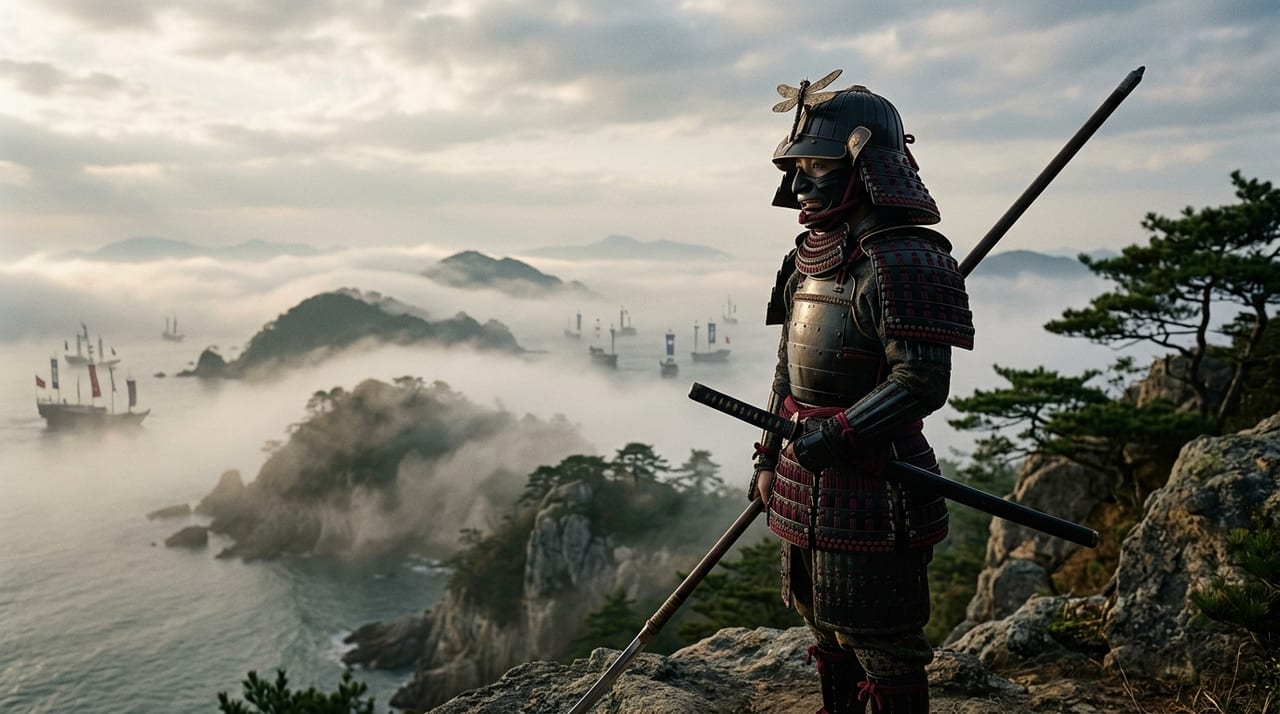
 * Image is for illustrative purposes only.
Tsuruhime
鶴姫
The Female Warrior of Ōshima — Priestess and Commander of the Inland Sea
Description
Birth of the Sea Priestess
Born around Daiei 6 (1526) in Ōmishima in Iyo Province, Tsuruhime grew up as the daughter of the Ōhori (chief priest) of Ōyamazumi Shrine, Ōhori Yasuo (Ōchi Yasuo). She is one of Japan's most famous female military commanders, who donned armor herself and marched into battle for control of the Seto Inland Sea. Ōyamazumi Shrine, revered as a shrine of sea deities in the Seto Inland Sea, is known for housing the largest collection of armor in the nation, including one of Japan's three great suits of armor. Born into this sacred place, Tsuruhime, as the daughter of a shrine priest, possessed both a deep understanding of weapons and considerable influence over the ama (sea warriors) of the Seto Inland Sea.
The Sengoku Seto Inland Sea
The Seto Inland Sea during Tsuruhime's lifetime was a fierce battleground where multiple powers—the Mōri clan, the Murakami pirates, the Ōuchi clan, and the Kōno clan—competed for supremacy. The Ōchi family, as priests of Ōyamazumi Shrine, held power centered on Ōmishima and commanded the island maritime forces, playing a role in the struggle for control of the Seto Inland Sea. When Tsuruhime's brothers fell in battle one after another, she was forced at a young age to inherit the family headship. The decision Tsuruhime made at this moment was neither surrender nor flight, but to don armor herself and take to the battlefield.
Armor and Weapons
Tsuruhime's armor still survives at Ōyamazumi Shrine today and is designated as a National Important Cultural Property as a konito-susogake-yoke dōmaru (a type of body armor with dark-blue cord lacing) (the "women's armor" theory is regarded negatively in armor research). This armor was made with a narrower waist to fit a female body, and its construction confirms it was practical combat equipment actually used in battle. The helmet followed the form of contemporary (tousei) helmets and was fully outfitted, combined with a menpo (face guard). The existence of this armor provides compelling physical evidence to people today that Tsuruhime was not merely a legendary figure but a real female warrior who actually donned armor and fought.
Swords and Female Warriors
Tsuruhime's sword is often discussed in relation to the precious swords of Ōyamazumi Shrine. Ōyamazumi Shrine's treasure hall houses numerous suits of armor and swords designated as National Treasures and Important Cultural Properties, and famous swords dedicated by Minamoto no Yoshitsune, Minamoto no Yoritomo, Takeda Shingen, and various Iyo generals remain preserved. The people of the time believed that the blade Tsuruhime wielded on the battlefield was imbued with the spiritual power of the shrine's precious swords. A daughter of the war deity grasping the sword of the war deity and rowing out to sea—for the ama of the time, this figure possessed a mythic significance that transcended mere warfare.
Three Campaigns and Tragedy
Tsuruhime is said to have participated in naval battles of the Seto Inland Sea three times in total, from Daiei 7 (1527) to Tenbun 12 (1543). In her first campaign, she achieved victory, but in subsequent battles she lost her brothers and father in succession. Leading the island men to sea, Tsuruhime herself took command and attacked enemy vessels. Her tactics were not frontal assault, but sophisticated maritime warfare utilizing her intimate knowledge of the complex tidal currents of the Seto Inland Sea and the topography of the islands. Ultimately, however, legend preserves that Tsuruhime, having lost her beloved in war (said to be a nephew of Ōchi Yasuo and retainer of Ōchi Yasunari), threw herself into the sea in profound grief. She was said to be seventeen years old.
Ōyamazumi Shrine and Sword Culture
Ōyamazumi Shrine is one of Japan's shrines most deeply connected to sword culture. The treasure hall of the shrine, which received dedications of armor and swords from warriors throughout the nation, preserves numerous famous swords from the Genpei War through the Sengoku period. Particularly famous are the armor and great swords dedicated by Minamoto no Yoritomo and Minamoto no Yoshitsune, swords associated with Emperor Godaigo, and other masterpieces that represent the quintessence of Japanese sword history. Tsuruhime was born and raised in this sacred site of swords, cultivating from childhood respect and understanding for weapons. The blade she wielded was not merely a weapon, but held the significance of a spiritual medium connecting the divine and human realms.
Between Legend and History
In Tsuruhime's life, historical fact and legend are complexly intertwined, and it is difficult to confirm everything as historical truth. However, it is certain that her existence occupies a special place in Japanese samurai culture, and even today the people of Ōmishima speak with pride of Tsuruhime as a local hero. Called Japan's Joan of Arc, the story of Tsuruhime represents one of the purest pieces of evidence that Japanese history has demonstrated—that it is possible to embody the spirit of bushidō while transcending the constraints of gender, social status, and age.
Notable Swords
- Sacred swords of Ōyamazumi Shrine — the great collection of dedicated blades at the shrine where Tsuruhime grew up, including swords from Yoshitsune, Yoritomo, and Shingen; the spiritual heritage that infused her own weapons with divine significance
- Tsuruhime's battle sword — the practical fighting blade she carried in the naval engagements of the Seto Inland Sea, forged in the Iyo tradition for a young woman who had inherited the responsibility of defending her people and her god