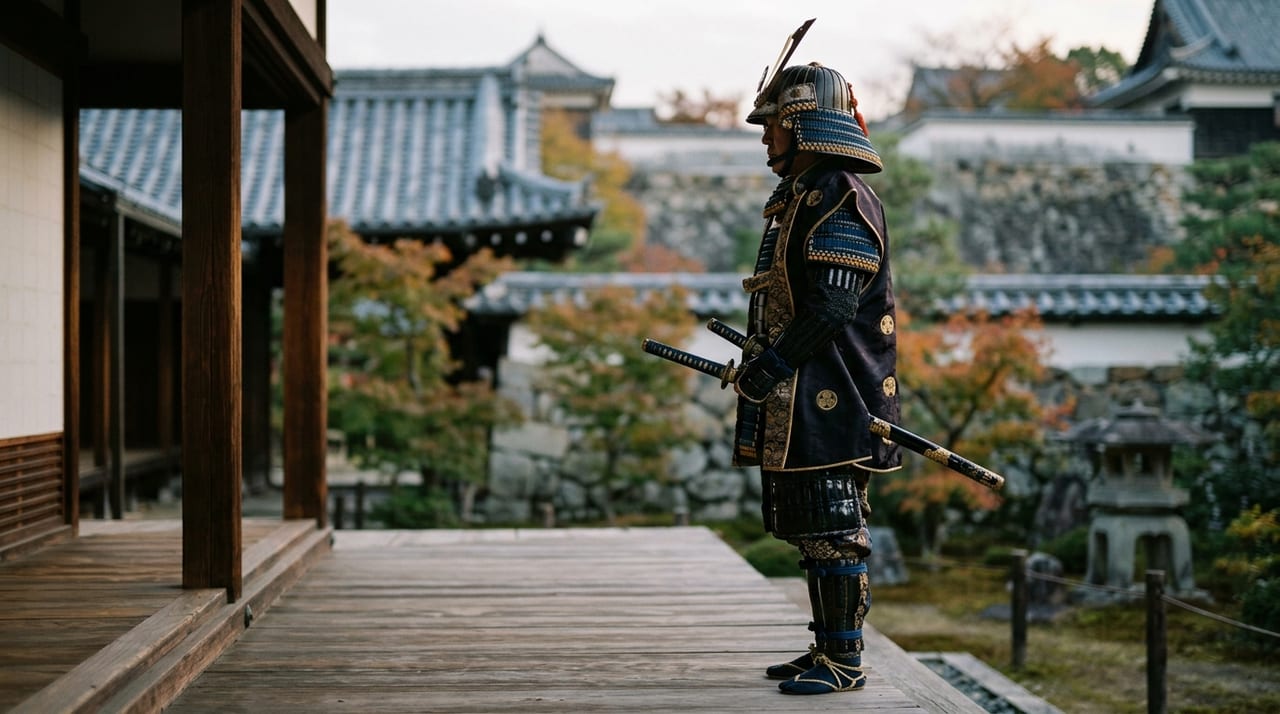
 * Image is for illustrative purposes only.
Tokugawa Yoshimune
徳川吉宗
The Shogun Connoisseur — The Eighth Shōgun Who Systematized Sword Culture
Description
From Kishū to the Shogunate
Born in Jōkyō 1 (1684) as the fourth son of the Kishū Tokugawa house, Tokugawa Yoshimune succeeded to the lordship of the Kishū domain after his elder brothers died in quick succession. When the shogunal family was left without a successor following the death of Tokugawa Ietsugu, Yoshimune was singled out as heir and took office as the eighth shōgun in Kyōhō 1 (1716). Amid the unprecedented situation of a shōgun coming from a collateral line, Yoshimune carried out the Kyōhō Reforms under the banner of a 'return to the founding precedents of the Tokugawa,' and succeeded in rebuilding the shogunate's finances and restoring social order. Nicknamed the 'Rice Shōgun,' Yoshimune displayed outstanding skill in economic reform centered on rice price policy, but his achievements did not stop there. He also left an unforgettable mark on the history of the Japanese sword.
Kyōhō Reforms and Sword Policy
Among Yoshimune's measures in the Kyōhō Reforms, the one most noteworthy for its connection to sword culture is the compilation of the Kyōhō Meibutsuchō, commissioned from the Hon'ami family. Presented to Tokugawa Yoshimune in Kyōhō 4 (1719), this register of famous blades records renowned swords and documents the origin, provenance, form, and evaluation of each one. It is among the most important documents in the history of Japanese swords. The register includes many famous blades favored by sengoku daimyō and others, including the Tenka Goken, the Five Great Swords under Heaven: Mikazuki Munechika, Dōjigiri Yasutsuna, Onimaru Kunitsuna, Ōdenta Mitsuyo, and Juzumaru Tsunetsugu. It forms the foundation of current sword research. In Kyōhō 3 (1718), Yoshimune had the famous Onimaru Kunitsuna brought to Edo Castle and personally viewed it.
Relations with the Hon'ami Family
Yoshimune's relationship with the Hon'ami family was among the closest of any shōgun. As specialists in polishing, appraisal, and cleaning of swords continuing since the Muromachi period, the Hon'ami family was the supreme authority responsible for managing the swords of the shogunal family and the daimyō households. Yoshimune favored Hon'ami Kōchū (the head of the family at that time) and ordered him to organize and appraise the swords held by the shogunate. The origami (certificate) issued by the Hon'ami family held absolute authority in the sword market of the Edo period, and famous swords accompanied by an origami carried incomparably greater value. While making use of this system, Yoshimune improved and enriched the sword collection held by the shogunal family.
Promotion of Martial Arts
Yoshimune did not limit himself to collecting and studying swords. He also devoted great effort to promoting the martial arts. During the Kyōhō Reforms, he strongly encouraged martial arts, which had declined under the civil governance of earlier times. Yoshimune revived falconry, which had been banned under Tsunayoshi, and personally trained his body in the jūjutsu of Shinshin-ryū. He thus also had the qualities of a warrior, and his very way of life set an example of upholding the essence of the samurai.
Legacy as a Sword Connoisseur
Yoshimune's legacy regarding swords appears most clearly in the cultural project of compiling the Kyōhō Meibutsuchō. This register is still referenced today as a fundamental source for Japanese sword studies, and it is always cited whenever famous swords of the Edo period are discussed. Had the project commissioned by Yoshimune not been carried out, many famous swords transmitted from the sengoku period might have remained buried with unknown provenance. The Kyōhō Meibutsuchō, realized through the combination of shogunal authority and Yoshimune's personal passion for swords, is in terms of the systematization of Japanese sword culture Yoshimune's greatest achievement in the history of the sword. Viewed from the perspective of sword culture, Yoshimune, who was called the 'Rice Shōgun,' can also be regarded as a 'Sword Shōgun.' His accomplishments hold an unshakable place as the foundation of today's Japanese sword research.
Notable Swords
- Famous swords of the realm (Tenka Meibutsu) handed down in the Tokugawa shogunal family (a group of shogunal-held swords recorded in the Kyōhō Meibutsuchō and systematically managed through sorting and appraisal under Yoshimune's orders)