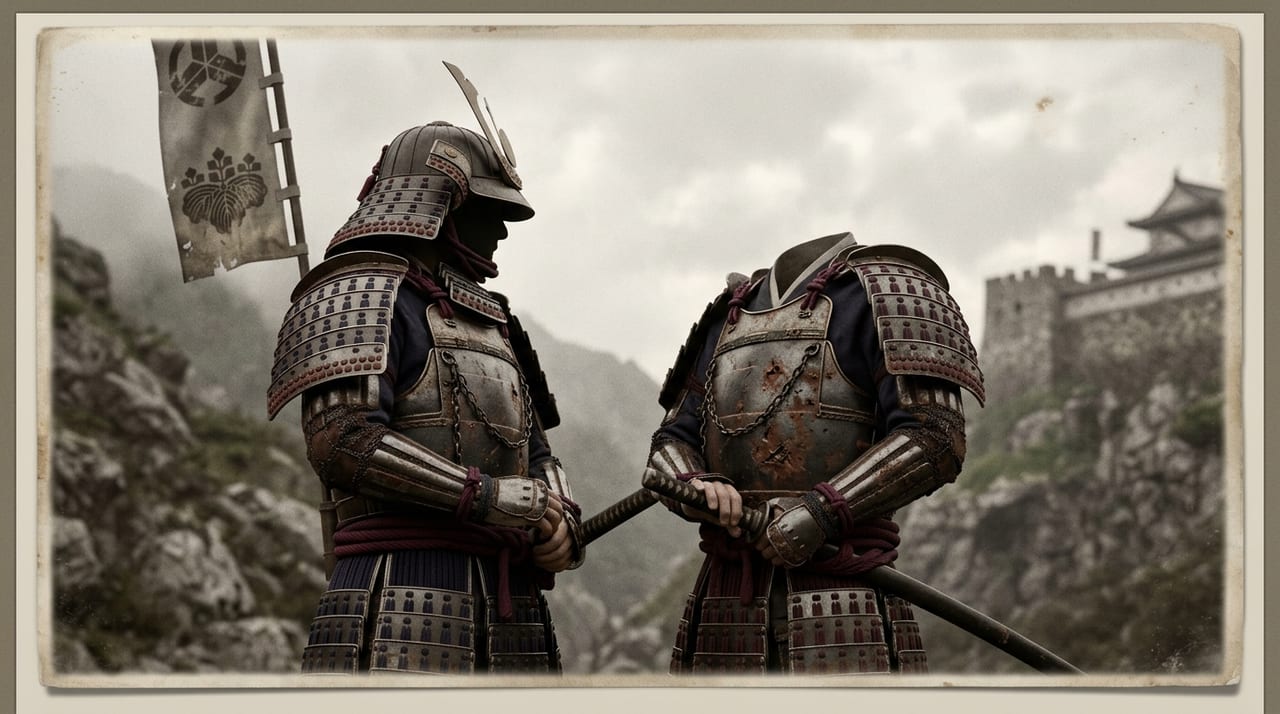
 * Image is for illustrative purposes only.
Saitō Dōsan
斎藤道三
The Viper of Mino, Embodiment of Gekokujo
Description
Saitō Dōsan (1494?–1556) was a Sengoku-period warlord who embodied gekokujō, the overthrow of superiors by inferiors. As a master of intrigue, he is also known by the nickname "the Viper of Mino" (mamushi), which spread through modern historical novels. The legendary story of his rise, said to have begun as an oil merchant and to have carried him to daimyō of the whole province of Mino, is still told as one of the most dramatic success stories the Sengoku period produced.
Recent research has revised what is known about Dōsan's origins. He was once depicted as a man who, within a single generation, drove out the Toki clan, shugo of Mino. Today the more widely accepted view is that the gekokujō began with his father, Nagai Shinzaemon-no-jō (Matsunami Shōgorō), and that Dōsan, as the second generation, completed the control of Mino. In any case, the assessment of a career in which father and son, within two generations, rose from the household of a shugo's vassal to the rank of province lord remains unchanged, as a symbol of the meritocratic Sengoku age.
What makes Dōsan stand out as a warlord is the combination of extraordinary political shrewdness and military talent. From his father's generation onward he served the Nagai family, who were retainers of the Toki clan, shugo of Mino. He eventually took the Saitō surname, expelled the shugo Toki Yorinori, and gained control of Mino. In this process he made full use of the stratagems of the Sengoku age, including scheming, assassination and treacherous attacks.
The Mino that Dōsan governed was also famous as a center of sword production. Swords of the Mino tradition, collectively called "Mino-mono," were highly valued for their sturdy construction suited to actual combat. Mino swordsmiths developed from lineages that drew on figures such as Shizu Saburō Kaneuji. The techniques of the Seki smiths, who gained renown in the Muromachi period as makers of the "Seki blades," form the foundation of Seki City in Gifu Prefecture, today's cutlery production region.
Dōsan fought fiercely with Oda Nobuhide, father of Oda Nobunaga, but in the end concluded a peace and gave his daughter Kichō (Nōhime) in marriage to Nobunaga. The anecdote of their meeting is famous. The remark Dōsan is said to have made afterward, "It is regrettable; my sons will surely end up tethering their horses at the gate of that fool (in other words, become his retainers)," is known as an episode showing the keenness of his judgment of men.
In his final years, however, Dōsan's relations with his eldest son Yoshitatsu deteriorated, and in 1556 he met a tragic end, killed by his own son at the Battle of Nagaragawa. The will said to have stated that Dōsan would transfer Mino to Nobunaga is famous (only copies survive, and some hold it to be a forgery). Nobunaga later pacified Mino and made Gifu Castle his base, so Dōsan's wishes were realized indirectly. As an embodiment of gekokujō and a schemer who consistently pursued meritocracy, Saitō Dōsan is one of the figures who most clearly show the essence of the Sengoku age.