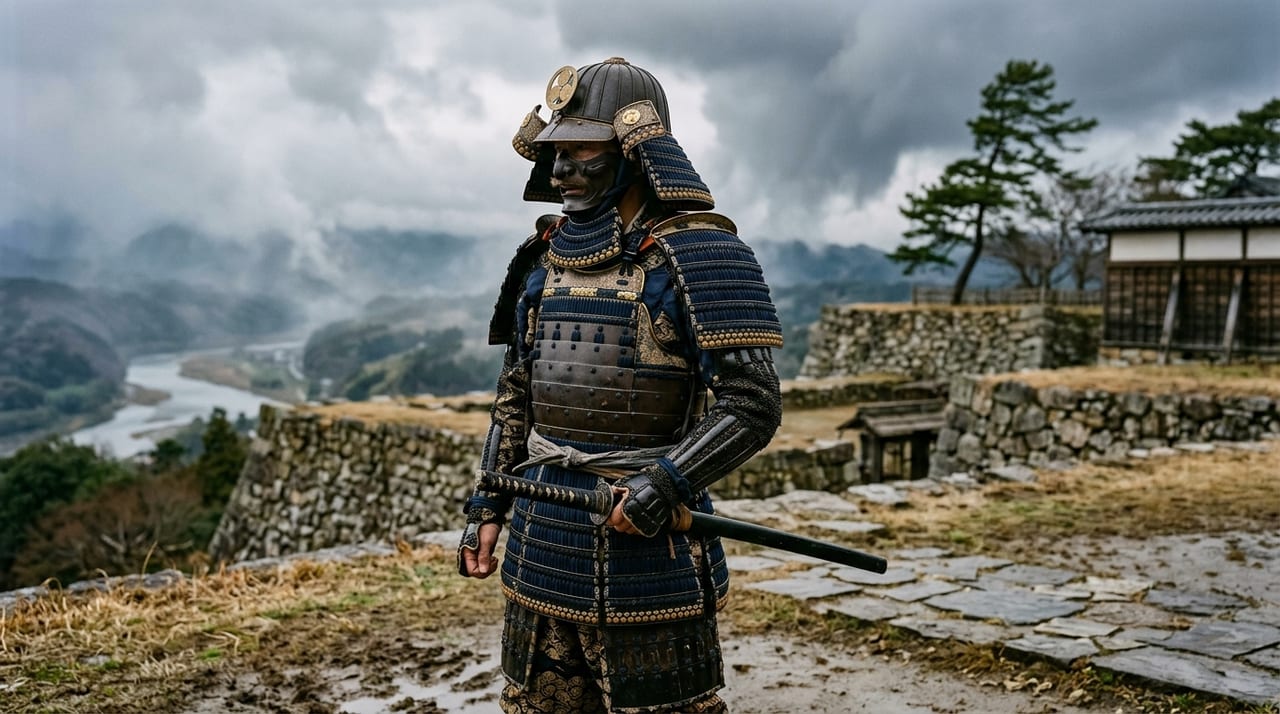
 * Image is for illustrative purposes only.
Aisu Ikōsai
愛洲移香斎
Founder of Kage-ryū, Martial Strategist Who Opened One of the Sources of Japanese Swordsmanship
Description
Aisu Ikōsai (1452-1538) is one of the most important figures in the history of Japanese swordsmanship. He is regarded as a martial arts master who, as the founder of the Kage-ryū school of swordsmanship (also written with alternative characters), opened one of the wellsprings of Japanese swordsmanship. He is said to have come from Ise Province (present-day Mie Prefecture). He travelled throughout the country, studied the swordsmanship of various regions, and after mastering his own principles of the sword, founded the Kage-ryū.
Ikōsai is said to have set out on journeys of martial arts training from a young age and to have travelled as far as Ming China. At the age of 36, he is said to have undertaken a religious retreat at the Udo cave (Udo no Iwaya) in Hyūga Province (present-day Nichinan, Miyazaki Prefecture), where he attained enlightenment through a miraculous power. A legend of this survives, and this experience is said to have been the source of the sword concept of “kage.”
The most famous successor to the Kage-ryū is Kamiizumi Nobutsuna (Ise-no-kami), who developed the Kage-ryū and founded the Shinkage-ryū. Furthermore, the Yagyū Shinkage-ryū branched off from the Shinkage-ryū and became the official instructional school of the Tokugawa shogunal house. Ikōsai's swordsmanship influenced many schools of Japanese swordsmanship indirectly, through the Shinkage-ryū.
Ikōsai's life contains many legendary aspects, and much of his true image remains unclear. However, documents handed down in the Hirasawa family, his descendants, and the “Aisu medicine” (Aisu-gusuri) that appears in the diary of Yamashina Tokitsugu, the Tokitsugu-kyō ki, attest to his existence. He is said to have lived to the remarkable age of eighty-seven, an extraordinary longevity for his time, and his Kage-ryū has been passed down to modern martial arts, including through the Shinkage-ryū.