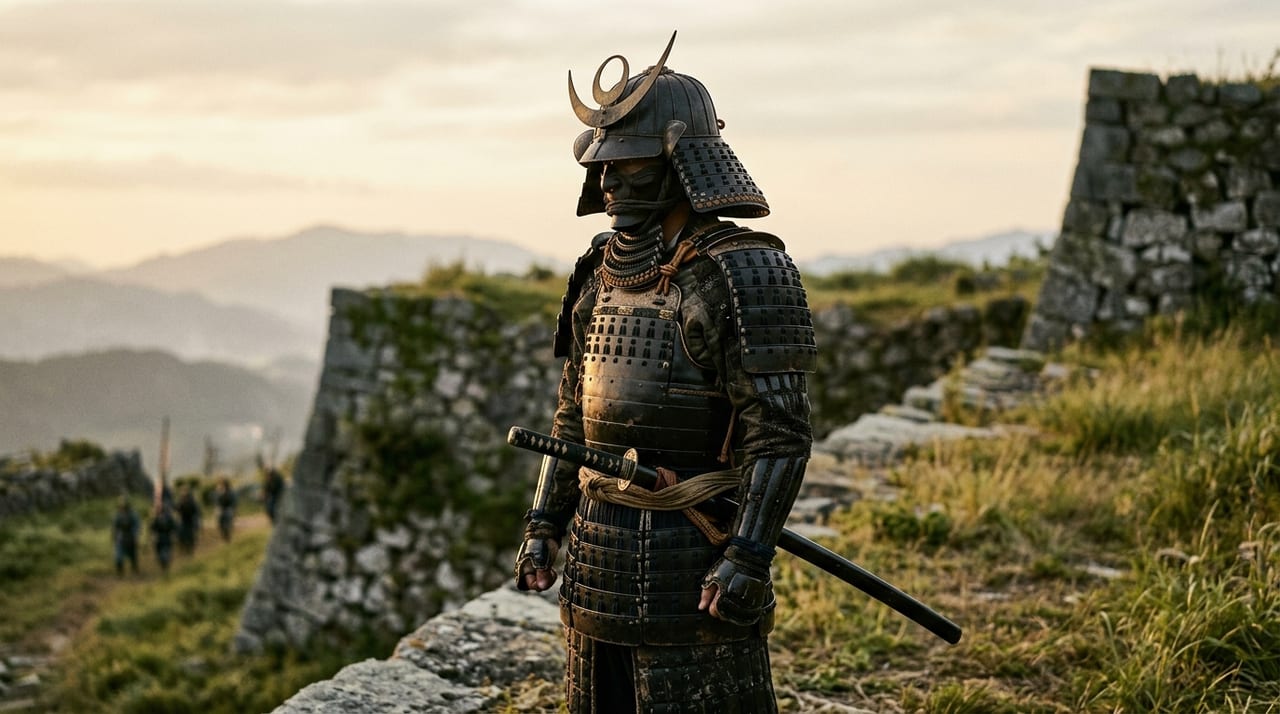
 * Image is for illustrative purposes only.
Narita Nagachika
成田長親
Narita Retainer Who Held Oshi Castle in the Odawara Campaign and the Model for The Floating Castle
Description
Narita Nagachika was a warrior from the Sengoku period into the early Edo period and a retainer of Narita Ujinaga, lord of Oshi Castle in Musashi Province. Born in 1546 as the heir of Narita Yasusue, he is said to have died on the 4th day of the 12th month of Keicho 17 (24 January 1613) at the age of 67. His official title was Okura-taifu, his pen name Jieisai, and his Buddhist name Seigan Gihaku Anshu.
Life
His lord was Narita Ujinaga. After the fighting over the Hanyu domain from 1574 onward, he is said to have won many military merits under Ujinaga. A retainer register of 1578 lists "Narita Okura, 300 kan", which is identified with Nagachika. His wife was a daughter of Toyama Tokuro, and his children included Nagasue and Yasuie.
The defence of Oshi Castle
In the Odawara Campaign of 1590 his father Yasusue served as castle warden of Oshi. According to the Narita-ki, Nagachika was named commander after Yasusue died suddenly. The Narita genealogy says he defended the Mochida gate. Against Ishida Mitsunari's flooding of the castle, he is also said to have cut the embankment at night and sent the water into the enemy camp, though this appears only in the Narita genealogy. The breach of the Sarao gate by Asano Nagamasa's troops is recorded as Asano's achievement. In the end the castle was surrendered through the mediation of Toyotomi Hideyoshi.
After the surrender
Ujinaga's lands were confiscated and he was placed in the custody of Gamo Ujisato; Nagachika is said to have followed Ujisato as well. Ujinaga was later restored as a daimyo with the 20,000-koku Karasuyama Castle in Shimotsuke. The Narita genealogy says Ujinaga came to suspect Nagachika, who left Karasuyama and became a wanderer, refusing even a letter of apology. The Danke-fu records only that he became a ronin after the fall of Odawara. He shaved his head, took the name Jieisai and is said to have retired in Owari. His grave is at Daiko-in in Nagoya, with a monument in the Daiko-in cemetery in Heiwa Park, and his line continued as retainers of the Owari domain.
Later reputation
He is considered the model for the protagonist of Wada Ryo's novel Nobo no Shiro, which was made into the 2012 film The Floating Castle. He is also the protagonist of Kazeno Machio's novel Mizu no Shiro: Imada Rakujo Sezu.