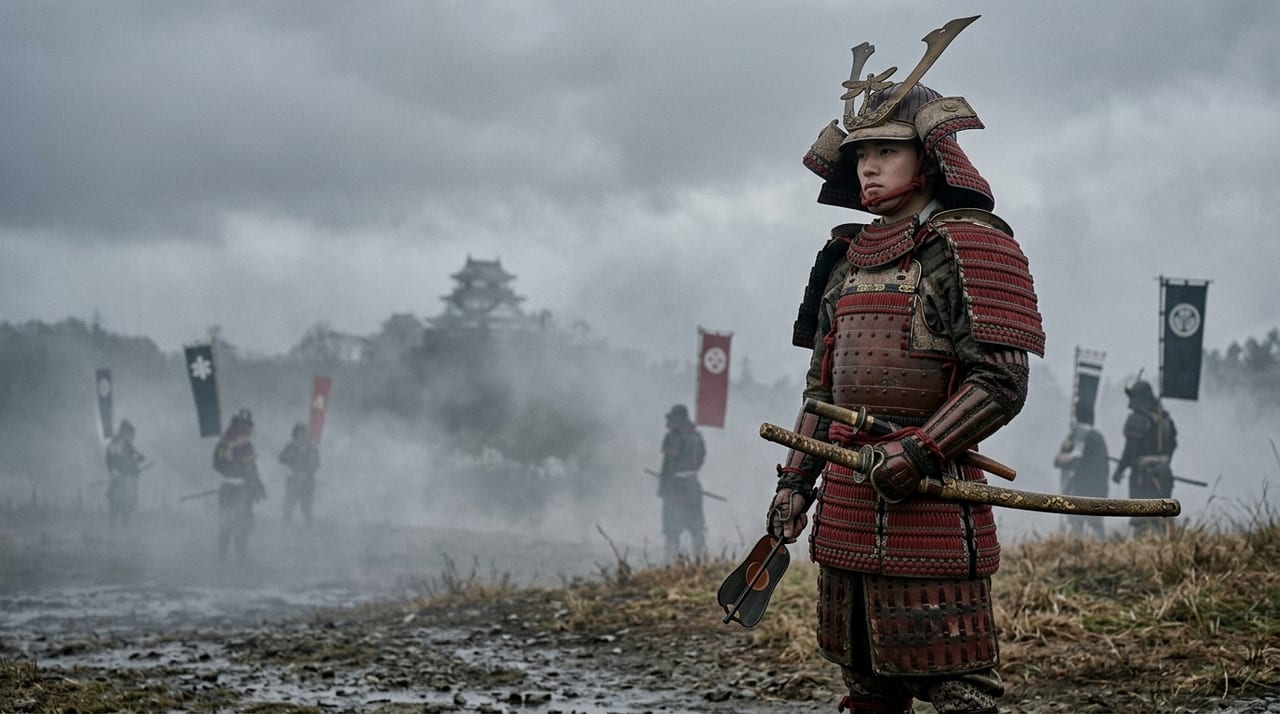
 * Image is for illustrative purposes only.
Kitabatake Akiie
北畠顕家
A Southern Court General Who Ruled Mutsu in His Teens and Fought Ashikaga Takauji in Two Great Campaigns
- Era
- Nanbokucho Period
- Lifespan
- 1318-1338
Description
The Prodigy's Birth and Departure for Mutsu
Kitabatake Akiie was born in Bunpō 2 (1318), the eldest son of the court noble Kitabatake Chikafusa. From childhood he was known as a child prodigy who excelled in both letters and arms. He was well versed in waka, Chinese poetry, and music, and he also showed extraordinary talent in the martial arts. When the Kenmu Restoration of Emperor Go-Daigo began in Genkō 3 (1333), Akiie, then only fifteen, escorted Prince Noriyoshi (later Emperor Go-Murakami) to the provincial seat of Mutsu (Taga Castle). Appointed Governor of Mutsu and Chinjufu Shōgun, Akiie governed the vast Tōhoku region effectively and won the trust of both warriors and courtiers. That a youth in his mid-teens brought under his control Tōhoku, a region considered the most difficult to govern at the time, was a remarkable display of political and military talent.
The First Expedition and the Capture of Kamakura
In Kenmu 2 (1335), when Ashikaga Takauji rebelled and advanced on the capital, Akiie led the troops of Mutsu on a lightning campaign southward. The army set out from Tōhoku in winter. Adding warrior bands along the way one after another, it advanced south, and it contributed to defeating the Ashikaga commander holding Kamakura and driving Takauji back as far as Kyūshū. The leadership and marching speed Akiie displayed in this first expedition were astonishing and went beyond the military norms of the day. The seventeen-year-old general successfully overcame the triple hardships of marching through snow, long-distance campaigning, and securing supply lines. Akiie's martial fame quickly spread throughout the land, and he established his reputation as a guiding light of the Southern Court.
The Second Expedition and a Heroic Death
In Engen 2 (1337), Akiie again raised troops from Mutsu and set out on a second expedition. This campaign, however, was extremely difficult. His forces captured Kamakura in the 12th month of that year. In the 1st month of Engen 3 (1338), they advanced west along the Tōkaidō and defeated the Ashikaga forces at Aonogahara in Mino Province. Exhausted, they could not march straight on to the capital, so they turned toward Yamato by way of Ise. In the 2nd month of Engen 3 (1338), they were defeated at Hannyazaka in Nara, and they fought further battles at Tennōji and Abeno. The attrition of his forces was unavoidable. In the 5th month of Engen 3 (1338), at Ishizu in Izumi Province (present-day Sakai, Osaka Prefecture), Akiie fought a decisive battle against the great army led by Kō no Moronao. After fierce fighting he was killed. He was only twenty years old.
Remonstrance to Emperor Go-Daigo and the Spirit of the Warrior Code
Before his death, Akiie left behind a written remonstrance to Emperor Go-Daigo. This document frankly pointed out the failings of the Kenmu Restoration and offered proposals for political reform to relieve the suffering of the people. This remonstrance, which condenses the character of a commander who also had the qualities of a statesman and thinker, has been highly praised by later generations as "Kitabatake Akiie's Memorial to the Throne." Akiie wielded the sword without forgetting the brush and combined martial prowess with refined learning. His image as an ideal warrior has been deeply inscribed in Japanese culture.
As a Star of the Southern Court
Kitabatake Akiie is regarded as the foremost commander on the Southern Court side during the turmoil of the Northern and Southern Courts. As one of the leading Southern Court commanders alongside Kusunoki Masashige and Nitta Yoshisada, the bravery, loyalty, and literary talent he showed in his brief life had a great influence on later generations. In particular, his two great expeditions from Tōhoku are evaluated as among the foremost military feats in Japanese history for their strategic vision and their execution. The brilliance of Akiie, condensed into his short life of twenty years, will be told forever as a symbol of the tragedy of the Northern and Southern Courts.