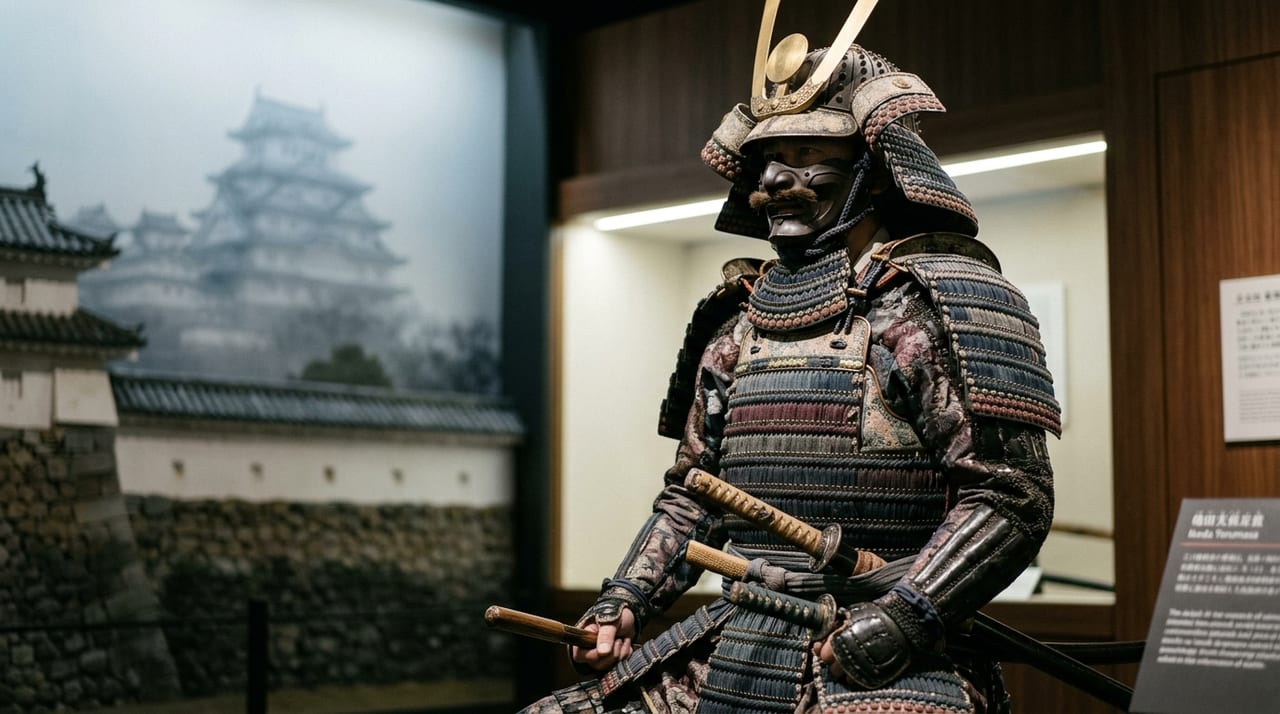
 * Image is for illustrative purposes only.
Ikeda Terumasa
池田輝政
Builder of Himeji Castle — A Formidable General Known as the "Saigoku Shōgun," Who Gained Control of the West Through His Sekigahara Achievements
Description
A Formidable General Known as the Saigoku Shōgun
Ikeda Terumasa, born in January 1565 (the 12th month of Eiroku 7), gained Himeji in Harima, worth 520,000 koku, following his contribution to the Eastern Army at the Battle of Sekigahara. Bizen and Awaji were distributed to his children, bringing the Ikeda family's holdings to approximately 1 million koku. He was a formidable general who governed the West in the early Edo period as the "Saigoku Shōgun ('Shōgun of the West')" and the "lord of Himeji Castle." Although he lost his father Ikeda Tsuneoki and his elder brother Ikeda Motosuke at the Battle of Komaki-Nagakute, Terumasa sought closer ties with the Tokugawa regime by taking Toku-hime, second daughter of Tokugawa Ieyasu, as his second wife. At Sekigahara, he played an important role as a key unit of the Eastern Army. In Harima Province, which was granted to him as recognition of this achievement, he carried out major renovation and expansion work on Himeji Castle, which has also become a World Heritage Site, and built the magnificent form of the castle that still stands today.
From Komaki-Nagakute to Sekigahara
Ikeda Terumasa's career as a warrior began with the tragedy at the Battle of Komaki-Nagakute in Tenshō 12 (1584). In this battle, his father Ikeda Tsuneoki and elder brother Ikeda Motosuke were killed in action, and Terumasa succeeded to the Ikeda family at a young age. He afterward served Toyotomi Hideyoshi. During the invasion of Korea (the Bunroku campaign), he did not cross the sea but was assigned to defense within Japan. At the Battle of Sekigahara in Keichō 5 (1600), he was active in the attack on Gifu Castle and played an important role in the Eastern Army's advance westward. In the main battle of Sekigahara, he served to hold down the Western Army forces at Mount Nangū, including Mōri Hidemoto, Kikkawa Hiroie and others.
Major Renovation of Himeji Castle
Terumasa, who was granted Harima Province in recognition of his achievements at Sekigahara, began a major renovation of Himeji Castle in Keichō 6 (1601). The magnificent appearance of Himeji Castle, now known as a World Heritage Site and as White Heron Castle, is the product of a large construction project that Terumasa completed over about eight years. Even in this work, Terumasa displayed his sense of aesthetics down to the smallest details, embodying the "functional beauty of defense" in castle architecture at the highest level.
The Ikeda Family and Ō-Kanehira
The tachi "Ō-Kanehira" (National Treasure, held by the Tokyo National Museum), forged by the smith Kanehira of the Ko-Bizen school, was passed down to the Ikeda family. An anecdote is handed down that Ikeda Mitsumasa, lord of Okayama Domain, acquired it. However, there is also a theory that it had already been passed down to the Ikeda family in the time of Mitsumasa's grandfather, Terumasa, so the exact timing of its transmission is uncertain. The Ikeda family handed down Ō-Kanehira from generation to generation together with famous swords such as Ikeda Masamune and Ikeda Rai Kunimitsu. In 1967, the state purchased it.
As the Guardian of the West
Ikeda Terumasa died at the age of fifty in Keichō 18 (1613). However, Himeji Castle, which he left behind from his brief time in Himeji, remains today as a World Heritage Site and a treasure of humanity. The name of Terumasa, who was called the "Saigoku Shōgun," continues to be passed down to the present day along with Himeji Castle.
Notable Swords
- Ō-Kanehira — a tachi forged by the smith Kanehira of the Ko-Bizen school (National Treasure, held by the Tokyo National Museum). It was passed down to the Ikeda family, and there is also a theory that it had already been held by the Ikeda family in Terumasa's time.