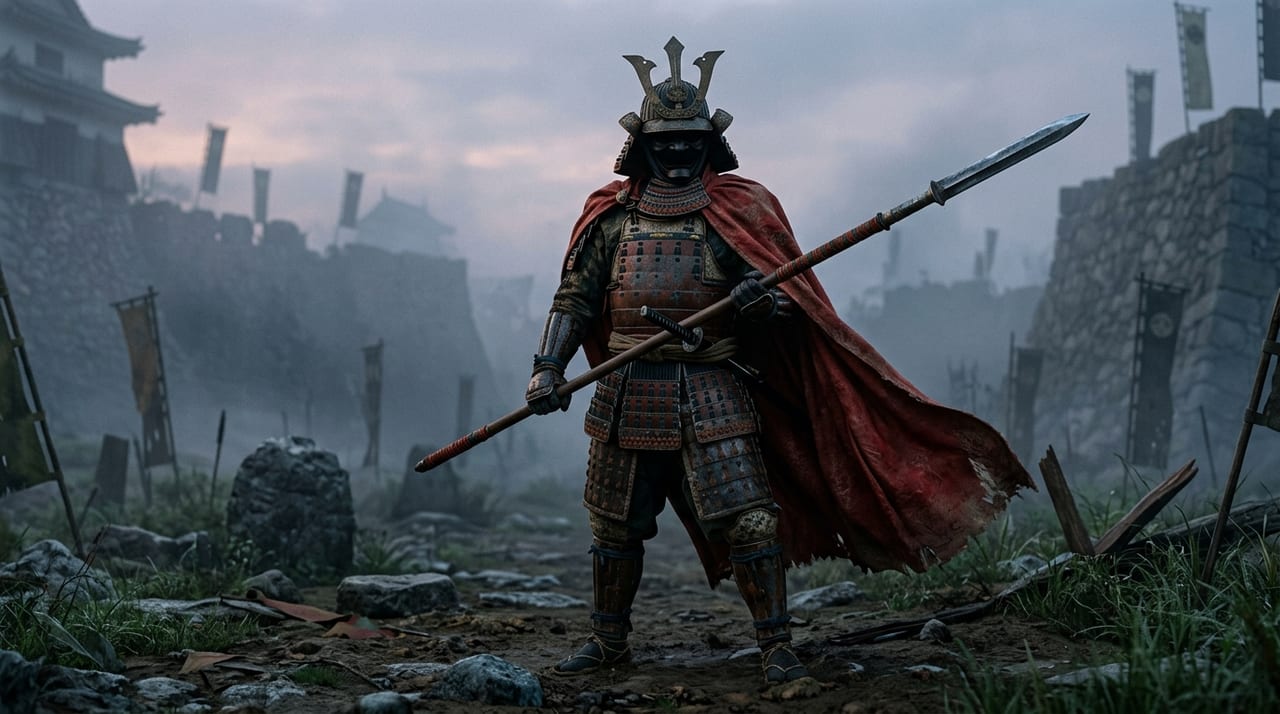
 * Image is for illustrative purposes only.
Honjō Shigenaga
本庄繁長
Uesugi Retainer, Agakita-shū
Description
Honjō Shigenaga (Tenbun 8 (1540) – the 12th month of Keichō 18 (1614)) was a warrior active from the Sengoku period into the early Edo period. He was a senior retainer of the Uesugi family and one of the local lords (kokujin) of northern Echigo known as the Agakita-shū. He served as lord of Honjō Castle in Iwafune District, Echigo, and his martial prowess was so renowned that it was said, “the Uesugi house has a demon god (kishin).”
Recovery of the Family Headship
Shigenaga was born as the son of Honjō Fusanaga, a local lord (kokujin) of Echigo. His childhood name was Chiyoimaru. Just before Shigenaga was born, his father Fusanaga was deprived of his residence by the treachery of his younger brother Ogawa Nagasuke (Shigenaga's uncle), and it is said that he died of illness in despair. When Shigenaga grew up, he seized Nagasuke during a memorial service held for his father and drove him to take his own life, and it is said that he thereby regained the real authority of the Honjō house.
Vassalage to Uesugi Kenshin and the “Honjō Shigenaga Rebellion”
Shigenaga became a retainer of Uesugi Kenshin (Nagao Kagetora) and distinguished himself in battle as he fought across various regions, including the Battles of Kawanakajima and the campaign into the Kantō. However, in Eiroku 11 (1568), dissatisfied among other things with the rewards he received, he responded to the overtures of Takeda Shingen and raised an army in revolt. This is the “Honjō Shigenaga Rebellion.” Shigenaga fought bravely, but in the end, through the mediation of the Ashina clan and others, he surrendered after sending his eldest son as a hostage, and he returned to the service of the Uesugi house.
The Otate Disturbance and Later Years
In Tenshō 6 (1578), during the succession dispute known as the Otate Disturbance (Otate no Ran), which broke out after Kenshin's death, he sided with Uesugi Kagekatsu. Even after the Uesugi house was relocated to Aizu and Yonezawa, he continued to serve as a senior retainer. In the Battle of Matsukawa in Keichō 5 (1600), when the forces of Date Masamune attacked Fukushima Castle, he defended the castle to the end and drove back the Date army.
He died on the 20th day of the 12th month of Keichō 18 (1614), at the age of 74. It is said that in recognition of his martial valor, his lord Uesugi Kagekatsu bestowed upon him the title “Bujin Hachiman” (warrior Hachiman). He lived a life full of turbulence, and he is remembered as a fierce warrior whose renown resounded across Echigo and Dewa.