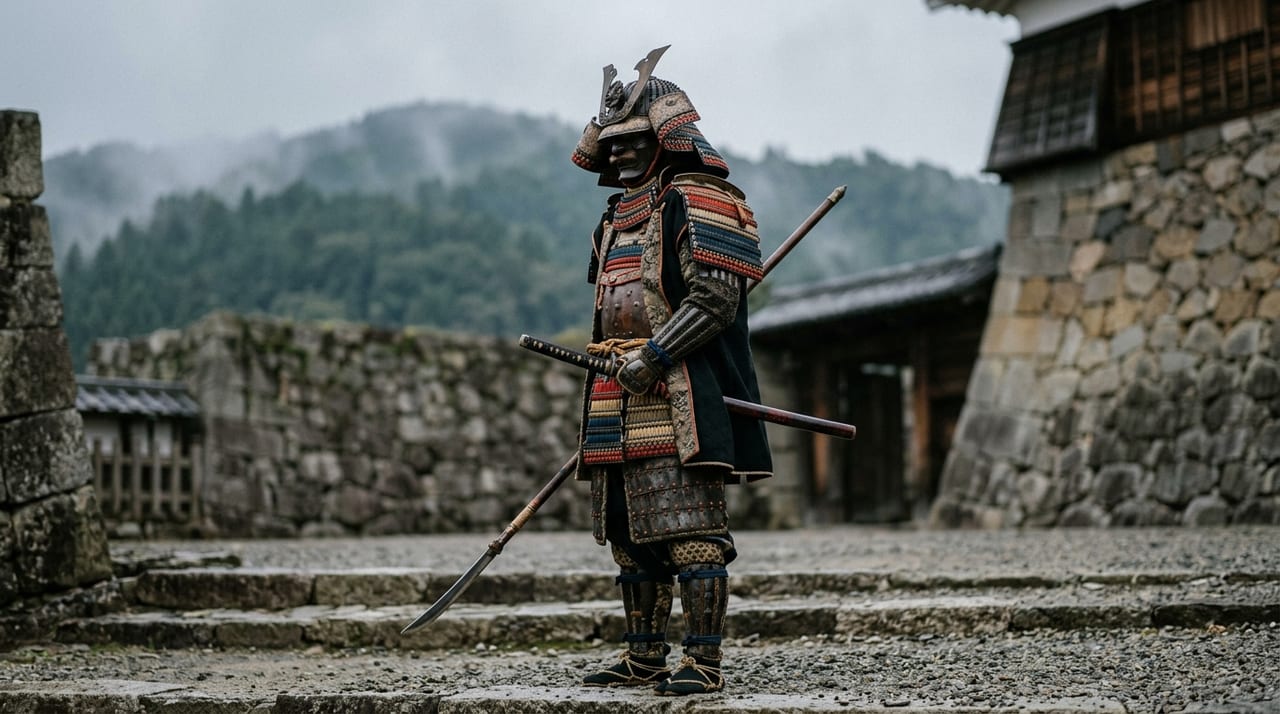
 * Image is for illustrative purposes only.
Hōjō Yasutoki
北条泰時
Third Regent of the Kamakura Shogunate Who Established the Goseibai Shikimoku—The Exemplary Lord Who Laid the Foundation for a Samurai Rule-of-Law State
Description
A Wise Ruler Who Achieved the Codification of Warrior Government
Hōjō Yasutoki, born in Juei 2 (1183) as the eldest son of Hōjō Yoshitoki, enacted the Goseibai Shikimoku (Jōei Shikimoku) in Jōei 1 (1232) as the third regent (shikken) of the Kamakura shogunate. It was Japan's first full-fledged code of warrior law. It codified inheritance of property, land control, and litigation procedures in warrior society, and for several hundred years afterward it served as the foundation of Japan's warrior legal system.
Bold Decision in the Jōkyū War
When Minamoto no Sanetomo was assassinated in Kenpō 7 (1219), conflict between the imperial court and the shogunate deepened, and in Jōkyū 3 (1221) Retired Emperor Go-Toba launched the Jōkyū War. In this crisis, Yasutoki led the gokenin (housemen), who had been inspired by the speech of his aunt, Hōjō Masako, on 'the favors of Lord Yoritomo,' and dispatched a large army toward Kyoto. Arriving in the capital as commander-in-chief, Yasutoki defeated the forces of Retired Emperor Go-Toba, entered Kyoto, and firmly established the superiority of warrior government over the imperial court.
Virtuous Rule over Martial Force: Governance of a Compassionate Wise Ruler
A defining feature of Yasutoki's governance was that he placed greater importance on virtuous rule than on martial force. He listened earnestly to the appeals of poor gokenin and common people, and while strictly cracking down on wrongdoing, he strove for compassionate judgments. During the Kangi famine, he is said to have exempted the most severely affected regions from annual tax payments and distributed rice to save the people. The collection of tales Shasekishū praised Yasutoki as a sage who, like a parent to all people, took the people's sorrows as his own. In the Nanboku-chō period, Kitabatake Chikafusa also praised his governance in the Jinnō Shōtōki. Yasutoki was passed down for a long time as an exemplary regent.
Connection to Sword Culture
The Kamakura period was the era when Japanese swords first reached their golden age, and many master smiths were active, including Masamune, the Awataguchi school, and the Rai school. The Azuma Kagami records an anecdote in which, when Yasutoki in his youth stood up for the gokenin Taga Shigeyuki over a matter of the dismounting etiquette, Minamoto no Yoritomo praised his conduct and gave him a sword.
Notable Swords
- Sword given by Minamoto no Yoritomo (according to the Azuma Kagami, Yoritomo gave it to the young Yasutoki as a reward when he shielded the gokenin Taga Shigeyuki)