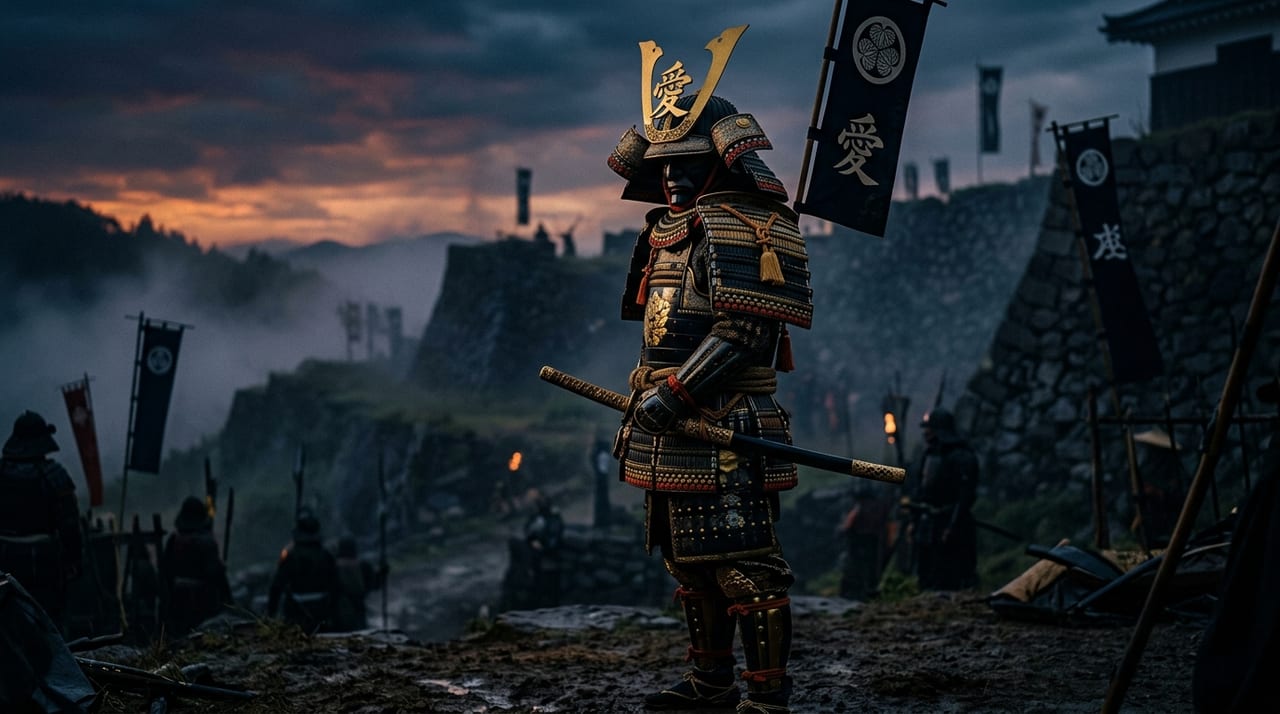
 * Image is for illustrative purposes only.
Kikuchi Takefusa
菊池武房
Tenth Head of the Kikuchi of Higo Who Led His Clan Against the Mongol Invasions
Description
Kikuchi Takefusa was a warrior of the mid-Kamakura period and the tenth head of the Kikuchi clan of Higo. Born in 1245, he died on 3 October 1298 (Einin 6, 8th month, 27th day) aged 54. His father was the ninth head, Kikuchi Takayasu, and Takefusa was the third son. Because Takefusa's eldest son Takamori died young, a grandson, Tokitaka, later succeeded to the headship. The death date is disputed: the Kikuchi-gun-shi calls the 1285 date in the Sonoda genealogy an error.
The first invasion
In the 1274 Bun'ei campaign he landed with his younger brother Akahoshi Aritaka and defeated the Mongol force that had advanced as far as Akasaka. The main Mongol body fell back to Sohara and some units to Tsukahara in Beppu; more than a hundred Kikuchi riders are said to have returned with many enemy heads (the Battle of Akasaka).
The second invasion
He again distinguished himself in the 1281 Koan campaign. The court awarded him armor, but the shogunate gave no reward, and he is described as having leaned toward an anti-shogunate stance as a result.
Anecdote
When Hojo Masamura died in May 1273, Takefusa sent a letter of condolence to Masamura's nephew and son-in-law Hojo Sanetoki. It expresses regret that he could not attend in person, since an order forbade Kyushu jito-gokenin from leaving their posts because of the foreign threat.
In the scrolls
The Moko Shurai Ekotoba shows Takefusa seated at the Genko Borui defensive wall, reflecting the clan-wide effort in the war.
Legacy
He was posthumously granted Junior Third Rank on 10 November 1915.
Related Warriors
安達泰盛
Kamakura PeriodAdachi Yasumori
Leader of the Koan Reforms Who Fell in the Shimotsuki Incident
竹崎季長
Kamakura PeriodTakezaki Suenaga
Higo Gokenin Who Petitioned Kamakura for His Reward and Left the Mongol Invasion Scrolls
北条高時
Kamakura periodHojo Takatoki
14th and Final Regent of the Kamakura Shogunate
島津忠久
Kamakura PeriodShimazu Tadahisa