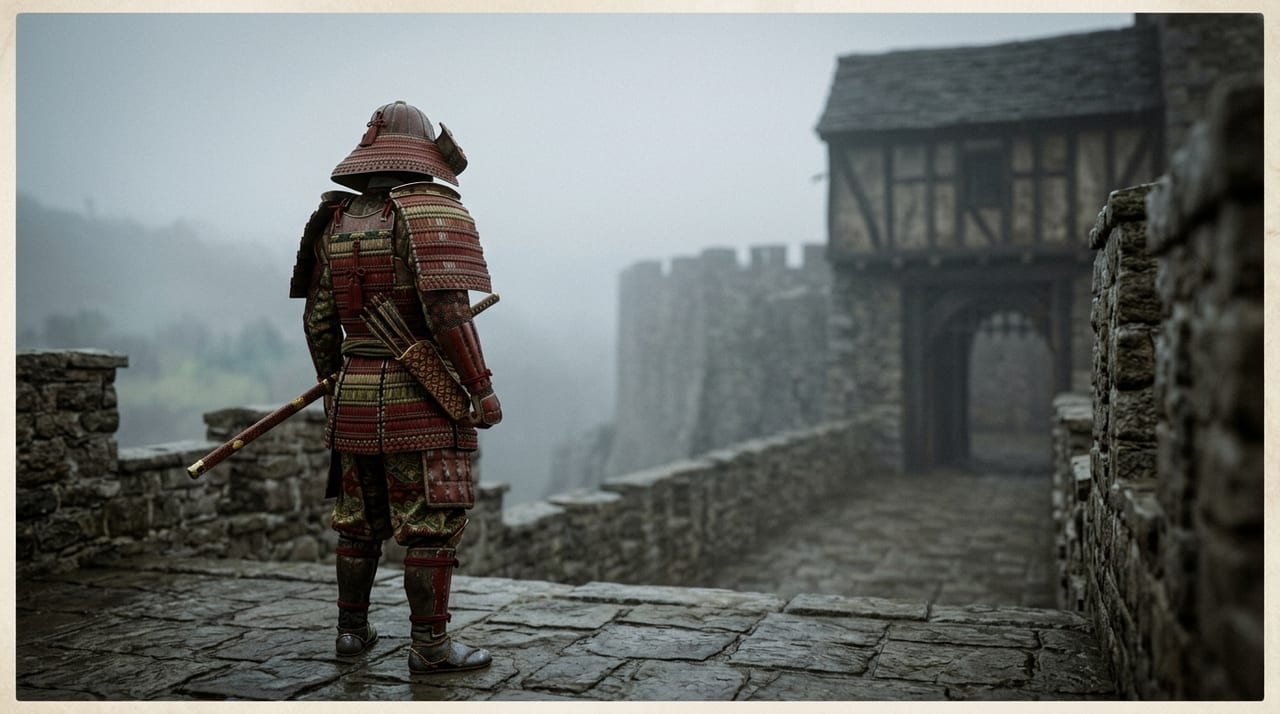
 * Image is for illustrative purposes only.
Amakusa Shirō
天草四郎
Leader of the Shimabara Rebellion
Description
Amakusa Shirō (c. 1621–1638), also known as Masuda Shiro Tokisada, was the youthful leader of the Shimabara Rebellion (1637–1638), the largest peasant uprising of the Edo period and the last large-scale armed resistance involving Japanese Christians.
Background
The Shimabara and Amakusa regions had been domains of the Christian lords Konishi Yukinaga and Arima Harunobu. Heavy taxation and the Tokugawa shogunate's suppression of Christianity drove local farmers and Christians to revolt in the 10th month of Kan'ei 14 (1637). Shiro, then approximately sixteen years old, was elevated to commander as a charismatic figure regarded by believers as a heaven-sent savior.
Siege of Hara Castle
The rebel force of roughly 37,000 entrenched themselves in the abandoned Hara Castle on the southern tip of the Shimabara Peninsula. The shogunate deployed over 120,000 troops under Senior Councilor Matsudaira Nobutsuna and even secured Dutch naval artillery support. The castle held out for nearly three months.
Fall and Legacy
Hara Castle fell on April 12, 1638 (the 28th day of the 2nd month of Kan'ei 15 by the lunar calendar), after provisions were exhausted; Shiro and virtually all defenders were killed. The rebellion prompted the shogunate to sever ties with Portugal and finalize the sakoku (closed-country) policy. Amakusa Shirō endures as a symbol of Christian faith and peasant resistance in Japan, and remains a symbolic figure of the region today.
Related Warriors
山田長政
Early Edo periodYamada Nagamasa
From leader of Ayutthaya's Japanese quarter to a high official of the Siamese kingdom — the remarkable early-Edo adventurer who crossed the sea
由比正雪
Early Edo PeriodYui Shōsetsu
Instigator of the Keian Incident—an early Edo-period military scholar who opened the military science school Chōkōdō
徳川家光
Early Edo PeriodTokugawa Iemitsu
Third Shogun Who Solidified the Edo Bakufu; Establisher of Buke Shohatto and Sankin-kotai
荒木又右衛門
Early Edo PeriodAraki Mataemon
One of Japan's Three Great Vengeances, Duellist of Kagiya no Tsuji