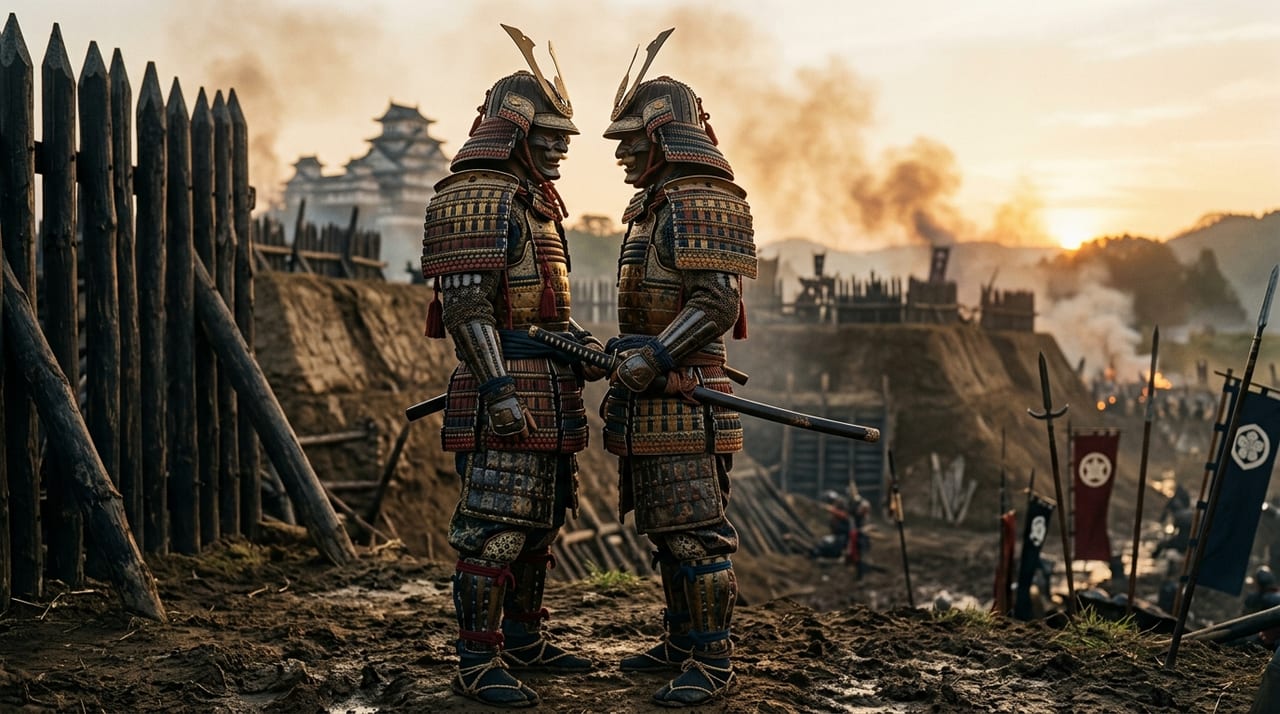
 * Image is for illustrative purposes only.
Akamatsu Norimura
赤松則村
Akamatsu Enshin, Cunning Lord of Harima Who Survived the Nanbokucho Wars
Description
Akamatsu Norimura (1277–1350), who took Buddhist vows and adopted the religious name Enshin, was the founder of the Akamatsu clan of shugo daimyo based in Harima Province (present-day Hyogo Prefecture). He was a remarkable warrior who navigated the turbulent Nanbokucho period with exceptional and fluid political acumen. Although his Buddhist name "Enshin" was adopted after he took religious vows, he became widely known to posterity as "Akamatsu Enshin."
Norimura's initial historical role was his participation in Emperor Go-Daigo's campaign to overthrow the Kamakura Shogunate. In the Genko Incident of 1331 (Genko 1st year), he received an imperial edict from Imperial Prince Moriyoshi and raised forces at Tainawa Castle in Harima, fighting from the outset for the anti-shogunate faction. He played a crucial role alongside Ashikaga Takauji in the 1333 assault on the Rokuhara Tandai. Under the Kenmu Restoration government, his reward was limited to the confirmation of Sayō Manor, and he temporarily fell out of favor. He later became shugo of Harima under Ashikaga Takauji and expanded Akamatsu power.
When the Kenmu Restoration began, Norimura found himself treated coldly and came to support the rise of Ashikaga Takauji, who prioritized the interests of the warrior class. In 1336, at the Battle of Minato River, Kusunoki Masashige was killed in battle and the Ashikaga government was established; Norimura became an important supporter and was instrumental in the formation of the early Muromachi Shogunate.
Norimura's relationship with the sword is understood through his role as a protector of sword culture in Harima Province. Harima and Bizen provinces were renowned as Japan's premier sword-producing regions. Swordsmiths in Harima, influenced by the Bizen Osafune school, are said to have flourished under Norimura's patronage. Settlement of swordsmiths was actively promoted around the Akamatsu clan's headquarters, and the production of practical uchigatana (striking swords) suited to actual warfare was encouraged.
Norimura's military tactics favored siege warfare and wars of attrition over frontal assault. The 1333 battles at Akasaka and Chihaya castles are celebrated for Kusunoki Masashige's defensive tactics, but Norimura himself demonstrated remarkable skill in defending Akamatsu fortifications. Rather than displaying the chivalric spirit of "sending salt to enemies," his opportunistic nature—changing allegiances based on practical advantage—exemplifies the typical character of Nanbokucho period generals.
Norimura's later years were peaceful owing to his active cooperation with the Ashikaga government. However, after his death, the Akamatsu clan shocked the realm by assassinating an Ashikaga shogun (the Kakitsu Incident of 1441), bringing themselves to the brink of destruction. The independent spirit of the Akamatsu clan, cultivated in Harima, took root during Norimura's lifetime and became the wellspring of his descendants' rebellious nature. As a strategist who lived through the flourishing age of Japanese sword culture during the Nanbokucho period, Akamatsu Norimura is historically recognized as a protector of regional sword culture.
Notable Swords
- Harima Uchigatana
- Swords Passed Down in the Akamatsu Family