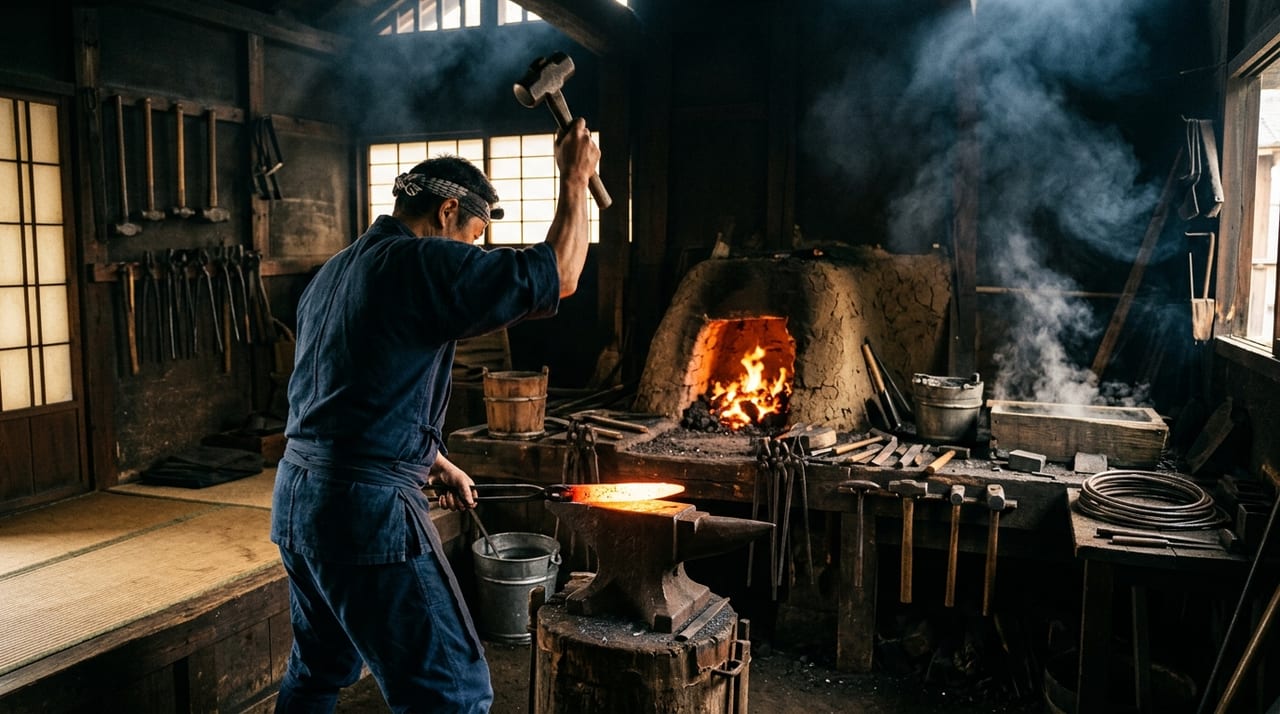
 * Image is for illustrative purposes only.
Soboro Sukehiro (Tsuda Sukehiro I)
そぼろ助広(初代助広)
Description
Pioneer of Osaka Shinto Swordsmithing — Soboro Sukehiro
Soboro Sukehiro (personal name Yahei-no-jō) was an early Edo-period swordsmith traditionally said to hail from Tsuda village in Harima Province. He is identified as the first-generation "Tsuda Sukehiro." He moved to Osaka and trained under the first-generation Kawachi-no-kami Kunisuke, whose lineage traced back to the shintō pioneer Horikawa Kunihiro.
Style
His blades had a shallow curvature and a fine ko-mokume grain, with hamon favoring chōji-midare and gunome-midare reminiscent of the Bizen tradition — a gentler style than the dramatic tōran-ba ("billowing wave") pattern later created by his adopted successor, the second-generation Sukehiro.
Origin of the Nickname
The origin of the nickname "Soboro" is uncertain; theories include a habit of wearing tattered clothing, but no definitive source confirms this.
Reputation and Succession
He was ranked jō-jō-saku (superior new-sword work) and saijō ō-wazamono (highest cutting grade). After his death, his adopted son inherited the name Tsuda Echizen-no-kami Sukehiro and originated the tōran-ba pattern, becoming the figure most commonly meant today by "Tsuda Sukehiro" — making Soboro Sukehiro, his teacher and predecessor, the founding figure of the line.
Related Swordsmiths
和泉守国貞
Osaka Shinto (Settsu Province). Carrying on the Osaka tradition of refined shinto swordmaking, Kunisada inherited the techniques of his predecessor (Kunisada I) and refined them further, becoming recognized as the foremost swordsmith in Osaka.Izumi no Kami Kunisada
Active during the mid-Edo period (late 17th to early 18th century), coinciding with the flourishing Genroku era of Osaka culture. Under the peaceful governance of Tokugawa Tsunayoshi, demand for swords shifted toward artistic refinement, and Kunisada embodied this spirit with his polished craftsmanship.
堀川国広
Soshu tradition (New Sword)Horikawa Kunihiro
Momoyama to Early Edo period (New Sword genesis era)
大和守吉道
OtherYamato no Kami Yoshimichi
Early Edo Period
近江守継廣
Echizen Shintō (Echizen Shimosaka School)Ōmi no Kami Tsuguhiro
Mid-Edo Period