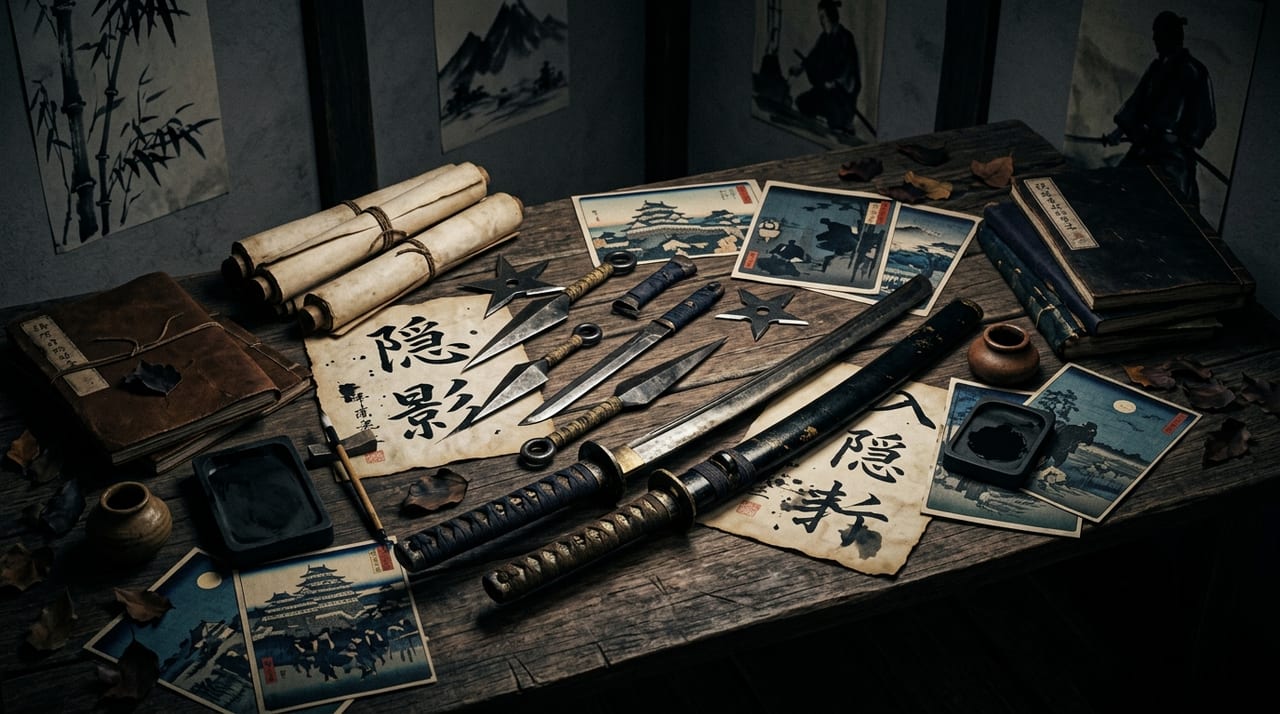
 * Image is for illustrative purposes only.
Tenchu
天誅
A ninja stealth action game series developed by Acquire in 1998. Ninjas Rikimaru and Ayame use Japanese swords (shinobi-to) and various ninja tools to complete missions in Sengoku to Edo period Japan. A pioneering work that meticulously depicted the actual sword culture used by ninjas such as shinobi-to (a relatively short straight-bladed sword), wakizashi, and kunai, transmitting Japanese sword culture to gamers worldwide.
Description
Tenchu and Ninja Sword Culture
Tenchu is a pioneering ninja stealth action game developed by Acquire and published by Sony in 1998. Players control ninja protagonists Rikimaru or Ayame and carry out various assassination and intelligence missions under the orders of their lord, Goda Matsunoshin. The series was later continued by From Software and ran until "Tenchu: Crimson" in 2004. It was highly acclaimed abroad, and the PlayStation version with the English title "Tenchu: Stealth Assassins" became a worldwide hit.
Shinobi-to—The Ninja's Blade
The most important sword depiction in the Tenchu series is the "shinobi-to" used by the protagonists. The shinobi-to is generally described as a practical straight-bladed sword of shorter length, and it is widely known in legend to have been designed for ninja to carry and use. While historical scholars debate whether a distinct "shinobi-to" form was ever formally established, ninjutsu texts and oral traditions frequently depict a short straight-bladed sword associated with ninja, and the Tenchu series faithfully visualized this legend. Rikimaru's shinobi-to bears the name "Izayoi" within the game, embedding the essence of Japanese sword culture—the tradition of naming blades—into the gameplay.
Wakizashi and the Aesthetics of Dual Blades
Ayame is depicted as a dual-wielding ninja fighting with two short swords (kodachi), and this design choice evokes interest in the diversity of Japanese sword forms. The wakizashi is a sword type with a blade length between one shaku and two shaku, and it was customarily worn alongside the uchigatana as the "daisho" (great-small) pairing, serving as the samurai's auxiliary weapon. Though known as the blade used in seppuku (ritual suicide), the wakizashi also played an important role as a secondary combat weapon and tool for self-defense. It is said that ninja favored the wakizashi because its manageable blade length was well-suited to close-quarters and indoor combat.
Visualization of Sengoku-Edo Period Sword Culture
Tenchu's game design carefully depicts the architecture, costumes, and weapons of the Sengoku to early-Edo period, leveraging this historical setting. Throughout the game, one observes attention to historical accuracy in the samurai enemies' "daisho" styling of uchigatana and wakizashi, the interior layout of samurai residences, and the architectural design of castles. This visual authenticity instilled interest in Edo-Sengoku period Japanese culture among players worldwide and played an important role in spreading knowledge of Japanese sword and samurai culture globally.
The Legacy of Tenchu and Its Connection to the Modern Era
Tenchu is regarded as one of the foundational influences on subsequent ninja and samurai games, and From Software's "SEKIRO: SHADOWS DIE TWICE" is said to have been influenced by it. The ninja aesthetic of "approach hidden and fell with a single strike" is deeply connected to the Japanese sword philosophy of "the first cut"—resolving the matter with the initial blow, striking no unnecessary blows. This "aesthetics of a single decisive stroke" that Tenchu spread globally through gaming can be said to embody one of the most essential essences of Japanese sword culture in modern entertainment.
Real Swords Featured
Shinobi-to (Ninja Short Sword)
The blade associated with ninja, typically described as shorter than a standard uchigatana with a straight edge. Classical ninjutsu manuals such as Bansenshukai list tanto and wakizashi as ninja weapons, confirming that shorter, practical blades were favored for stealth work. Straight-hamon (suguha) blades carry a serene beauty highly regarded in sword appreciation.
Wakizashi
A blade between 30–60 cm, worn alongside the uchigatana as the samurai's companion sword — the 'sho' of the daisho pairing. Known also as the sword of ritual suicide (seppuku), the wakizashi served as a practical close-quarters and indoor defensive weapon. Merchants and artisans were also permitted to wear wakizashi in the Edo period. Fine wakizashi are forged with the same craft as full-length swords and are prized as independent art objects.
See authentic Japanese swords
See authentic Japanese swordsThis page is intended to introduce Japanese sword culture and is not affiliated with any of the works mentioned.