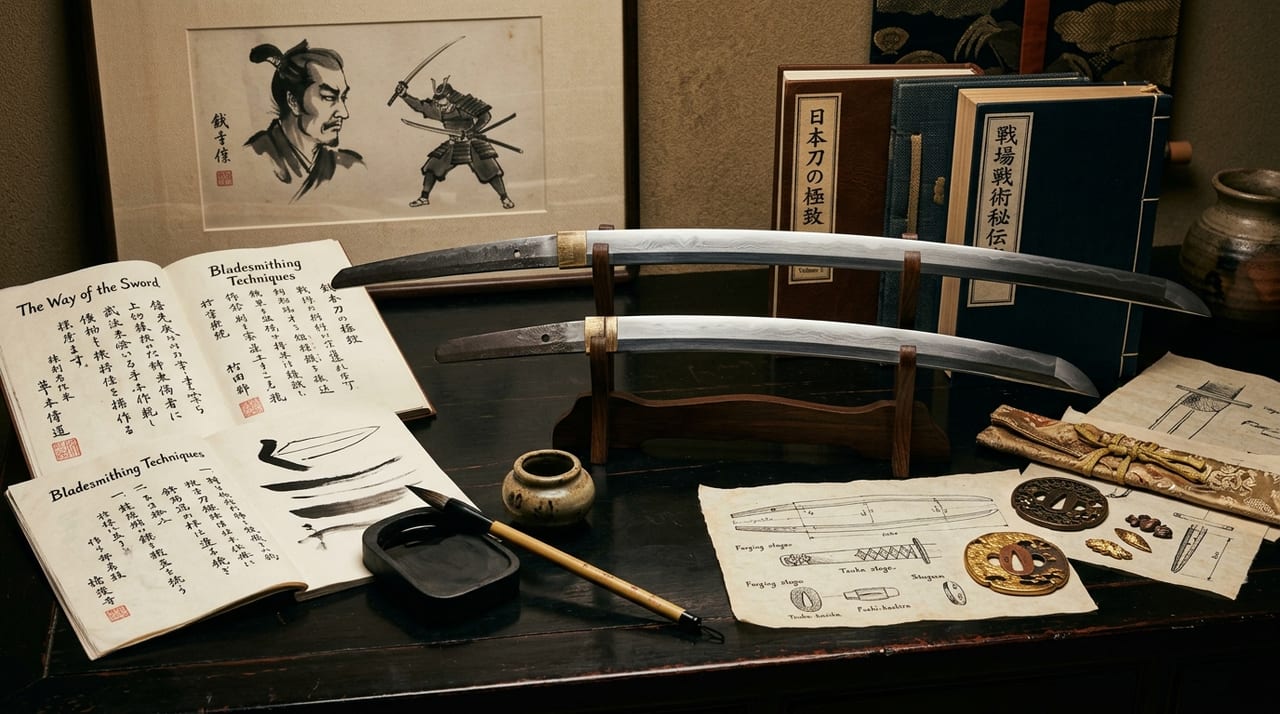
 * Image is for illustrative purposes only.
GHOST OF TSUSHIMA
GHOST OF TSUSHIMA
In 2020, Sucker Punch Productions released an open-world game set in the Bunei War (Mongol Invasions) of 1274. The story of Sakai Jin, a samurai of Tsushima, standing against the Mongol army recreates the tachi, samurai life, and landscape of Tsushima during the Kamakura period with astonishing precision, and garnered widespread attention with the inclusion of a "Kurosawa Mode" imbued with deep respect for Japanese period dramas. Its achievement in bringing the sword culture of the Kamakura period—regarded as the golden age of the Japanese sword—to the world is immeasurable.
Description
Kamakura Period Recreation
Ghost of Tsushima (2020) is an open-world game depicting the fierce battles of Sakai Jin, a samurai of Tsushima, set against the backdrop of the Bunei War of 1274. It is a groundbreaking work that allowed gamers worldwide to experience the sword culture of the Kamakura period, regarded as the golden age of the Japanese sword. The staff of Sucker Punch Productions visited Japan during development and conducted thorough research into Tsushima's landscape, samurai culture of the Kamakura period, and Japanese sword-making techniques. The results of this research are reflected throughout the game, from the design of the tachi to the movements of sword choreography and the bearing of the samurai.
Swords of the Era
The swords in the game faithfully recreate the tachi of the Kamakura period. The Kamakura period is regarded as the most important era in Japanese sword history, as the establishment of the samurai government and successive conflicts powerfully drove the evolution of the sword. From the slender and elegant tachi of the Heian period, mid-Kamakura tachi underwent transformation to practical designs with wider bodies, thicker cross-sections, and inokubi-kissaki (boar-neck point) shapes. In particular, the two Mongol invasions of the Bunei War and the Kōan War brought decisive turning points to Japanese sword-making philosophy. To counter the thick leather armor and group tactics of the Mongol forces, there was a demand for swords that were more robust and superior in cutting power. Consequently, grand and imposing tachi with wider bodies, thicker cross-sections, and deeper curvature were forged.
Great Swordsmiths
The swordsmiths active in this period were like brilliant stars adorning the history of the Japanese sword. Shintōgo Kunimitsu, founder of the Soshu tradition, developed his own forging techniques based on the methods of the Yamashiro tradition (Awataguchi) and Bizen tradition, laying the foundation for the Soshu smiths that would later produce the legendary Masamune. In the Rai school of Yamashiro province, Rai Kunitoshi and Rai Kuniyuki were active, their elegant and refined style embodying the essence of the Yamashiro tradition. In Bizen province, Osafune Mitsutada, founder of the Osafune school, dominated the era with his splendid choji-midare (clove-pattern irregular) hamon. The three generations of Osafune that followed—Osafune Nagatoshi and Osafune Kagemitsu—established the golden age of Bizen swords. The Kamakura period, in which these master swordsmiths competed and elevated one another's craft, was truly a miraculous age when the artistry and functionality of the Japanese sword achieved their highest synthesis.
Respect for Culture
Ghost of Tsushima, despite being produced by an American development company rather than a Japanese one, was a work so filled with respect for Japanese culture that it received a letter of appreciation from Tsushima City. The fact that this game sparked an increase in foreign tourists visiting Tsushima and heightened international interest in Japanese history and sword culture is particularly noteworthy. At our gallery, we handle authentic Japanese swords that continue the legacy of the master swordsmiths of the Kamakura period.
Real Swords Featured
Kamakura Period Tachi
A group of swords that symbolize the golden age of Japanese swords. With the establishment of the Kamakura shogunate, samurai political power became more formalized, and demand for blades suited to actual combat increased dramatically. Initially inheriting the slender form of the Heian period, blade width gradually increased; by the mid-period, the imposing tachi form with the inokubi kissaki (wild boar neck point) was established. The curvature transitioned from koshizori (waist curve) to nakizori (middle curve), directly reflecting the shift in combat style from mounted to foot warfare. Kamakura period tachi are often praised for having "fine form," embodying a perfect harmony of utility and beauty.
Shintōgo Kunimitsu (shintōgo kunimitsu)
A master smith active in the late Kamakura period, regarded as the founder of the Soshu tradition. Inheriting the line of the Awataguchi school of Yamashiro Province, he studied in Kyoto before relocating to Kamakura, where he established his distinctive style featuring straight blades with characteristic strong nie. He achieved particular acclaim as a master of tantō (short swords), and his refined craftsmanship exerted profound influence on the later Masamune. The character "go" in Shintōgo is an abbreviation of Goro; without this swordsmith, the completion of the Soshu tradition would not have been possible. Surviving works by Kunimitsu are limited in number, yet all are held in extremely high regard as fine swords.
Rai Kunitoshi (rai kunitoshi)
A representative swordsmith of the Rai school who was active in late Kamakura in Yamashiro Province (Kyoto). While some theories suggest the Rai school descended from immigrant smiths from Goryeo, this remains uncertain. Kunitoshi's style was characterized by dignified straight blades with small-scale nie work, and the beauty of his polished steel is said to embody the essence of the Yamashiro tradition. He produced masterworks in both tachi and tantō, and many of his signed tachi are designated as National Treasures or Important Cultural Properties. The Rai school continued through his sons Rai Kunimitsu and Rai Kunitsugu, becoming a leading group of Yamashiro smiths that flourished from the late Kamakura through the Nanboku-cho periods.
Mongol Invasions
A collective term for the 1274 Bun'ei Invasion and the 1281 Koan Invasion. These were two military campaigns launched by the Mongol Empire under Kublai Khan against Japan, and they had an immeasurable impact on the history of the Japanese sword. Against the thick leather armor and group tactics employed by the Mongol forces, traditional Japanese blades were sometimes reported to chip, generating demand for sturdier tachi with broader blade width and thicker cross-section. Furthermore, the Mongol forces' firearms, exemplified by tetsuhau (jinguan/thunderclap bombs), profoundly shocked the Japanese samurai and catalyzed a fundamental transformation in their combat philosophy. The invasion depicted in Ghost of Tsushima is precisely this historical turning point, and the fierce battles waged by the samurai of Tsushima are recorded in history as the "Tsushima no Eki" (Tsushima Invasion).
See authentic Japanese swords
See authentic Japanese swordsThis page is intended to introduce Japanese sword culture and is not affiliated with any of the works mentioned.