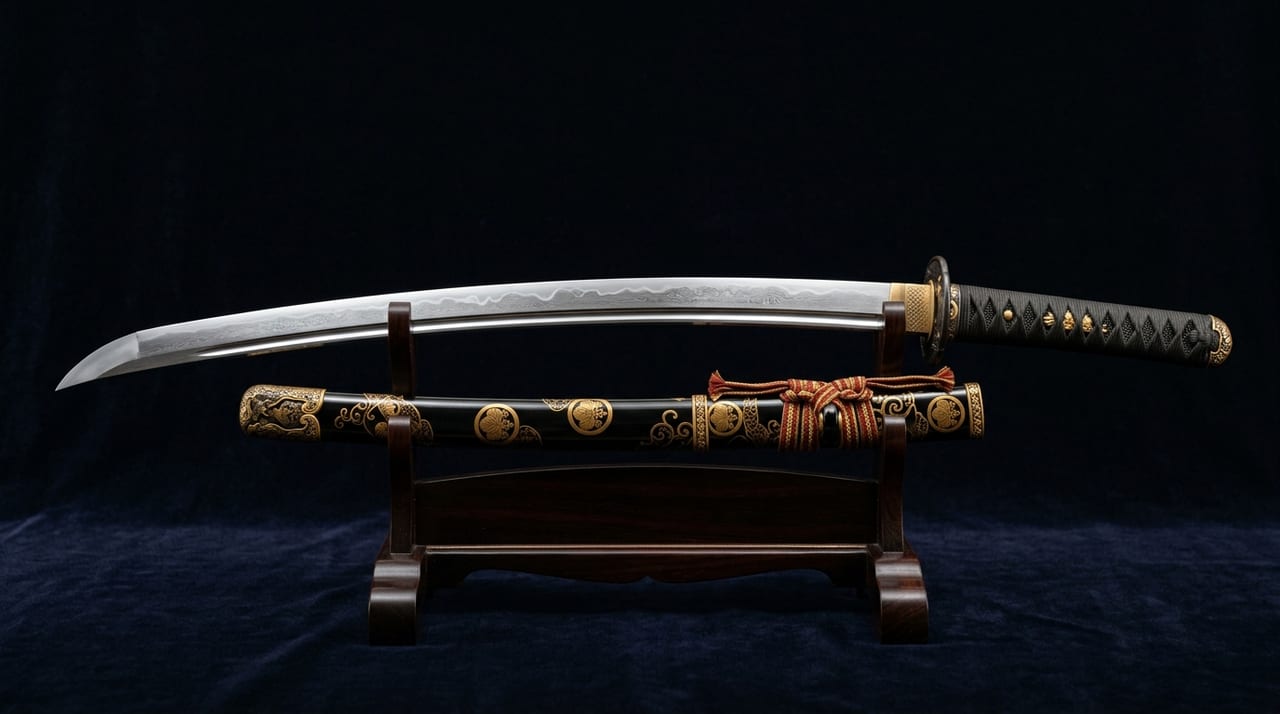
 * Image is for illustrative purposes only.
Yoshioka Ichimonji Sukemitsu
吉岡一文字助光
Also known as: Yoshioka Sukemitsu • Yoshioka Ichimonji • Listed in the Kyōhō Meibutsu-chō • Essence of mid-Kamakura Bizen • Yoshioka chōji
Description
Yoshioka Ichimonji Sukemitsu is a tachi crafted by Sukemitsu, a representative swordsmith of the Yoshioka Ichimonji school originating in Yoshioka village of Bizen Province (present-day Okayama Prefecture). The blade displays the richly developed chōji-midare hamon characteristic of the Ichimonji school, with kinsuji and sunagashi interspersed throughout — a magnificent style expressing the aesthetic ideals of Kamakura-period warriors in their finest form. The ji-tetsu features dense ko-itame interspersed with mokume, with vivid utsuri standing out clearly, allowing one to fully savor the quintessence of the Bizen tradition. The tang retains a long signature of Sukemitsu, making it an exceptionally valuable authenticated work of the Yoshioka Ichimonji school. Both the dignity of the blade and its condition are superb, placing it among the finest achievements of the Kamakura-period Ichimonji school.
Legends & Stories
The Ichimonji school was the preeminent swordsmith collective of Bizen Province, said to have originated when smiths forging blades under the orders of Retired Emperor Go-Toba came to be called Ichimonji. Yoshioka Ichimonji flourished as a regional branch rooted in the Yoshioka area, producing celebrated masters such as Sukemitsu, Sukekichi, and Sukeyo. The flamboyance of their hamon evolved into a distinctive style called "Yoshioka-chōji," earning high acclaim from later generations of sword scholars. Blades forged by Yoshioka Ichimonji, flourishing from the late Kamakura period through the Nanboku-chō period, possess a dignity that was valued by the warrior class in subsequent generations. Regarding this sword, it may once have been in the possession of a court noble or temple in Kyoto, and is said to have been rediscovered during the shogunate's survey of famous swords in the early modern period. As one of the supreme achievements of Kamakura-period Bizen, it has become the object of desire for sword enthusiasts.