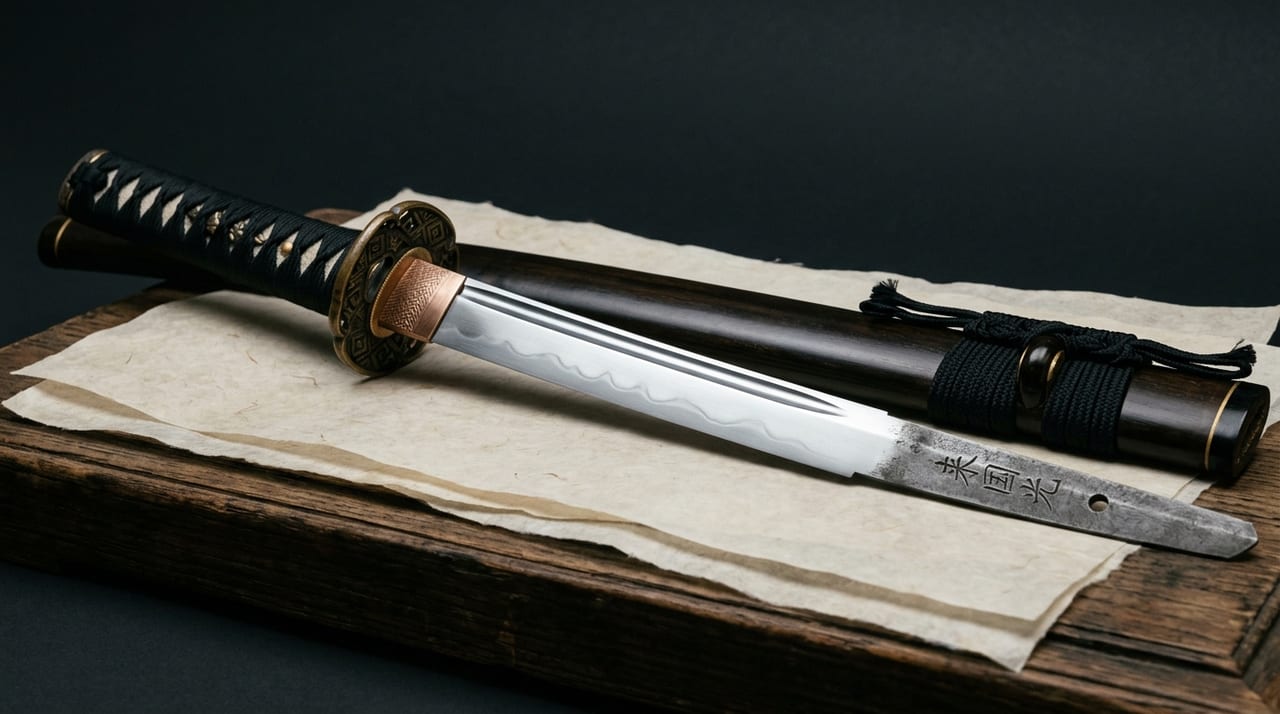
 * Image is for illustrative purposes only.
Beloved Sword of Ōmura Masujirō
大村益次郎の愛刀
Also known as: Ōmura Masujirō's Worn Sword · Sword of the Father of the Modern Army · Wakizashi by Minamoto Kiyomaro · Sword of the Dutch Scholar
Description
The beloved sword of Ōmura Masujirō is a wakizashi said to have been worn by the Bakumatsu military scholar Ōmura Masujirō (1824–1869), who laid the foundation for Japan's modern army. According to one account, it is also said to be a work by Minamoto Kiyomaro, who is celebrated as the pinnacle of Shinshintō swordsmithing. After studying Dutch learning and military science and serving the Uwajima and Chōshū clans, Ōmura worked as the first Minister of War in the new government following the Meiji Restoration, dedicating himself to the establishment of modern military systems. He left remarkable achievements, including introducing Western-style military institutions to Japan, but was assassinated by former Bakufu retainers in 1869. This wakizashi, as a protective sword that accompanied him through his tumultuous life, stands as a living witness to the history of the Bakumatsu and Meiji Restoration periods.
Legends & Stories
Ōmura Masujirō began his career as a physician trained in Dutch medicine and a military scholar from Chōshū; his exceptional knowledge of Western military science led various clans to highly value him under the name Murata Zōroku. During the Boshin War, he led the military strategy for the Imperial forces centered on the Chōshū clan and served as a commander in the suppression of the Ueno Shōgitai and engagements against the Ōu-Etsu Alliance of Clans. His rational tactics were often at odds with the samurai ethos of the time, earning him resentment from the traditional warrior class. In September 1869, he was attacked and severely wounded by a group of former samurai at an inn in Sanjo Kiyamachi, Kyoto, and died in Osaka about two months later in November of that year. This wakizashi, which is said to be a relic of Ōmura—later praised as the 'Father of the Army'—is traditionally attributed to Minamoto Kiyomaro.