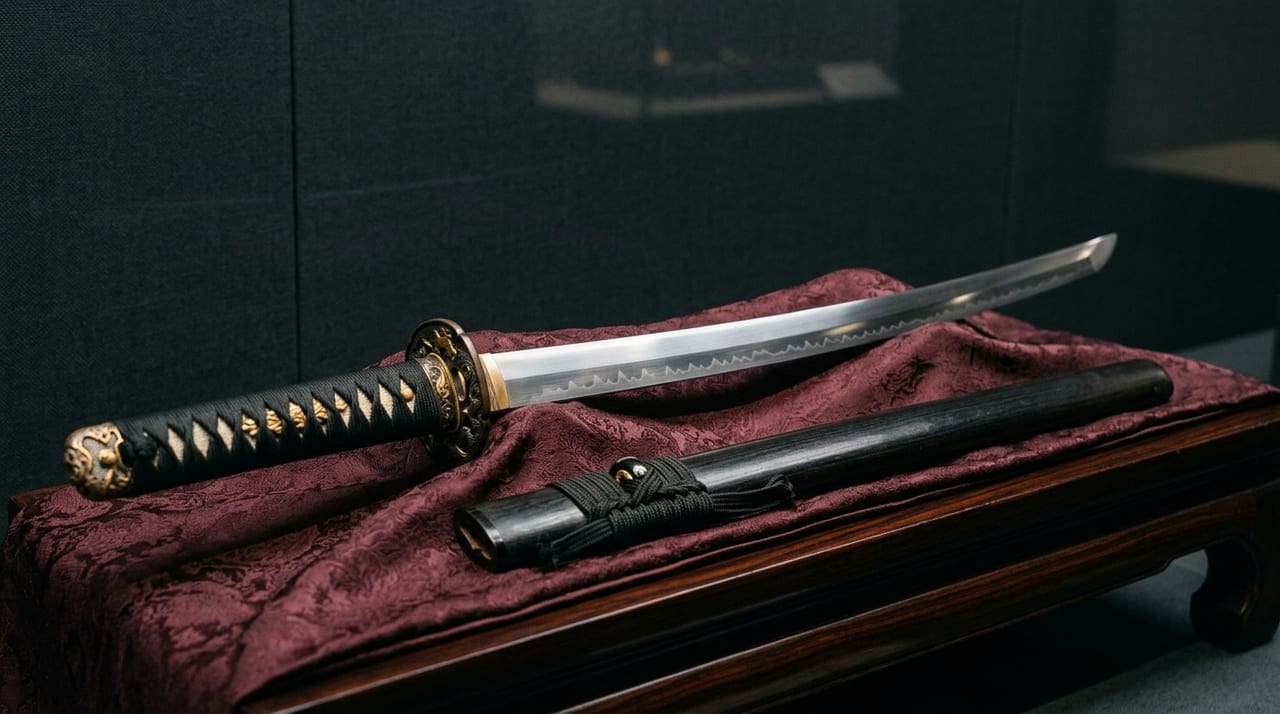
 * Image is for illustrative purposes only.
Beloved Swords of Tokugawa Ieyasu
徳川家康の愛刀
Also known as: Record of Ieyasu's Worn Swords (Sohaya no Tsurugi, Muramasa, Daihannya Nagamitsu)
Description
Tokugawa Ieyasu (1543–1616) was a military commander who brought an end to the long Sengoku period, established the Edo shogunate, and laid the foundation for 265 years of peace. Just as the saying 'Wait until the hototogisu sings' goes, Ieyasu seized the realm through patience and caution. His view of swords, unlike that of Oda Nobunaga and Toyotomi Hideyoshi, placed importance on practicality and spiritual significance. The three swords most famous among Ieyasu's favorites are Sohaya no Tsurugi, Muramasa, and Daihannya Nagamitsu.
Sohaya no Tsurugi——A Sacred Sword of Suruga Protected by the Gods and Buddhas
Sohaya no Tsurugi is a tachi made as a copy of the blade worn by the Heian-period general Sakanoue no Tamuramaro, and it is traditionally attributed to the master smith Miike Tenta Mitsuyo of Chikugo, active from the late Heian to the early Kamakura period. It is also called 'Myōjun Denji Sohaya no Tsurugi Utsusu Nari' after the kiritsuke inscription on its tang, and it is the sacred sword that Ieyasu treasured most throughout his life. According to shrine tradition, Ieyasu favored this sword above all others, always wore it, and even used it as a makuragatana (pillow sword) at night. Shortly before his death, he is said to have left instructions that the sword be enshrined at Kunōzan with its tip pointing west, as a safeguard against the daimyō of the western provinces. It is now held at Kunōzan Tōshōgū (Shizuoka City), the shrine enshrining Ieyasu, and has been carefully preserved for generations as a protective blade of the Tokugawa shogunal house. The blade is a tachi with deep curvature (sori), and its cutting edge length (nagasa) is 67.9 centimeters. It is designated an Important Cultural Property.
Muramasa——A Cursed Famous Sword of the Tokugawa House
Muramasa is the name of swords forged by the master smith Sengo Muramasa of Ise Province (present-day Mie Prefecture) in the Muromachi period, and he is one of the most famous smiths known for the 'demonic blade Muramasa.' Ieyasu possessed several Muramasa blades, and the karma associated with Muramasa swords is well known. His grandfather Matsudaira Kiyoyasu was assassinated by a retainer with a Muramasa wakizashi, his father Hirotada was slashed by a retainer with a Muramasa sword, and a Muramasa blade was used when his eldest son Nobuyasu committed seppuku. These events gave rise to the 'legend of the Muramasa curse.' It is also said that during the Edo period the Tokugawa shogunate strictly suppressed Muramasa blades, but in fact Ieyasu himself prized their cutting quality and used them as working swords. Despite the image of a 'cursed blade,' Muramasa swords are valued in sword history as excellent wazamono (masterworks of high practical quality).
Daihannya Nagamitsu——A Tachi Imbued with Six Hundred Scrolls of Prayer
Daihannya Nagamitsu is a tachi forged by the master smith Nagamitsu of Bizen Province (present-day Okayama Prefecture) in the late Kamakura period. Because its daitsuke (appraised value) in the Muromachi period was an extraordinary 600 kanmon in coin, it was named 'Daihannya Nagamitsu,' likened to the Great Prajñāpāramitā Sutra, which consists of 600 fascicles. After being held by the Muromachi shogun Ashikaga Yoshiteru, it passed through the Miyoshi family to the possession of Oda Nobunaga. It is traditionally said to have been granted to Tokugawa Ieyasu for his merit at the Battle of Anegawa, making it a famous sword that 'circulated the realm.' The quality of the blade represents the archetype of Bizen Nagamitsu, and its splendid chōji-midare hamon (temper line) has a dignity befitting a 'sword of the tenkabito (ruler of the realm).' It is now held by the Tokyo National Museum and designated a National Treasure.
Ieyasu's View of Swords——The Fusion of Practicality and Faith
A characteristic of Ieyasu's view of swords is that, while he valued them practically as 'tools for war,' he simultaneously worshipped them as 'sacred vessels bearing the protection of gods and buddhas.' Even after establishing an era of peace across the realm, Ieyasu continued to collect swords and, as part of the Edo shogunate's cultural policy, protected and nurtured outstanding smiths. That spirit was passed down as the sword collection of the Tokugawa shogunal house, and it is still preserved today at the Tokugawa Art Museum (Nagoya) and Kunōzan Tōshōgū. Ieyasu's beloved swords, as 'symbols of the peace of the realm' that transcend mere weapons, continue to occupy the heart of Japanese sword culture today.
Legends & Stories
The most famous legend associated with Tokugawa Ieyasu's swords is the 'curse of Muramasa.' Because a series of incidents in which Ieyasu's family members were wounded by Muramasa blades is said to have occurred, the claim that 'Muramasa is an enemy of the Tokugawa house' arose. In fact, however, Ieyasu himself favored a daishō pair of Muramasa blades, and that uchigatana was passed down to the Owari Tokugawa family and is now held by the Tokugawa Art Museum. Regarding Sohaya no Tsurugi, the Tōshōgū Gojikki and other sources record that shortly before his death Ieyasu had the blade used for a trial cut on a condemned man, and left instructions that it be enshrined at Kunōzan with its tip pointing west, so that no daimyō of the western provinces would rise against the Tokugawa house. Daihannya Nagamitsu is a famous blade (meibutsu) that Ieyasu received from Oda Nobunaga as a reward for his merit at the Battle of Anegawa; Ieyasu later gave it to Okudaira Nobumasa as a reward for merit at the Battle of Nagashino.