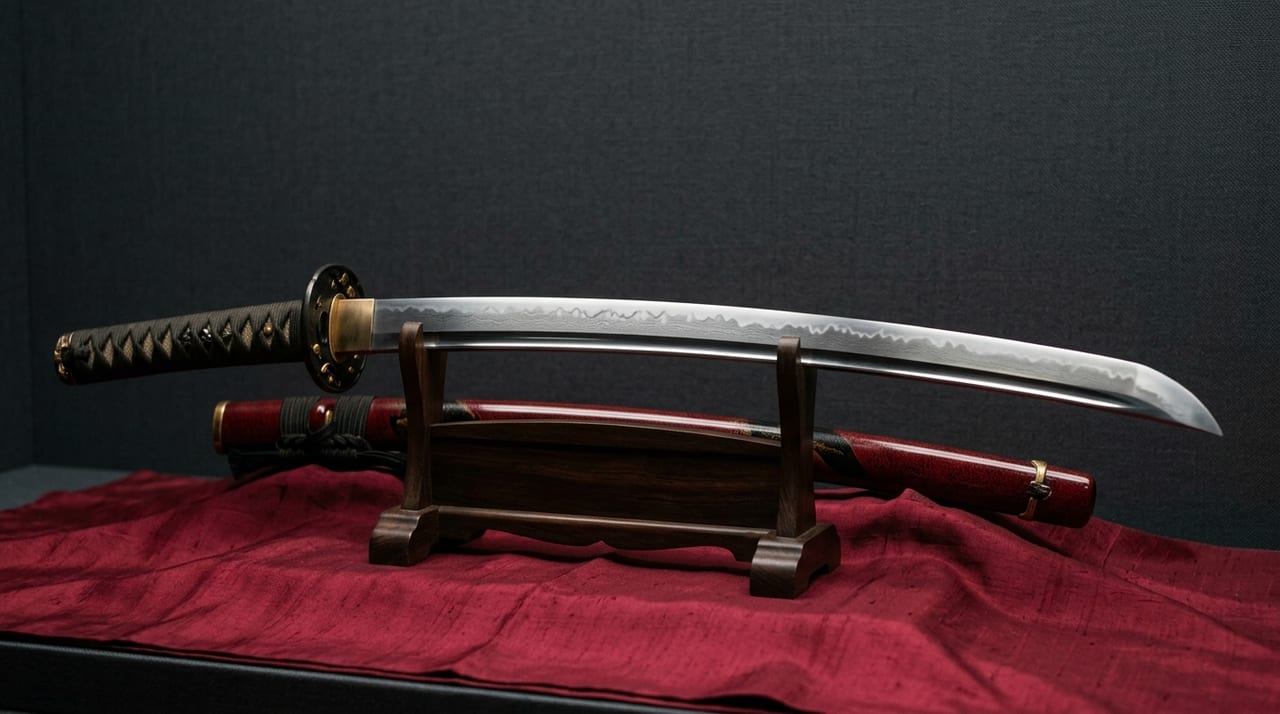
 * Image is for illustrative purposes only.
Chokutō, Unsigned (known as Suiryūken)
直刀 無銘(号 水龍剣)
Also known as: Suiryūken; chokutō transmitted from the Shōsōin; said to be a possession of Emperor Shōmu; a favourite sword of Emperor Meiji
Description
A Nara-Period Straight Sword from the Shōsōin
Japanese blades only acquired their characteristic curvature from the mid-Heian period onward; earlier jōkotō were straight swords without curve. Apart from the treasures of the Shōsōin, very few Nara-period straight swords survive. This is one of that small number — a fine example, thick in the blade and in an excellent state of preservation. It was originally transmitted in the Shōsōin, and one tradition holds that it was a personal possession of Emperor Shōmu.
The Name "Suiryūken"
In 1872 the sword was brought from the Shōsōin to Emperor Meiji. The following year, 1873, new mountings were made for it by Kanō Natsuo, the foremost metal carver of the late Edo and Meiji era, with fittings decorated in a suiryū — water dragon — motif. The sobriquet Suiryūken, "Water Dragon Sword," derives from these mountings. The Tokyo National Museum records the piece under the designated title "Chokutō, unsigned (known as Suiryūken), with pear-skin-ground water dragon and auspicious cloud treasure-sword mountings," the koshirae being included in the designation.
Two Eras in a Single Blade
Because a Nara-period blade was given a new guise by a Meiji metalworker, the piece carries a double character: it is at once a relic of the ancient straight-sword tradition and a masterwork of modern Japanese metal carving. Kanō Natsuo, who was also involved in the Meiji government's trial coinage, was the leading carver of his day, and the fittings with their water dragons and auspicious clouds are considered a high point of Meiji-period metalwork. Known as a favourite sword of Emperor Meiji, it is today held by the Tokyo National Museum and designated an Important Cultural Property.
Legends & Stories
An ancient straight sword transmitted in the Shōsōin, said by one tradition to have belonged to Emperor Shōmu, passed after more than a thousand years into the hands of Emperor Meiji. The emperor had Kanō Natsuo make new mountings bearing water-dragon designs, and from then on the blade came to be called the Suiryūken, the Water Dragon Sword.
Related Famous Swords
同田貫正国
Multiple official designationsDōtanuki Masakuni
Dōda-tsuruba Masakuni (Higo Dōda-tsuruba School)
肥前忠吉
Important Cultural Property • Important Sword (multiple works)Hizen Tadayoshi
First Hizen Kuni Tadayoshi
一期一振
Gomotsu (Imperial Collection)Ichigo Hitofuri
Awataguchi Yoshimitsu
織田信長の愛刀
National Treasures and Important Cultural Properties (multiple)Oda Nobunaga's Beloved Sword
Awataguchi Tōshirō, Samonji, Yukimitsu, Hasebe (respective smiths)